
Common causes of noisy suspension when driving in DR
Introduction
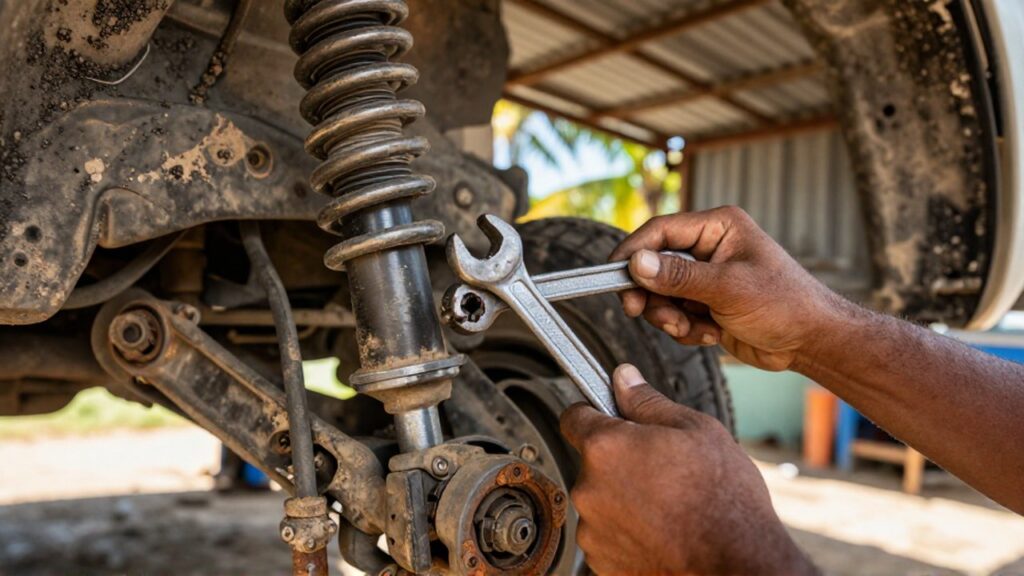
Driving in the Dominican Republic presents a unique set of challenges for any vehicle's chassis and suspension system. The combination of uneven asphalt, frequent potholes, unpaved rural roads, and the tropical humidity creates a demanding environment that accelerates the wear and tear of mechanical components. Noticing strange sounds—such as clunks, squeaks, or rattles—is often the first warning sign that your vehicle's structural integrity is being compromised.
Understanding the sources of these noises is essential for maintaining road safety and avoiding expensive repairs. Ignoring suspension issues can lead to poor handling, uneven tire wear, and, in extreme cases, a loss of control during maneuvers. By identifying the specific cause of the noise, drivers can take proactive steps to replace worn parts before they cause secondary damage to other systems like the steering or braking components.
Impact of local road conditions on suspension parts
The geography and infrastructure of the Dominican Republic play a decisive role in how quickly suspension components degrade. Constant exposure to "baches" (potholes) and speed bumps, known locally as policías acostados, subjects the shocks, struts, and bushings to repetitive, high-impact stress. These sudden jolts can bend metal components or cause the internal valves of a shock absorber to fail prematurely.
Furthermore, the tropical climate introduces high humidity levels, which can lead to rapid oxidation and corrosion of metal joints. When metal surfaces rust, they lose their ability to move smoothly, leading to the characteristic squeaking sounds often heard during cornering or when driving over small bumps. The combination of physical impact and environmental moisture makes regular inspection vital for local drivers.
Identifying clunking and banging noises
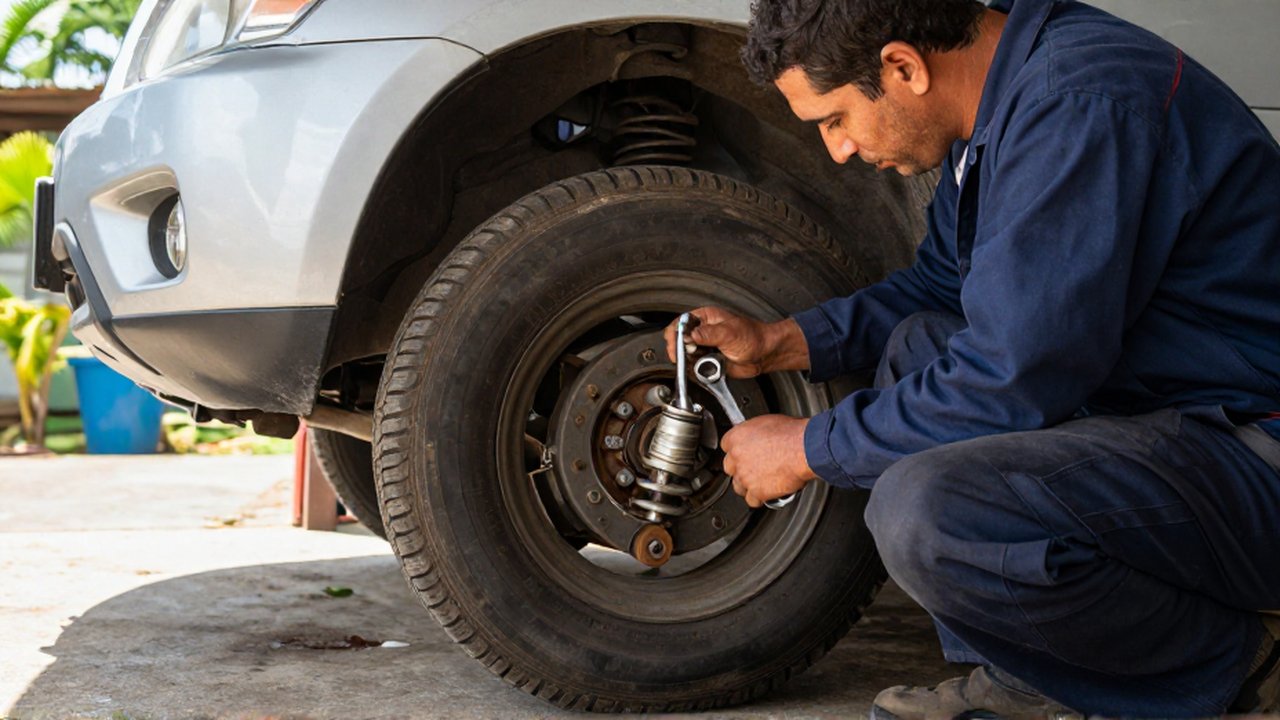
A heavy clunking or banging sound, especially when driving over uneven surfaces or during sudden braking, usually points toward structural components that have lost their stability. One of the most frequent culprits is the sway bar link (or stabilizer link). When the joints in these links wear out, they create a distinct metallic clicking or knocking sound as the vehicle moves.
Other common causes for heavy noises include:
- Worn Control Arm Bushings: These rubber components act as cushions between the metal parts of the suspension. Once the rubber cracks or degrades due to heat and road impact, metal-on-metal contact occurs, resulting in a heavy thud.
- Damaged Shock Absorbers or Struts: If the internal fluid leaks or the gas pressure is lost, the component can no longer dampen movement effectively, leading to a bottoming-out sound.
- Worn Ball Joints: These are critical pivot points. A failing ball joint often produces a loud popping or clunking sound, which can be extremely dangerous if the joint were to fail completely while driving.
Recognizing squeaks and creaks during movement
Squeaking or creaking sounds are typically different from heavy clunks; they are often higher-pitched and occur rhythmically as the vehicle's body moves up and down. These noises are frequently related to friction between components that should be smoothly gliding or cushioned.
The primary causes for these sounds often involve the rubber bushings found throughout the suspension system. Over time, the rubber loses its elasticity and hardens, or it may tear due to constant vibration. When a bushing is dry or damaged, it rubs against the metal mounting bolts, creating a rhythmic squeak. Additionally, the strut mounts—the parts that connect the strut assembly to the vehicle chassis—can wear out, causing creaking sounds when turning the steering wheel or navigating dips in the road.
Common suspension noise symptoms and causes
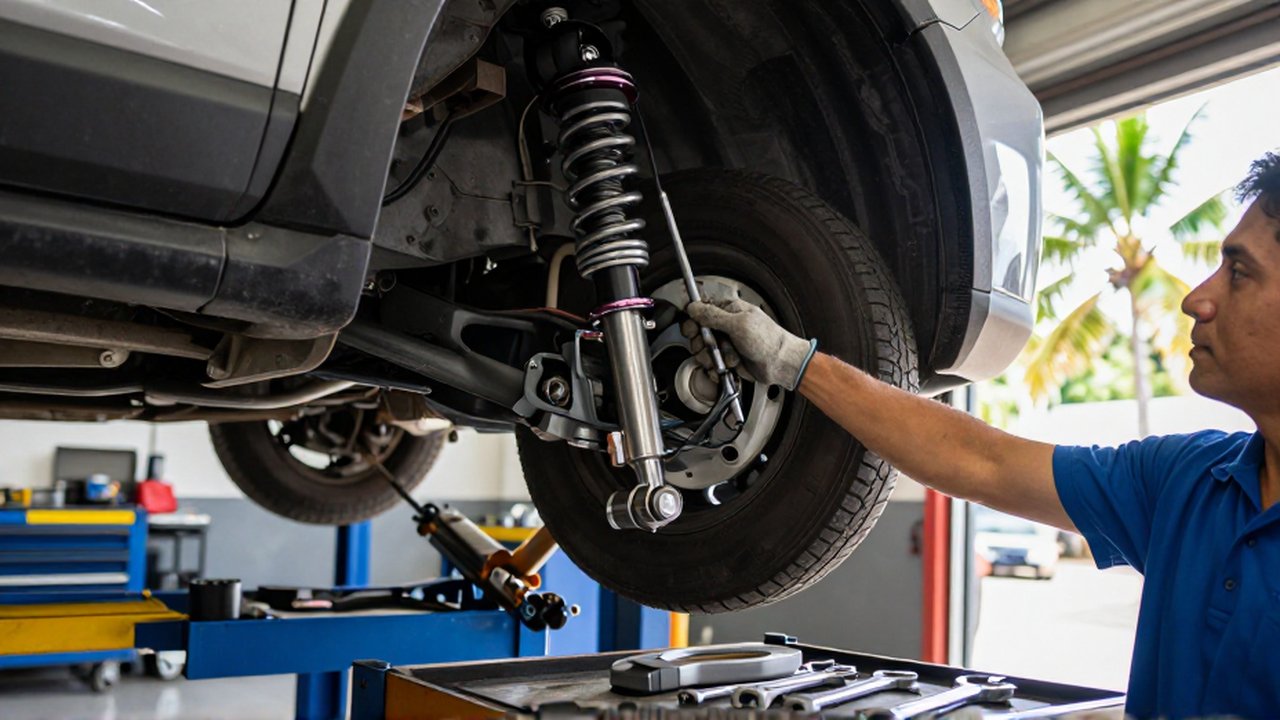
To help diagnose the issue, it is useful to correlate the specific sound with the likely component failure:
| Sound Type | Likely Component | Common Driver Experience |
|---|---|---|
| Clunking / Knocking | Sway bar links or Ball joints | Occurs when hitting potholes or turning. |
| Squeaking | Rubber bushings or Strut mounts | Occurs during slow movement or weight shifts. |
| Rattling | Loose heat shields or worn dampers | Occurs on gravel or uneven pavement. |
| Deep Thudding | Shock absorbers or Struts | Occurs during heavy braking or large bumps. |
Preventive measures for vehicle longevity
While road conditions are difficult to control, drivers can implement several strategies to mitigate suspension damage. Maintaining correct tire pressure is surprisingly important; underinflated tires increase the impact force transferred directly to the suspension components. Similarly, ensuring that wheel alignment is performed regularly after hitting a significant pothole can prevent the uneven wear that stresses the bushings and joints.
Regular visual inspections can also be beneficial. Looking for signs of leaking oil around the shock absorbers or checking for visible cracks in the rubber bushings can allow for early intervention. Addressing a small squeak early is significantly more cost-effective than replacing an entire suspension assembly after a major component failure.
Frequently asked questions
Can a noisy suspension affect my steering? Yes. Since the suspension and steering systems are closely integrated, worn parts like ball joints or control arms can cause the steering to feel loose, heavy, or inconsistent, making the car harder to control.
Is it safe to drive with a clunking sound? It is not recommended. A clunking sound often indicates a component that is close to mechanical failure. If a ball joint or tie rod fails while driving, you could lose steering capability entirely.
Why does my car only make noise when turning? Noises during turns are often related to the steering linkage, CV joints, or the strut mounts. These components undergo specific torsional stress during cornering that doesn't occur when driving in a straight line.
How often should I inspect my suspension? In environments with high road stress like the Dominican Republic, a professional inspection is recommended at least once a year or whenever you notice a significant change in how the vehicle handles bumps.
Leave a Reply