
Differences between paper and reusable air filters
Introduction
The air filter is a critical component of your vehicle's intake system, serving as the first line of defense for your engine. Its primary purpose is to trap dust, debris, and microscopic particles before they enter the combustion chamber. In tropical climates like the Dominican Republic, where dust and sand are prevalent, maintaining a clean filter is essential to prevent premature engine wear and ensure optimal fuel efficiency.
Choosing between a disposable paper filter and a high-performance reusable filter is a common dilemma for vehicle owners. This decision impacts not only your maintenance budget but also the long-term performance and airflow characteristics of your engine. Understanding the fundamental differences in filtration efficiency, cost, and maintenance requirements is necessary to make an informed choice for your specific driving conditions.
Function of air filters in the engine
The engine requires a constant stream of air to mix with fuel for combustion. However, the air drawn from the environment is rarely clean. Without a filter, particles such as sand, insects, and fine dust would enter the cylinders, acting like sandpaper on the piston rings, cylinder walls, and valves. Over time, this causes significant loss of compression and can lead to catastrophic engine failure.
Air filters are designed to balance two conflicting needs: high filtration efficiency (stopping as many particles as possible) and high airflow (allowing the engine to breathe easily). A filter that is too restrictive will starve the engine of oxygen, reducing power and increasing fuel consumption, while a filter that is too porous will allow contaminants to pass through, risking mechanical damage.
Characteristics of disposable paper filters

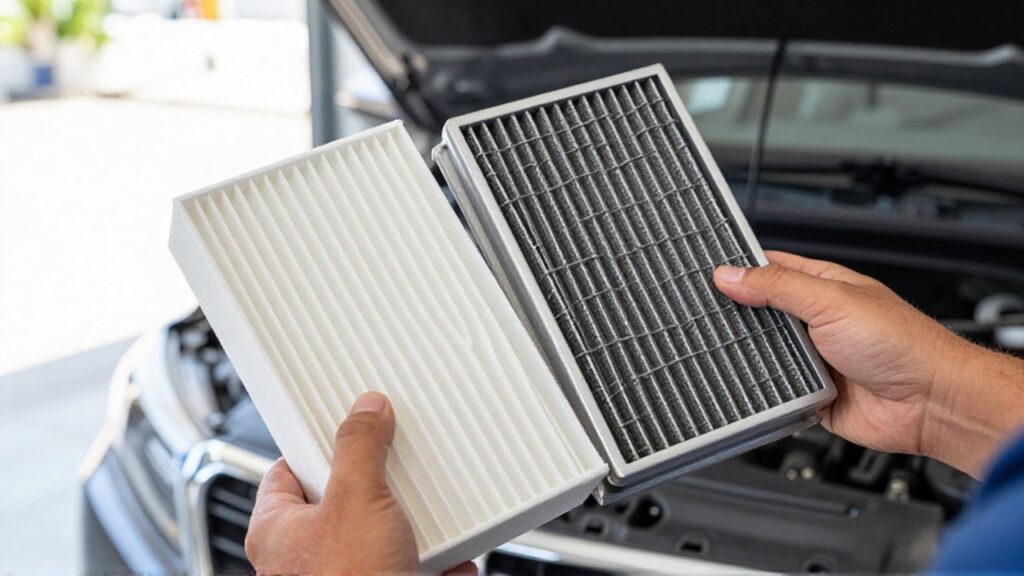
Paper filters are the standard equipment found in most factory-manufactured vehicles. They are typically constructed from pleated cellulose fibers that are treated to provide a specific level of filtration. These filters are designed to be "set and forget" components that are replaced entirely once they become saturated with dirt.
The main advantage of paper filters is their consistent and predictable performance. Because they are manufactured to strict OEM (Original Equipment Manufacturer) specifications, they provide a reliable level of protection that is perfectly matched to the engine's airflow requirements. They are generally inexpensive to purchase and require zero maintenance other than periodic replacement.
However, the primary disadvantage is their environmental impact and repetitive cost. Every time the filter reaches the end of its life, it becomes waste that must be discarded. Furthermore, in extremely dusty environments, paper filters may clog more quickly, requiring frequent replacements that can add up over the lifespan of the vehicle.
Benefits and drawbacks of reusable air filters
Reusable air filters, often made from cotton gauze or synthetic materials, are designed to be cleaned and re-oiled rather than thrown away. These are popular among automotive enthusiasts and those looking for a long-term solution to air filtration.
The most significant benefit is the increased airflow. Reusable filters are often less restrictive than paper ones, which can lead to a slight improvement in throttle response and engine performance. From a financial perspective, while the initial purchase price is much higher than a paper filter, a single high-quality reusable unit can last for the entire life of the vehicle if maintained correctly.
The drawbacks involve a higher level of responsibility and potential risk. A reusable filter requires regular cleaning with specialized kits and the careful application of filter oil. If the filter is not cleaned properly, or if too much (or too little) oil is applied, it can actually harm the engine. Excessive oil can coat the Mass Air Flow (MAF) sensor, leading to incorrect air-fuel readings and "check engine" lights, while insufficient oil may allow dust to bypass the media entirely.
Comparison between filtration types

To decide which type is best for your vehicle, it is helpful to compare them across several key metrics:
| Feature | Paper Filters | Reusable Filters |
|---|---|---|
| Installation | Simple replacement | Requires cleaning and re-oiling |
| Initial Cost | Low | High |
| Maintenance | None (Replace only) | Regular cleaning required |
| Airflow | Standard/Restricted | High/Optimized |
| Lifespan | Short (disposable) | Very long (permanent) |
| Risk Factor | Very low | Moderate if poorly maintained |
Selection criteria for different driving conditions
The "best" filter depends heavily on how and where you drive. If your daily routine involves heavy city driving on paved roads, the standard paper filter is usually the most practical and cost-effective choice. It provides the necessary protection without the need for specialized cleaning tools.
If you frequently drive on unpaved roads or in areas with high levels of airborne dust, a reusable filter might seem attractive for its longevity. However, you must be prepared to clean it much more frequently than a standard schedule would suggest. For many users in dusty environments, the frequency of cleaning required to keep a reusable filter safe can become a significant chore.
For performance-oriented drivers who want to maximize engine response, reusable filters are the logical choice, provided they are willing to commit to the meticulous maintenance required to protect the sensitive electronic sensors in modern engines.
Frequently asked questions
Can I use a reusable filter if my car is still under warranty? While it is not illegal, some manufacturers may point to non-standard air intake components if engine issues arise. It is wise to check your warranty terms or consult a dealer if you plan to switch to a high-flow reusable filter.
How often should I clean a reusable air filter? There is no fixed schedule, as it depends on your environment. You should inspect the filter regularly. If the material looks dark or clogged, it is time for a cleaning. In dusty regions, this might be every few months.
What happens if I forget to re-oil a reusable filter? If a cotton-based reusable filter is not re-oiled after cleaning, its ability to trap fine particles is significantly diminished. This can allow dust to enter the engine, causing internal damage.
Is a paper filter better for engine longevity? In terms of pure safety and simplicity, paper filters are excellent because they are designed to fail by clogging rather than accidentally allowing dirt through due to improper cleaning or re-oiling.
Leave a Reply