
Common motorcycle suspension repair and maintenance

Introduction
Motorcycle suspension is a critical component designed to manage the impact of road irregularities, maintain tire contact with the ground, and ensure rider stability. A well-functioning suspension system absorbs shocks from potholes and bumps, preventing these forces from being transferred directly to the chassis and the rider. This system is essential not only for physical comfort but, more importantly, for maintaining control during cornering, braking, and acceleration.
Proper maintenance and timely repairs are necessary to prevent premature wear of other components and to ensure overall road safety. Neglecting the suspension can lead to unpredictable handling, increased braking distances, and excessive vibration. Because motorcycles in tropical environments often face heat and humidity, specialized care is required to prevent seal degradation and fluid contamination.
Importance of suspension health for rider safety
The primary role of the suspension is to maintain a consistent contact patch between the tire and the road surface. When the suspension is compromised, the tire may bounce or lose traction during uneven terrain, which can lead to a loss of control, especially during high-speed turns or emergency braking. A stable suspension allows the rider to react predictably to external stimuli.
Beyond safety, a healthy suspension system significantly reduces fatigue. Constant vibrations and harsh impacts from unserviced shocks or forks put unnecessary strain on the rider's wrists, back, and neck. By ensuring the dampening and spring rates are functioning correctly, the ride becomes smoother and more controlled, allowing for longer and safer travel.
Signs of suspension failure and wear
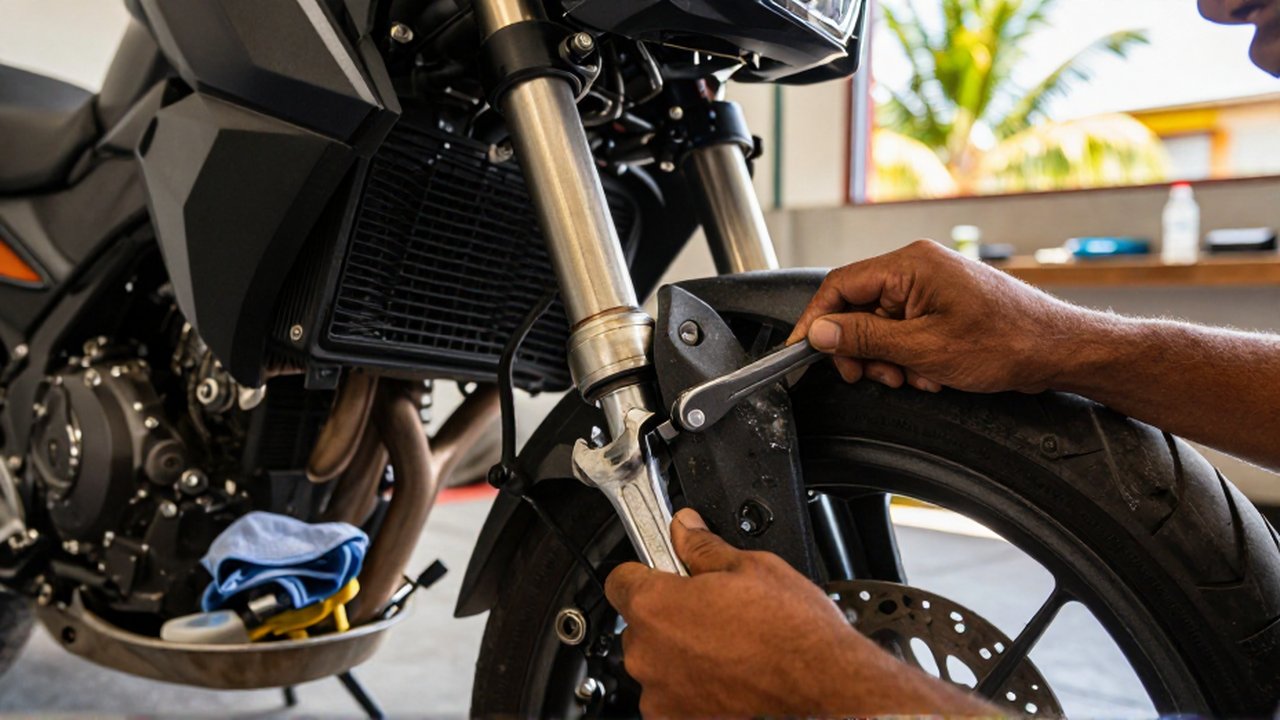
Recognizing the symptoms of a failing suspension can prevent more expensive repairs down the line. Riders should be vigilant for specific physical cues while riding or during stationary inspections.
- Oil Leaks: The most visible sign is hydraulic fluid leaking from the fork seals or the rear shock absorber. This often leaves a greasy residue on the lower part of the forks.
- Unusual Bouncing: If the motorcycle continues to bounce several times after hitting a bump, the damping effect of the oil has likely failed.
- Bottoming Out: A sensation of a hard "thud" when hitting bumps indicates that the suspension has reached its maximum travel, suggesting weak springs or incorrect settings.
- Poor Handling: If the motorcycle feels unstable in corners or "wallows" during turns, the suspension may not be providing the necessary support.
- Front-end Diving: Excessive nose-dive during braking often indicates that the front forks lack sufficient damping resistance.
Routine maintenance procedures for forks and shocks
To extend the lifespan of the suspension, regular maintenance is required. While the frequency depends on usage and road conditions, certain steps remain universal for both telescopic forks and rear shock absorbers.
Cleaning and Inspection Regularly wipe down the fork tubes with a clean, soft cloth. Debris such as sand, grit, or road salt can act as abrasives that score the metal surfaces and destroy the rubber seals. Inspect the tubes for any scratches, pits, or dents, as even minor imperfections can cause oil leaks.
Seal Replacement The rubber seals are the frontline defense against contamination. Over time, the rubber can harden due to heat or tear due to debris. Replacing fork seals is a standard maintenance task that prevents oil from leaking onto the brake components, which is a high-risk safety issue.
Fluid Changes Hydraulic fluid maintains the damping properties of the system. Over time, the oil breaks down or becomes contaminated with microscopic metal particles. Changing the fork oil and rear shock fluid according to manufacturer specifications ensures that the viscosity remains consistent, providing predictable damping.
Common suspension repair tasks
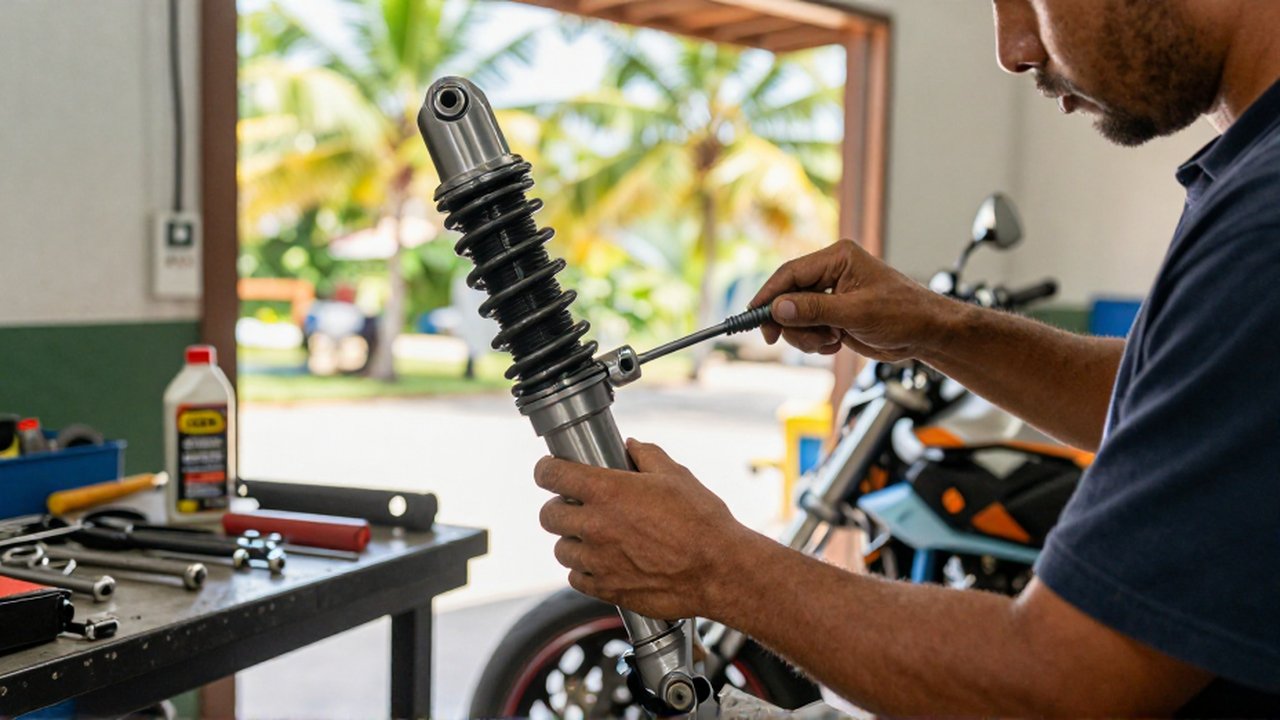
When maintenance is insufficient, actual repairs become necessary. These often involve more complex mechanical interventions.
| Component | Common Repair | Reason for Repair |
|---|---|---|
| Fork Seals | Seal replacement | Leakage or oil contamination |
| Springs | Spring replacement | Fatigue or loss of tension (sag) |
| Bushings | Bushing replacement | Play or "wobble" in the fork tubes |
| Damper Rods | Rod replacement | Internal mechanical failure or bending |
| Rear Shock | Rebuild or replacement | Loss of damping or gas pressure loss |
Replacing worn springs is common in motorcycles that have high mileage or are frequently used for carrying heavy loads. If the springs have lost their "memory" or tension, the motorcycle will sit too low in its travel, leading to frequent bottoming out.
Factors affecting suspension performance
Several variables can influence how your suspension feels and performs. Understanding these helps in making informed decisions regarding adjustments.
Preload Adjustments Preload refers to the amount of tension applied to the springs when the bike is unladen. Adjusting preload allows the rider to compensate for changes in weight, such as adding a passenger or luggage. Correct preload ensures the bike sits at the designed "sag" height within its travel range.
Compression and Rebound Damping Compression damping controls how fast the suspension compresses when hitting a bump, while rebound damping controls how fast it extends back. If the rebound is too fast, the bike feels bouncy; if it is too slow, the suspension may "pack down," becoming increasingly stiff over successive bumps.
Environmental Impact In tropical climates, heat can significantly thin out hydraulic fluid, potentially reducing damping effectiveness. Furthermore, high humidity can accelerate the corrosion of exposed metal parts like fork stanchions if they are not kept clean.
Frequently asked questions
How often should I change my fork oil? While it depends on usage, many riders opt for a change every two years or after a specific mileage interval suggested by the manufacturer. Frequent riding on rough roads may require more frequent changes.
Can I fix a leaking fork seal myself? Changing fork seals is a manageable task for experienced DIY mechanics with the correct tools, such as a specialized seal driver. However, if you are not comfortable disassembling the front end, professional service is recommended to avoid damaging the forks.
Why does my motorcycle feel unstable after a long ride? Heat can cause the suspension fluid to thin out, potentially altering the damping characteristics. Additionally, if you are carrying heavy loads without adjusting the preload, the geometry of the motorcycle changes, leading to instability.
Is it safe to ride with a small oil leak on my forks? It is not recommended. Even a small leak can eventually lead to a significant loss of hydraulic pressure, and more dangerously, oil can migrate to the brake discs or pads, causing a total loss of braking power.
Leave a Reply