
Why engine temperature rises in tropical climates

Introduction
Driving in tropical regions presents unique challenges for vehicle performance, most notably regarding thermal management. In environments characterized by high ambient temperatures and intense solar radiation, the internal combustion engine must work significantly harder to dissipate the heat generated during operation. Understanding why these temperature spikes occur is essential for every driver to prevent catastrophic mechanical failure and ensure long-term vehicle reliability.
Monitoring engine temperature is not merely about watching a gauge; it is about understanding the delicate balance between heat production and heat dissipation. When the external environment is already hot, the efficiency of the cooling system decreases, narrowing the margin of error for mechanical components. This article explores the specific factors that contribute to overheating in tropical climates and provides practical context for maintaining engine health.
Impact of high ambient temperature on cooling efficiency

The primary mechanism for cooling an engine is the heat exchange process between the engine coolant and the external air. In a standard operating environment, the radiator uses the airflow passing through its fins to absorb heat from the liquid circulating inside. However, in tropical climates, the air being pulled into the radiator is already significantly warmer than in temperate regions.
This reduction in the "temperature gradient"—the difference between the coolant temperature and the ambient air temperature—means that every pass through the radiator is less effective. Because the air cannot absorb as much heat as it would in a cooler climate, the coolant remains hotter as it returns to the engine. This constant cycle of high-temperature circulation forces the cooling system to operate at its absolute limit.
Role of high humidity and airflow limitations
Humidity is another critical factor in tropical environments. High moisture content in the air can affect how effectively heat is transferred away from the vehicle. Furthermore, many tropical regions experience frequent heavy rainfall and high humidity, which can lead to moisture buildup in various components.
Traffic conditions also play a major role. In many tropical urban areas, heavy congestion is common. When a vehicle is idling in traffic, there is little to no natural airflow passing through the radiator. While the cooling fan is designed to compensate for this, the combination of high ambient heat, high humidity, and stagnant air creates a "heat trap" under the hood. This scenario significantly accelerates the rise in engine temperature compared to driving at highway speeds.
Common causes of overheating in hot environments
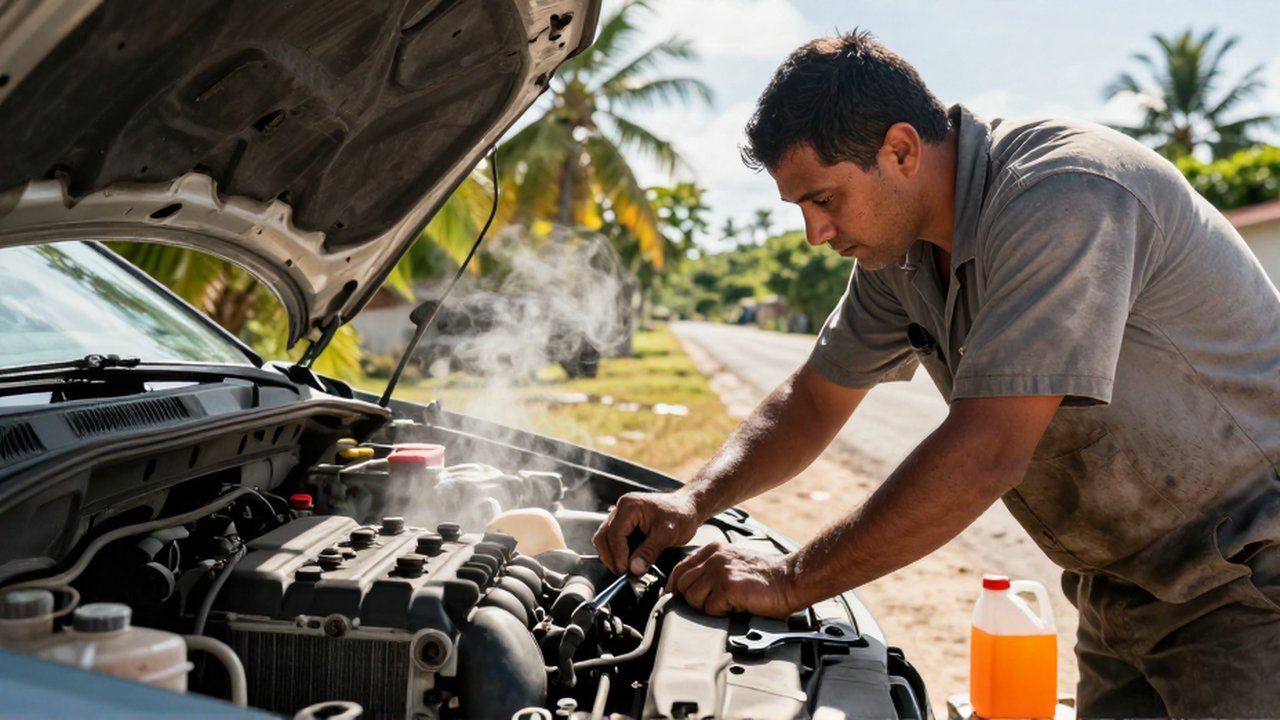
While the climate provides the baseline difficulty, specific mechanical issues often turn manageable heat into dangerous overheating. In tropical areas, these issues are frequently exacerbated by the constant thermal stress placed on the vehicle.
- Coolant degradation: Over time, the chemical additives in coolant break down, reducing its ability to transfer heat and protect against boiling.
- Radiator obstruction: Dust, debris, or insects can clog the radiator fins, reducing the surface area available for heat exchange.
- Thermostat failure: If a thermostat becomes stuck in a partially closed position, it restricts the flow of coolant, making it impossible for the engine to regulate its temperature in hot weather.
- Water pump inefficiency: A worn water pump cannot circulate coolant fast enough to keep up with the intense heat generation of a tropical climate.
- Fan malfunctions: If the electric cooling fan fails or operates at a lower speed than required, the engine will overheat almost immediately in stop-and-go traffic.
Preventive maintenance for tropical driving
To combat the inherent risks of high-temperature environments, owners must adopt a more proactive maintenance schedule. Relying on standard manufacturer intervals may not be sufficient if the vehicle is used daily in extreme heat.
Regularly inspecting the condition of hoses is vital, as high heat can cause rubber to become brittle and prone to bursting. Additionally, the cooling system should be flushed and the coolant replaced according to a strict schedule to ensure the chemical properties remain effective. Checking the radiator cap is also a simple but critical step, as a faulty cap cannot maintain the necessary pressure to raise the boiling point of the coolant.
Frequently asked questions
Can I use plain water to cool my engine in an emergency? In an absolute emergency, water can prevent immediate overheating, but it is not a long-term solution. Water has a lower boiling point than specialized coolant and lacks the anti-corrosive properties needed to protect the engine internals.
How can I tell if my engine is overheating before it is too late? Drivers should watch the temperature gauge on the dashboard closely. Other early warning signs include a sweet smell (indicating a coolant leak), steam rising from the hood, or a sudden loss of engine power.
Does using the air conditioning make the engine hotter? Yes, running the air conditioning places an additional load on the engine, which generates more heat. In heavy traffic and extremely high temperatures, turning off the AC can help reduce the thermal load on the cooling system.
Why does my temperature rise only when I am in traffic? In traffic, the vehicle relies almost entirely on the cooling fan rather than natural airflow. If the fan is weak or the radiator is partially clogged, the lack of moving air prevents the coolant from cooling down sufficiently.
Leave a Reply