
How often to rotate car tires for better wear
Introduction
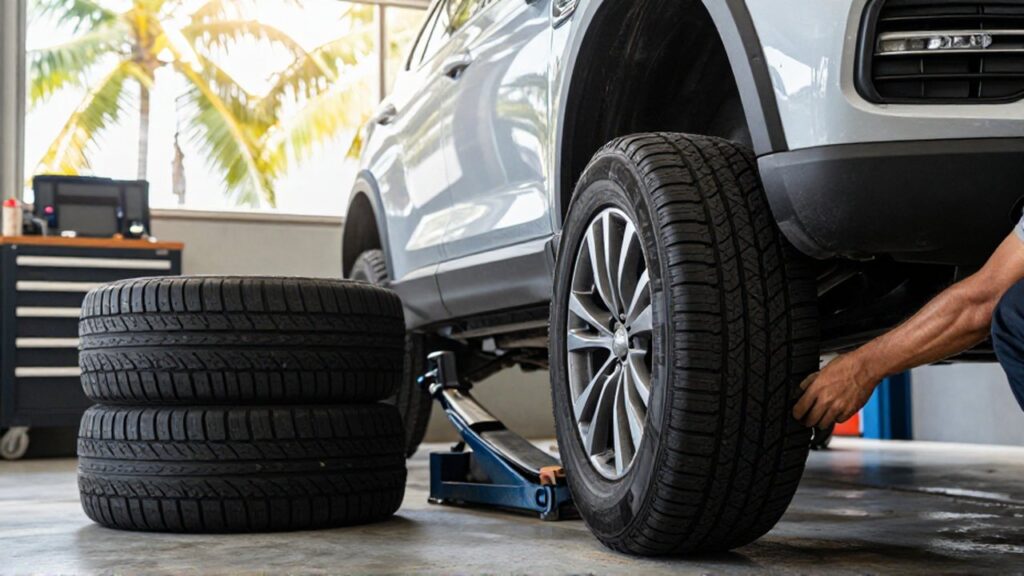
Tire rotation is a preventative maintenance practice that involves moving your vehicle's tires from one position to another to ensure even tread wear. Because different parts of a vehicle carry different loads and experience different levels of friction, tires do not wear down at the same rate. For example, the front tires on a front-wheel-drive car typically wear out much faster due to steering and power delivery.
Performing regular rotations is essential for maximizing the lifespan of your tires and maintaining optimal vehicle handling. By distributing wear more uniformly across all four tires, you prevent premature replacement and ensure that your braking and cornering capabilities remain consistent. This simple procedure is one of the most cost-effective ways to protect your investment in vehicle maintenance.
Implementing a consistent rotation schedule helps avoid uneven tread patterns, which can lead to vibrations, noise, and reduced traction in wet or sandy conditions. Understanding the optimal frequency and the specific patterns required for your vehicle is key to driving safely and efficiently on various road surfaces.
Ideal frequency for tire rotation

Most automotive experts and manufacturers recommend rotating your tires every 5,000 to 8,000 kilometers (approximately 3,000 to 5,000 miles). A practical rule of thumb is to perform a rotation every time you take your vehicle in for a routine oil change. This ensures that the maintenance is never overlooked and allows a technician to inspect the overall condition of the rubber simultaneously.
However, the exact interval can vary based on several environmental and driving factors. In tropical climates like the Dominican Republic, where high temperatures and intense sunlight can accelerate rubber degradation, keeping a closer eye on tire condition is vital. If you frequently drive on unpaved roads, through construction zones, or carry heavy loads, you may need to shorten the interval between rotations to prevent uneven wear from sudden impacts or increased pressure.
Monitoring your mileage is the most reliable way to stay on track. If you notice any unusual vibrations in the steering wheel or hear new rhythmic noises while driving, it may be an indication that the tread has become significantly uneven and a rotation—or a professional inspection—is overdue.
Common tire rotation patterns
The method used to move the tires depends on whether your vehicle is equipped with All-Wheel Drive (AWD), Front-Wheel Drive (FWD), or Rear-Wheel Drive (RWD), as well as whether your tires are direction-specific.
- Front-Wheel Drive (FWD): Typically, the front tires are moved to the rear on the same side, while the rear tires are moved to the front and crossed to the opposite side.
- Rear-Wheel Drive (RWD): The rear tires move to the front on the same side, and the front tires move to the rear and are crossed.
- All-Wheel Drive (AWD): Many AWD systems require a specific "X-pattern" or a cross-pattern to ensure all four tires wear at a similar rate. Always consult your owner's manual, as some AWD systems are sensitive to tire diameter differences.
It is crucial to identify if you have directional tires. These tires are designed to rotate in only one direction to effectively channel water away from the tread. If you have directional tires, they can only be moved from front to back on the same side; they cannot be crossed to the opposite side.
Benefits of regular tire maintenance
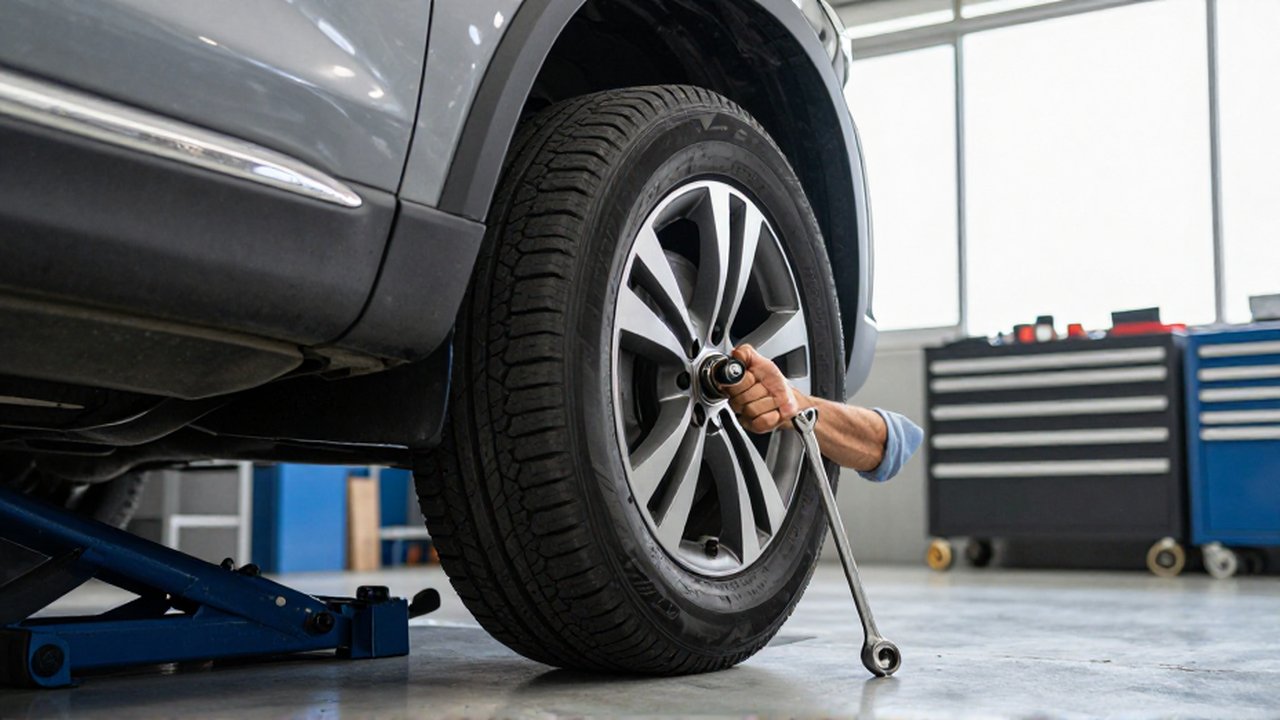
Maintaining a strict rotation schedule offers several tangible advantages for the vehicle owner:
| Benefit | Description |
|---|---|
| Extended Tire Life | Prevents one pair of tires from wearing out significantly faster than the others. |
| Cost Savings | Reduces the frequency of expensive tire replacements by maximizing the utility of the rubber. |
| Improved Safety | Ensures consistent traction and predictable handling during braking and turns. |
| Fuel Efficiency | Uniform tread maintains a smoother rolling resistance, which can slightly improve fuel economy. |
| Smooth Ride | Prevents the vibrations and "thumping" sounds caused by unevenly worn treads. |
Common mistakes to avoid
One of the most frequent errors is neglecting to check tire pressure during the rotation process. Because unevenly worn tires often lead to incorrect pressure readings, you should always adjust the PSI to the manufacturer's specification whenever the tires are moved.
Another mistake is ignoring the "spare tire." If you have a full-size spare that is in good condition, it should be included in the rotation cycle to ensure all five tires age at the same rate. Conversely, if you have a temporary "donut" spare, it should never be part of the regular rotation pattern.
Finally, never assume that a rotation will fix a mechanical issue. If your tires are wearing unevenly due to poor wheel alignment or worn suspension components, rotating them will only provide a temporary fix. If you see "feathering" or heavy wear on just one edge of the tire, seek an alignment service immediately.
Frequently asked questions
Can I rotate tires myself? Yes, if you have the necessary tools like a jack and a torque wrench. However, professionals can also inspect for uneven wear and balance the wheels, which is highly recommended.
Will tire rotation fix a vibration in my car? Not necessarily. While rotation can help if the vibration is caused by uneven tread wear, vibrations are often caused by unbalanced wheels or suspension issues that require specialized equipment to fix.
How do I know if my tires are directional? Check the sidewall of the tire. Directional tires will usually have an arrow marked "Rotation" pointing in the direction the tread should spin.
Do I need to rotate tires if my car is All-Wheel Drive? Yes, and it is even more important for AWD vehicles. Some AWD systems require specific patterns to prevent damage to the drivetrain, so always check your owner's manual first.
Leave a Reply