Essential car safety features for driving in Santo Domingo

Introduction
Driving in Santo Domingo presents a unique set of challenges that require more than just basic driving skills. The combination of high traffic density, unpredictable road conditions, sudden tropical rainstorms, and a diverse range of vehicle types—from heavy trucks to motorcycles—demands that your vehicle be equipped with specific safety technologies. Understanding which features are most critical can help protect you, your passengers, and other road users in the capital.
Prioritizing these safety elements is essential when purchasing a new or used vehicle in the Dominican Republic. By focusing on active and passive safety systems, you can mitigate the risks associated with sudden stops, visibility issues during heavy rains, and the high-stress environment of urban commuting. Investing in a well-equipped vehicle is not just a matter of comfort, but a fundamental component of proactive accident prevention.
Active safety systems for urban navigation

Active safety features are those designed to prevent an accident from occurring in the first place. In a city like Santo Domingo, where sudden lane changes and pedestrian activities are frequent, these systems act as a second set of eyes for the driver.
Anti-lock Braking Systems (ABS) are perhaps the most vital feature for local driving. In the event of a sudden obstacle or a patch of wet asphalt during an afternoon downpour, ABS prevents the wheels from locking up. This allows the driver to maintain steering control while braking hard, which is crucial for avoiding collisions in congested traffic.
Electronic Stability Control (ESC) is another indispensable tool. It helps prevent skidding and loss of control during sudden maneuvers or when navigating uneven road surfaces. In a city where road geometry can change abruptly, ESC works by applying brakes to individual wheels to keep the car on its intended path.
Advanced Driver Assistance Systems (ADAS), such as blind-spot monitoring and automatic emergency braking, provide an extra layer of protection. Given the high volume of motorcycles in the capital, blind-spot warnings are particularly useful for ensuring a safe lane change without colliding with two-wheeled vehicles that may be harder to see.
Passive safety features for collision protection
While active safety focuses on prevention, passive safety features are designed to minimize injury if a collision becomes unavoidable. These systems are the final line of defense for the occupants of the vehicle.
Airbag systems should be comprehensive, covering not only the driver and front passenger but also side and curtain airbags. Side airbags are especially important in urban environments where "T-bone" style collisions or side impacts are a potential risk in intersections.
Crumple zones are a structural safety feature built into the vehicle's frame. These areas are engineered to deform in a controlled manner during an impact, absorbing the kinetic energy that would otherwise be transferred to the passengers. When inspecting a used car in the Dominican Republic, it is vital to ensure that the vehicle's structural integrity has not been compromised by previous repairs to these zones.
Seatbelt pretensioners work in tandem with airbags. In the millisecond an impact is detected, these devices tighten the seatbelt to hold the passenger firmly in their seat, preventing them from striking the interior of the vehicle.
Importance of visibility and lighting
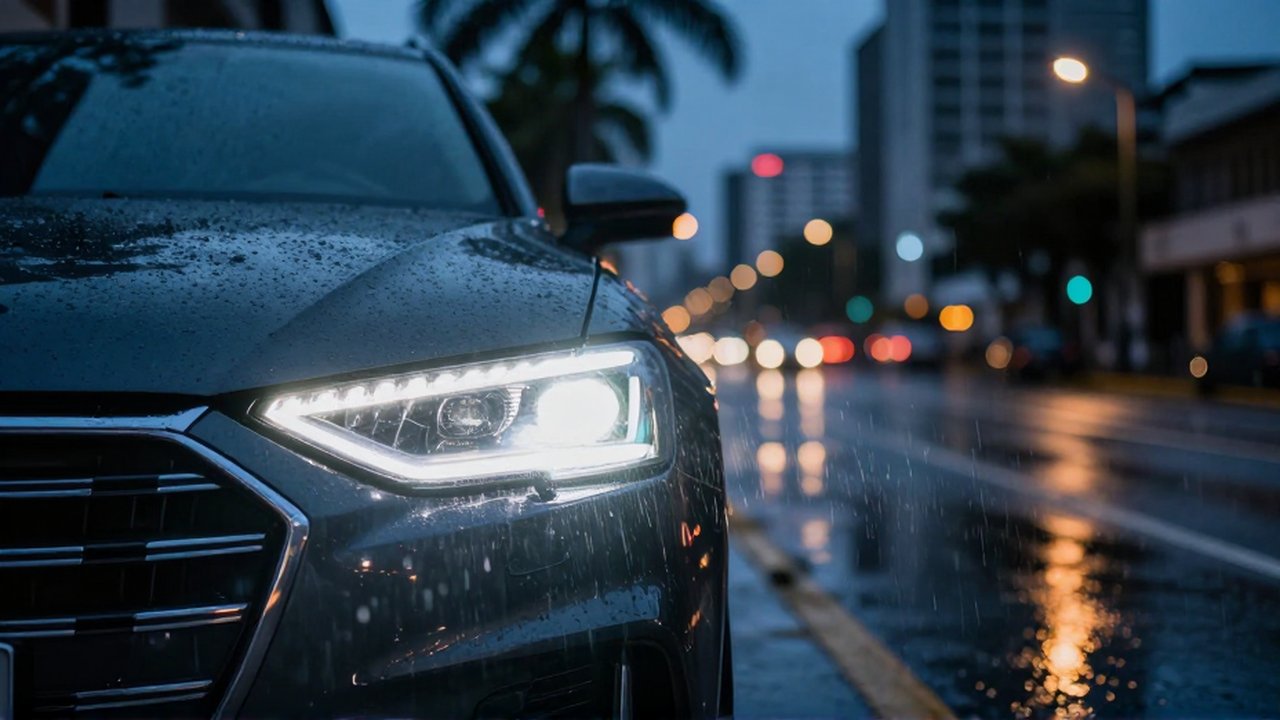
Visibility is a major factor in road safety, especially during the heavy tropical rains common in the Santo Domingo area and during night driving.
- High-quality headlights: Ensure your vehicle has powerful, well-aligned headlights to navigate poorly lit streets and detect pedestrians or obstacles early.
- Automatic headlights: These sensors detect changes in ambient light, ensuring your lights are always on when needed, which increases your visibility to others.
- Effective windshield wipers: In the Dominican Republic, the intensity of rain can be overwhelming. High-performance wipers and a functional defroster are essential to maintain a clear field of vision.
- Fog lights: These are useful for cutting through the mist or heavy spray kicked up by other vehicles during intense rainstorms, improving your ability to see the road markings.
Maintenance for sustained safety
A safety feature is only effective if it is in working order. The tropical climate, characterized by high heat and humidity, can affect various vehicle components over time.
Regularly checking the condition of your tires is a critical safety task. Worn treads reduce grip on wet roads, significantly increasing braking distances. Additionally, ensure that your braking system is inspected periodically by a professional to prevent the degradation of pads and fluid.
Maintaining the battery and electrical systems is also necessary, as many modern safety sensors and electronic stability controls rely on a consistent and strong electrical supply to function correctly.
Frequently asked questions
Is ABS enough to prevent all accidents in heavy rain? No, ABS is designed to prevent wheel lock-up and maintain steering control, but it cannot overcome the laws of physics if a driver enters a turn too fast or fails to account for increased stopping distances on wet roads.
Should I prioritize safety features when buying a used car? Yes. When inspecting a used vehicle, ensure that the primary safety systems like ABS, airbags, and ESC are functional and that the vehicle has not undergone structural repairs that could affect its crumple zones.
How does the climate in Santo Domingo affect car safety? High heat and humidity can accelerate the wear of rubber components like tires, belts, and wiper blades, and can also impact the electrical systems that manage advanced safety features.
Are side airbags important for city driving? Yes, they are crucial for providing protection during side-impact collisions, which are relatively common in urban environments with high-density traffic and frequent intersection crossings.
Leave a Reply