
Maintenance schedule for motorcycles in humid climates
Introduction
Owning a motorcycle in a humid climate presents unique challenges that can significantly impact the longevity and performance of your vehicle. High moisture levels in the air, often accompanied by heat and salt spray in coastal areas, accelerate the oxidation of metal parts and the degradation of electrical systems. Maintaining a strict service routine is essential to prevent premature rust, electrical failures, and mechanical breakdowns.
A specialized maintenance schedule is designed to combat these environmental stressors by prioritizing cleaning, lubrication, and protection. By understanding how humidity affects different components, riders can move beyond standard manufacturer recommendations to implement a proactive care strategy. This approach ensures that the motorcycle remains reliable, safe, and aesthetically pleasing despite the aggressive tropical conditions.
Impact of humidity on motorcycle components
Humidity acts as a constant catalyst for chemical reactions on a motorcycle. The most immediate threat is oxidation, commonly known as rust. When moisture settles on bare metal surfaces, such as the chain, bolts, or exhaust components, it creates an electrochemical reaction that eats away at the material. This is particularly dangerous for structural parts and moving components that require precise tolerances.
Electrical systems also face significant risks. High humidity can lead to condensation inside connectors, switches, and sensors. This moisture can cause short circuits, corrosion of contact points, and intermittent electrical failures that are notoriously difficult to diagnose. Furthermore, moisture can contaminate fluids, such as brake fluid, which is hygroscopic—meaning it naturally absorbs water from the air—potentially reducing braking efficiency and causing internal corrosion in the hydraulic system.
Routine cleaning and drying procedures

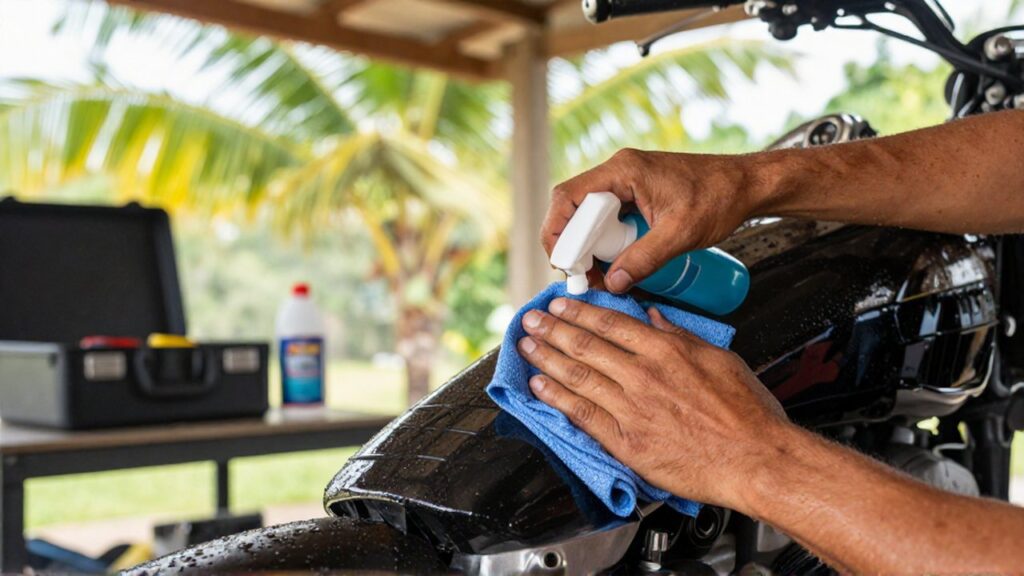
Regular cleaning is the first line of defense against climate-induced damage. In humid environments, it is not enough to simply wash the bike to remove dirt; the goal is to remove corrosive contaminants and ensure the surfaces are dry. A deep clean should be performed frequently, especially after riding in heavy rain or near coastal waters where salt is present.
After washing the motorcycle, it is crucial to dry it thoroughly. Using compressed air to blow water out of crevices, bolt heads, and electrical housings can prevent moisture from being trapped. Leaving a motorcycle to air-dry in a humid environment often results in "flash rust" on exposed metal surfaces. Once dry, applying a protective layer of wax or specialized sealant to the paint and metal surfaces creates a barrier that prevents moisture from making direct contact with the substrate.
Essential lubrication and corrosion protection
Lubrication serves two purposes: reducing friction in moving parts and acting as a moisture barrier. In humid climates, the frequency of lubrication must be increased compared to drier regions. The drive chain is perhaps the most sensitive component. A dry or improperly lubricated chain will rust rapidly, leading to stiff links and eventual failure.
To maintain the motorcycle effectively, follow these lubrication guidelines:
- Drive Chain: Clean and apply high-quality chain lube every few hundred kilometers or after any heavy rain exposure.
- Pivot Points: Apply a light penetrating oil or grease to brake levers, gear shifters, and kickstands to prevent seizing.
- Exposed Fasteners: Use a corrosion inhibitor spray on bolts and nuts that are frequently exposed to the elements.
- Electrical Connectors: Use dielectric grease in electrical plugs and junctions to prevent moisture from entering and causing oxidation.
Fluid management and inspection intervals
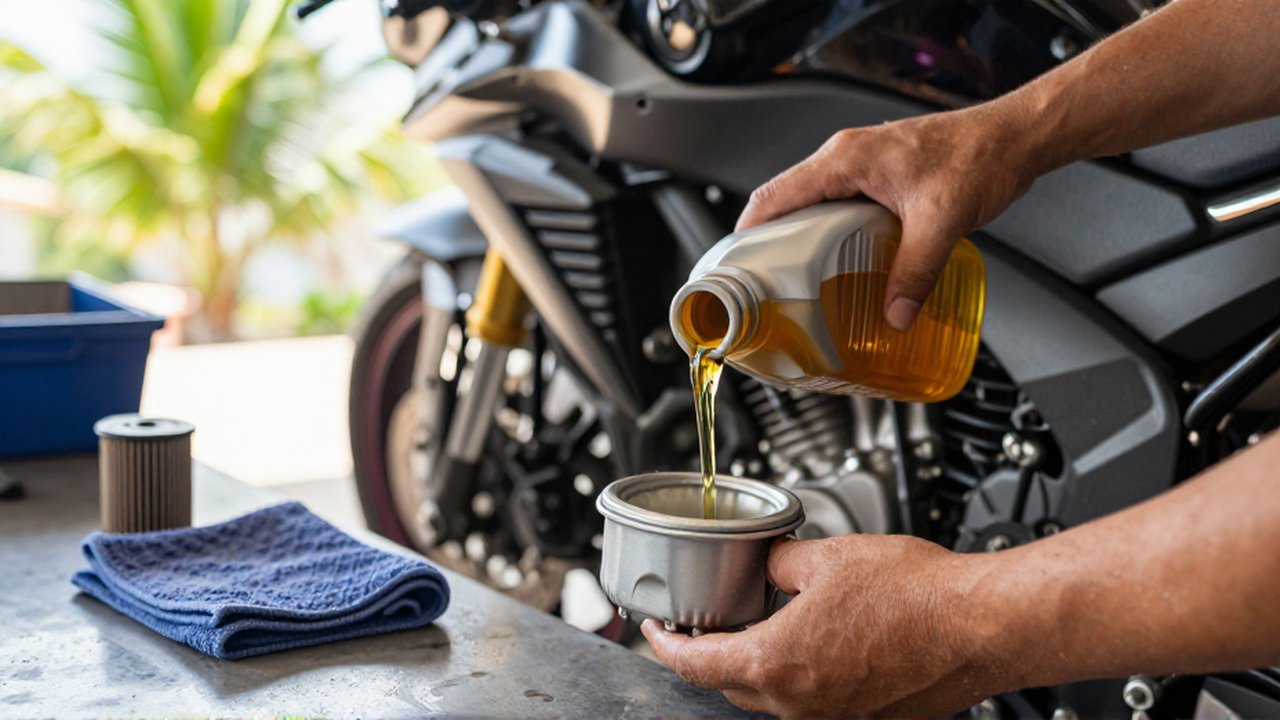
Fluids are the lifeblood of the motorcycle, but in high-humidity areas, they require closer monitoring. The most critical fluid to watch is brake fluid. Because it absorbs water, the moisture content can rise over time, lowering the boiling point of the fluid and potentially causing the brakes to feel "spongy" or fail under heat.
| Component | Recommended Action | Frequency Consideration |
|---|---|---|
| Brake Fluid | Test moisture content and flush | More frequent in high humidity |
| Engine Oil | Check level and quality | Standard intervals, but watch for emulsification |
| Coolant | Check level and pH balance | Periodic inspection for acidity/contamination |
| Fuel System | Inspect for condensation | Regularly if the bike is stored for long periods |
If you notice a milky appearance in your oil or coolant, this is a sign of water contamination, which requires immediate professional attention. Additionally, if the motorcycle is stored for long periods, ensure the fuel tank is full to minimize the air space where condensation can form.
Storage solutions for humid environments
How you store your motorcycle can dictate how much maintenance is required during active use. Whenever possible, avoid storing the motorcycle in open-air environments or damp garages. A controlled environment with low humidity is ideal for preventing the slow creep of corrosion.
If indoor storage is unavailable, using a high-quality, breathable motorcycle cover is recommended. Avoid using plastic tarpaulins that trap moisture underneath; instead, opt for covers designed to allow airflow while shedding water. For long-term storage, consider using a battery tender to maintain voltage and prevent the degradation of the electrical system, and ensure the motorcycle is kept on a stand to prevent flat spots on tires and to allow better airflow around the underside of the machine.
Common maintenance questions
How often should I clean my motorcycle in a humid area?
It is best to clean the bike after any ride in rain or heavy mist. For general maintenance, a thorough wash and dry every two weeks helps prevent the buildup of environmental contaminants.
Can humidity affect my motorcycle's performance?
Yes. High humidity can affect air density, which may slightly impact combustion, but more importantly, it can cause electrical malfunctions, sensor errors, and fluid degradation that directly impact how the bike runs.
Is it necessary to use dielectric grease?
In humid or coastal climates, yes. Applying dielectric grease to electrical connections prevents moisture from causing corrosion and ensures a reliable electrical signal throughout the vehicle's lifespan.
What is the best way to prevent rust on my chain?
The best method is a combination of regular cleaning with a dedicated chain cleaner and frequent application of a high-quality lubricant. Always ensure the chain is dry before applying new lube.
Leave a Reply