
How to check tire tread depth for road safety
Introduction
Checking your tire tread depth is a fundamental aspect of vehicle maintenance that directly impacts your safety on the road. The tread is the patterned part of the tire that makes contact with the ground, designed to channel water, debris, and loose materials away from the contact patch. Maintaining sufficient depth ensures that your vehicle can grip the road effectively, providing stability during turns and preventing hydroplaning during heavy tropical rainfalls.
Regular inspections should be performed monthly or before long journeys to ensure your tires are capable of performing as intended. Neglecting this small task can lead to decreased braking efficiency, poor handling, and an increased risk of accidents. Understanding how to measure this depth allows you to make informed decisions about when to replace your tires, preventing unexpected failures and ensuring your vehicle remains reliable in all driving conditions.
Importance of adequate tread depth

Tread depth is the primary factor in determining how well a tire manages water. When driving through puddles or during heavy rain, the grooves in the tire act as channels to move water out from under the rubber. If the tread is too shallow, the tire cannot evacuate the water quickly enough, creating a thin layer of liquid between the tire and the road surface. This phenomenon, known as hydroplaning, can cause a driver to lose all steering and braking control.
Beyond wet weather performance, tread depth significantly influences braking distances. On dry pavement, deeper grooves help maintain a consistent contact patch with the road. On uneven surfaces, such as those frequently encountered in various regions of the Dominican Republic, adequate tread helps the vehicle maintain traction. Furthermore, tires with healthy tread provide better grip during cornering, which is essential for maintaining stability at higher speeds or when navigating unexpected road obstacles.
Methods to measure tire tread
There are several practical ways to assess the condition of your tires, ranging from simple visual checks to using specialized tools.
The Penny Test One of the most common DIY methods involves using a coin to check the grooves. Insert a coin into one of the main tread grooves. If the top of the design is visible, the tread is likely too low and the tire needs immediate replacement. This method is quick and requires no extra equipment.
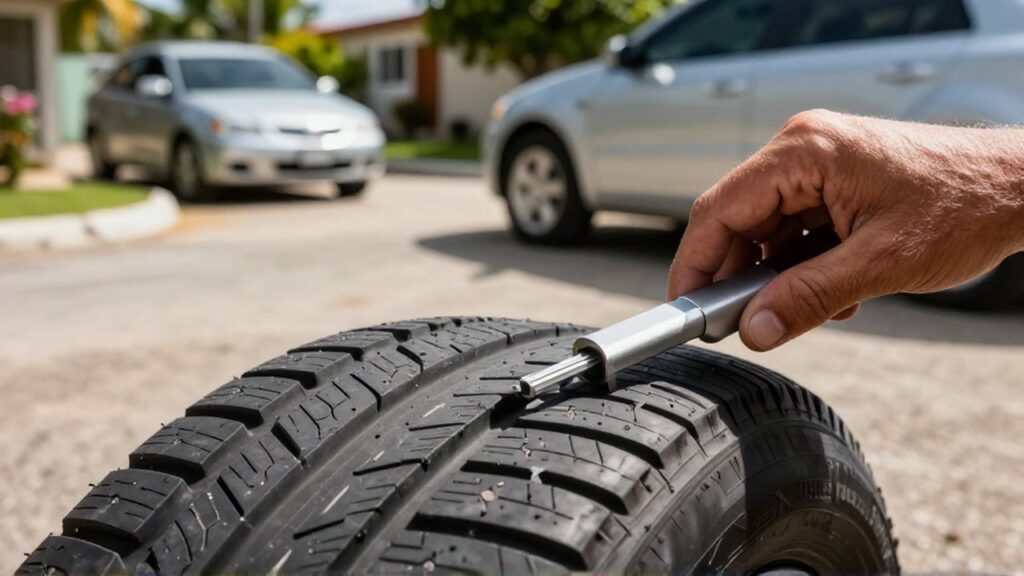
Using a Tread Depth Gauge For the most accurate results, using a dedicated tread depth gauge is recommended. These small, handheld tools can be inserted into the grooves to provide a precise measurement in millimeters or fractions of an inch. This precision allows you to track gradual wear over time and predict exactly when a tire will reach its legal or safe limit.
Visual Inspection of Wear Bars Most modern tires are manufactured with built-in wear indicators, often called "tread wear bars." These are small raised bumps located at the bottom of the main grooves. When the tread surface is worn down to the level of these bars, it indicates that the tire has reached its minimum legal tread depth and is no longer safe for use.
Comparison of measurement results

| Condition | Measurement Status | Action Required |
|---|---|---|
| Excellent | Deep, clear grooves with no signs of uneven wear | Continue regular monitoring |
| Warning | Tread approaching the wear bars | Plan for tire replacement soon |
| Critical | Tread level with wear bars or below limits | Replace tires immediately |
Common mistakes and risks
A frequent error is checking only one area of the tire. Tires often wear unevenly due to issues like improper inflation, poor wheel alignment, or worn suspension components. It is vital to inspect the inner, middle, and outer sections of the tread. If one side is significantly more worn than the others, it indicates an underlying mechanical problem that must be addressed alongside the tire replacement.
Another risk is relying solely on a visual assessment without actually measuring. From a distance, a tire may look functional, but the actual depth might be below the safety threshold. Additionally, some drivers ignore the age of the tire. Even if the tread depth seems adequate, rubber degrades over time due to heat and UV exposure, which can lead to cracks and structural failure. Always check the manufacturing date on the sidewall.
Frequently asked questions
How often should I check my tire tread? It is recommended to perform a visual inspection once a month and a detailed measurement every few months or before any significant trip.
Can uneven tread wear be fixed? Uneven wear usually suggests a mechanical issue like misalignment or suspension wear. While new tires will fix the grip, you must repair the underlying cause to prevent the new tires from wearing unevenly as well.
What is a safe minimum tread depth? While specific limits vary by local regulations, a common safety threshold is when the tread reaches the wear indicator bars located in the grooves.
Does tire pressure affect tread wear? Yes, significantly. Under-inflated tires tend to wear more on the outer edges, while over-inflated tires tend to wear more in the center of the tread.
Leave a Reply