
Safety risks of driving with damaged car suspension
Introduction
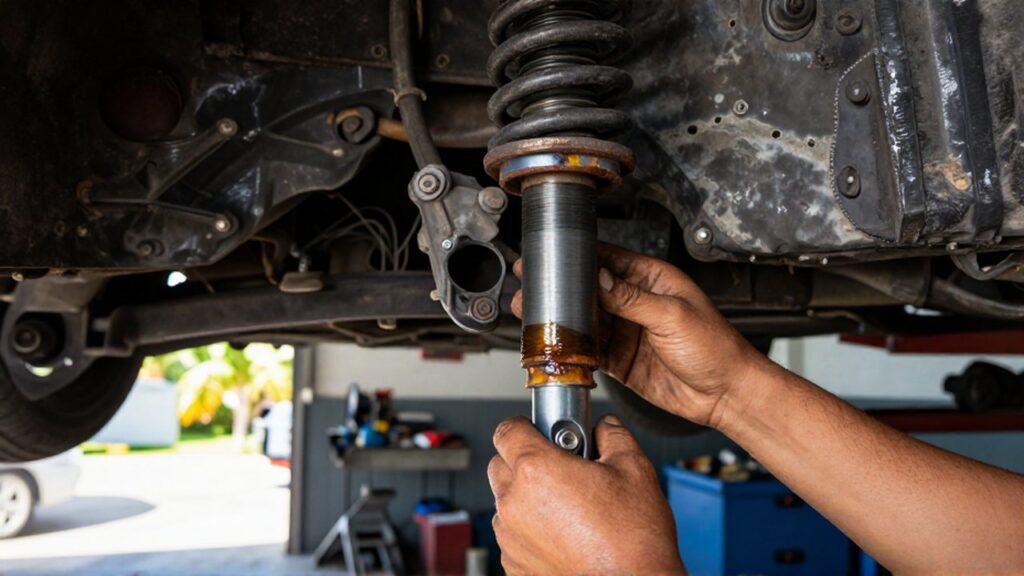
The suspension system of a vehicle is a critical assembly of components, including springs, shock absorbers, and linkages, designed to manage the impact of road irregularities. Its primary purpose is to maintain tire contact with the road surface and ensure a stable ride by absorbing energy from bumps and potholes. In environments with challenging road conditions, such as those found in tropical climates or areas with uneven pavement, the suspension works harder to keep the vehicle controlled and the passengers comfortable.
Neglecting a malfunctioning suspension system goes far beyond mere discomfort or a bumpy ride. When components like struts or bushings fail, the structural integrity and handling capabilities of the car are compromised. This can lead to unpredictable vehicle behavior during sudden maneuvers, increased braking distances, and a significant reduction in overall road safety. Understanding these risks is essential for every driver to prevent accidents and avoid more expensive mechanical failures.
Compromised handling and control

One of the most immediate dangers of a damaged suspension is the loss of precise handling. The suspension system is responsible for keeping the tires firmly planted on the ground. When shock absorbers are worn or springs are broken, the tires may bounce uncontrollably rather than staying in constant contact with the asphalt. This lack of traction makes the vehicle feel "floaty" or disconnected from the driver's inputs.
During cornering, a faulty suspension can cause excessive body roll, where the car leans too heavily to one side. This shifts the weight distribution unevenly, potentially causing the car to skid or lose grip on the inside tires. In extreme cases, particularly during high-speed turns, this instability can lead to a complete loss of directional control, making it difficult to navigate turns or avoid obstacles.
Increased braking distances and instability
The suspension plays a vital role in the efficacy of a vehicle's braking system. When you apply the brakes, weight shifts toward the front of the vehicle. A healthy suspension manages this load transfer, keeping the car level and ensuring that all four tires maintain optimal pressure against the road. If the suspension is damaged, this weight shift becomes erratic.
If the front struts are unable to control the downward force, the vehicle may "nose dive" excessively, which can lift the rear wheels slightly and reduce their traction. This imbalance increases the distance required to bring the vehicle to a complete stop. Furthermore, during emergency braking, an unstable suspension can cause the vehicle to wobble or veer to one side, significantly increasing the risk of a collision.
Accelerated wear on other vehicle components

Driving with a damaged suspension creates a domino effect of mechanical degradation. Because the suspension is no longer absorbing the energy from road impacts, that kinetic energy is transferred directly to other parts of the vehicle. This results in premature wear on several critical systems:
- Tires: Uneven suspension causes irregular tire wear patterns, such as cupping or feathering, which further reduces grip.
- Steering System: The vibrations and forces not handled by the shocks are passed into the steering linkage, potentially damaging tie rods and the steering rack.
- Chassis and Frame: Continuous jarring from a faulty suspension can lead to structural fatigue and loose connections throughout the vehicle's undercarriage.
- Wheel Bearings: The increased lateral forces and vibrations can accelerate the failure of wheel bearings, leading to noise and further instability.
Risk of hydroplaning and loss of traction
In regions prone to heavy tropical rains, the condition of the suspension becomes even more critical. Effective suspension maintains the "contact patch"—the area of the tire actually touching the road. If the suspension is bouncing due to faulty shocks, the tire may briefly lift off the ground.
In wet conditions, this momentary loss of contact makes the vehicle highly susceptible to hydroplaning. When the tire is not being pressed firmly into the road by a functional suspension, it cannot effectively channel water away through its treads, causing it to slide on top of the water layer. This lack of traction can occur even at moderate speeds, leading to sudden and dangerous skidding.
Frequently asked questions
How can I tell if my suspension is damaged? Common signs include excessive bouncing after hitting a bump, a tilted vehicle stance, uneven tire wear, or audible noises such as clunking and squeaking when driving over uneven surfaces.
Can a bad suspension cause my car to pull to one side? Yes. If the suspension components are unevenly worn or if a component is bent, it can alter the vehicle's alignment, causing the car to drift toward one side even when the steering wheel is straight.
Is it safe to drive on a pothole-damaged suspension? While the car may remain drivable for a short time, it is not considered safe. Each impact on a pothole with a compromised suspension increases the risk of a sudden part failure or a loss of control.
Does a soft ride mean my suspension is in good condition? Not necessarily. While a soft ride is comfortable, if the vehicle continues to bounce several times after a bump, the shock absorbers are likely worn out and failing to dampen the movement.
Leave a Reply