
How to improve motorcycle riding skills for beginners
Introduction
Learning to ride a motorcycle is an exhilarating experience that offers unparalleled freedom and a unique connection to the road. However, transitioning from a novice to a confident rider requires more than just knowing how to twist the throttle; it demands a combination of technical mastery, situational awareness, and disciplined practice. Improving your skills is essential for ensuring your personal safety and navigating the complexities of modern traffic effectively.
For beginners, the journey involves moving past basic operation toward fluid, instinctive control of the machine. Developing these skills is appropriate from the moment you receive your license, as riding proficiency is a continuous process of refinement. By focusing on fundamental techniques and controlled environments, you can minimize risks and build the muscle memory necessary for long-term competence on the road.
Fundamental riding techniques to master
The foundation of great riding lies in how you interact with the motorcycle's controls. Beginners often struggle with the coordination required to manage the clutch, throttle, front brake, and rear brake simultaneously. To improve, you must move from "thinking" about these movements to performing them automatically.
One of the most important skills is mastering the friction zone. This is the area in the clutch's travel where power begins to transfer to the rear wheel. Smooth take-offs and controlled low-speed maneuvers depend entirely on your ability to manipulate this zone without stalling the engine or jerking the bike.
Additionally, focus on your braking technique. Effective stopping requires a balance between the front and rear brakes. While the front brake provides the majority of the stopping power, the rear brake helps stabilize the motorcycle, especially at lower speeds. Avoid "grabbing" the brakes abruptly, as this can cause the tires to lose traction. Instead, practice progressive application, squeezing the levers smoothly to increase pressure.
Body positioning and control

Your physical relationship with the motorcycle significantly affects its stability and your ability to steer. A common mistake among beginners is being too rigid. A stiff body transfers unwanted movements to the chassis, making the bike feel twitchy and difficult to control.
To improve, practice the following positioning habits:
- Relax your grip: Hold the handlebars firmly enough to maintain control, but do not squeeze them tightly. This prevents arm pump and allows the front wheel to track naturally.
- Neutralize your stance: Keep your arms slightly bent and your knees tucked against the fuel tank. This creates a connection with the machine, allowing you to use your lower body to help stabilize the bike.
- Look through the turn: Your motorcycle goes where your eyes go. Instead of looking at the ground directly in front of your wheel, lift your gaze to the exit of the corner. This helps with line selection and balance.
Developing situational awareness
Riding a motorcycle requires a much higher level of mental engagement than driving a car. You are more exposed to the elements and more vulnerable to the mistakes of others. Improving your skill set means developing a "constant scan" mentality.
Always maintain a clear view of the road ahead and monitor your mirrors frequently. In environments like the Dominican Republic, where traffic patterns can be unpredictable, it is vital to anticipate the actions of drivers around you. Do not assume that a car has seen you just because you can see them.
Creating a safety buffer is a key decision criterion. Always leave more following distance than you think you need, especially in wet conditions or when following larger vehicles that might hide road hazards from your view. Learning to identify potential hazards—such as gravel, oil spills, or sudden lane changes—before they reach you is the hallmark of an advanced rider.
Practical ways to practice safely

Mastering a skill requires repetition in a controlled environment. You should not attempt to learn complex maneuvers in heavy traffic or on high-speed highways.
A highly effective method is to find an empty parking lot or a quiet residential street. Use these spaces to practice low-speed U-turns, emergency braking drills, and figure-eight patterns. These exercises build the fine motor skills required for technical riding.
| Skill | Focus Area | Benefit |
|---|---|---|
| Low-speed maneuvers | Clutch and rear brake control | Better stability in traffic and turns |
| Emergency braking | Progressive lever pressure | Reduced stopping distance and loss of control |
| Cornering | Eye placement and lean angle | Smoother turns and better line selection |
Common mistakes to avoid
Many beginners fall into predictable patterns that hinder their progress. One frequent error is over-reliance on the rear brake, which can lead to skidding during sudden stops. Another is "target fixation," where a rider stares at an obstacle they are trying to avoid, inadvertently steering directly into it.
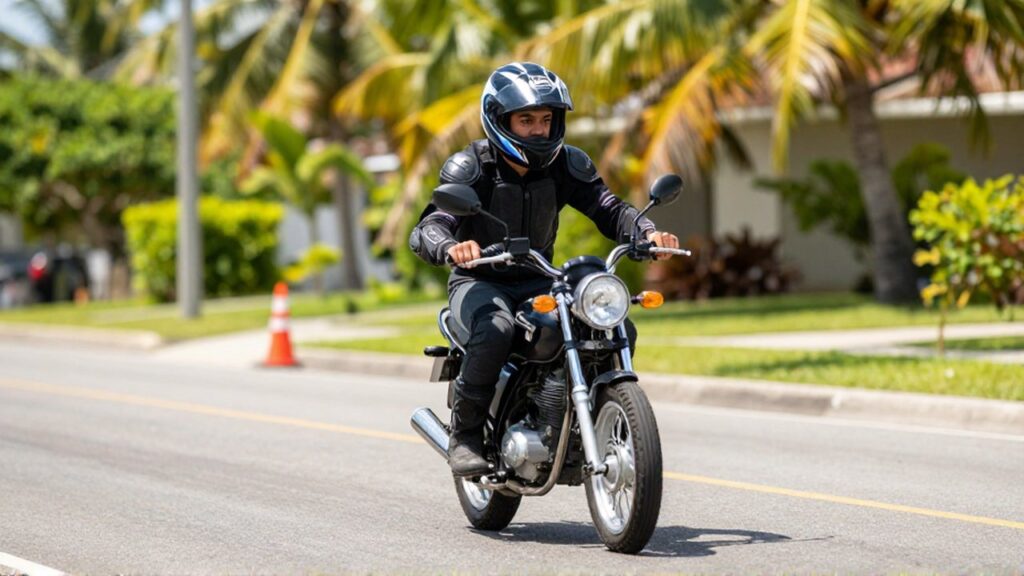
Furthermore, avoiding proper gear is a mistake that impacts more than just safety; it impacts comfort and focus. Wearing appropriate protective clothing helps reduce fatigue and allows you to focus entirely on the mechanics of riding rather than the discomfort of the environment.
Frequently asked questions
How often should I practice to see improvement? Consistency is more important than duration. Short, frequent practice sessions (20–30 minutes) focused on a specific skill are often more effective for muscle memory than one long session per month.
Is it better to take a professional course or learn on my own? Professional instruction is highly recommended. Instructors can identify bad habits you may not realize you are forming and can provide a safe, structured environment for learning high-risk maneuvers.
How do weather conditions affect skill development? Tropical climates can present sudden rain or heat. Practicing in varying conditions (within reason) helps you understand how traction and visibility change, but always prioritize safety over the desire to practice in dangerous weather.
Should I practice on the same motorcycle I intend to use for long trips? Yes. It is important to become intimately familiar with the weight, braking feel, and ergonomics of the specific machine you will be riding regularly.
Leave a Reply