
How to verify fog light visibility in rain

Introduction
Fog lights are specialized automotive lighting components designed to improve visibility during low-visibility conditions, such as heavy rain, fog, or mist. Unlike standard headlights, which are aimed to illuminate the road ahead and the periphery, fog lights are positioned low on the vehicle to project a wide, flat beam underneath the layer of airborne moisture. This placement helps prevent light from reflecting off raindrops or fog particles back into the driver's eyes, which can create a blinding glare.
Verifying the effectiveness of these lights is a critical safety maintenance task, especially for drivers in tropical regions where sudden, intense rainstorms are common. Ensuring that your fog lights are functioning correctly allows you to maintain a better sense of the road's edge and reduce the risk of accidents caused by limited sightlines. Regular testing ensures that the lenses are clear, the bulbs are bright, and the beam pattern is correctly aimed to assist your vision when it is needed most.
Importance of fog light functionality in wet weather

When heavy rain falls, water droplets in the air scatter the light from standard high and low beams. This phenomenon, known as backscatter, can significantly reduce your ability to see the road ahead. Fog lights are engineered to mitigate this by illuminating the area directly in front of the bumper and spreading light horizontally across the lane.
If your fog lights are dim, clouded, or misaligned, you lose this crucial advantage. During a downpour, the lack of low-level illumination makes it harder to spot lane markings, potholes, or debris on the asphalt. Verifying their visibility is not just about checking if the bulb turns on, but ensuring the light reaches the road surface effectively to provide the necessary contrast for safe navigation.
Steps to test fog light performance
Performing a manual inspection can help you identify issues before you encounter a storm. While a true test requires rain, you can simulate the conditions or perform a thorough visual check using the following method:
- Visual lens inspection: Check the outer housing of the fog lights for oxidation, yellowing, or cracks. Even if the bulb works, a clouded lens will diffuse the light in all directions, defeating its purpose.
- Operational check: Turn on your vehicle's lighting system and activate the fog lights. Walk around the vehicle to ensure both the left and right lights are emitting an equal level of brightness.
- Beam pattern observation: Direct the vehicle toward a flat, dark wall at a distance of about three to five meters. The light should appear as a wide, low pattern on the ground rather than a concentrated spot high up on the wall.
- Cleanliness check: Ensure there is no mud, heavy dust, or salt buildup on the lens. In tropical environments, organic residue can quickly coat the lights and obstruct the beam.
Common causes of reduced fog light visibility
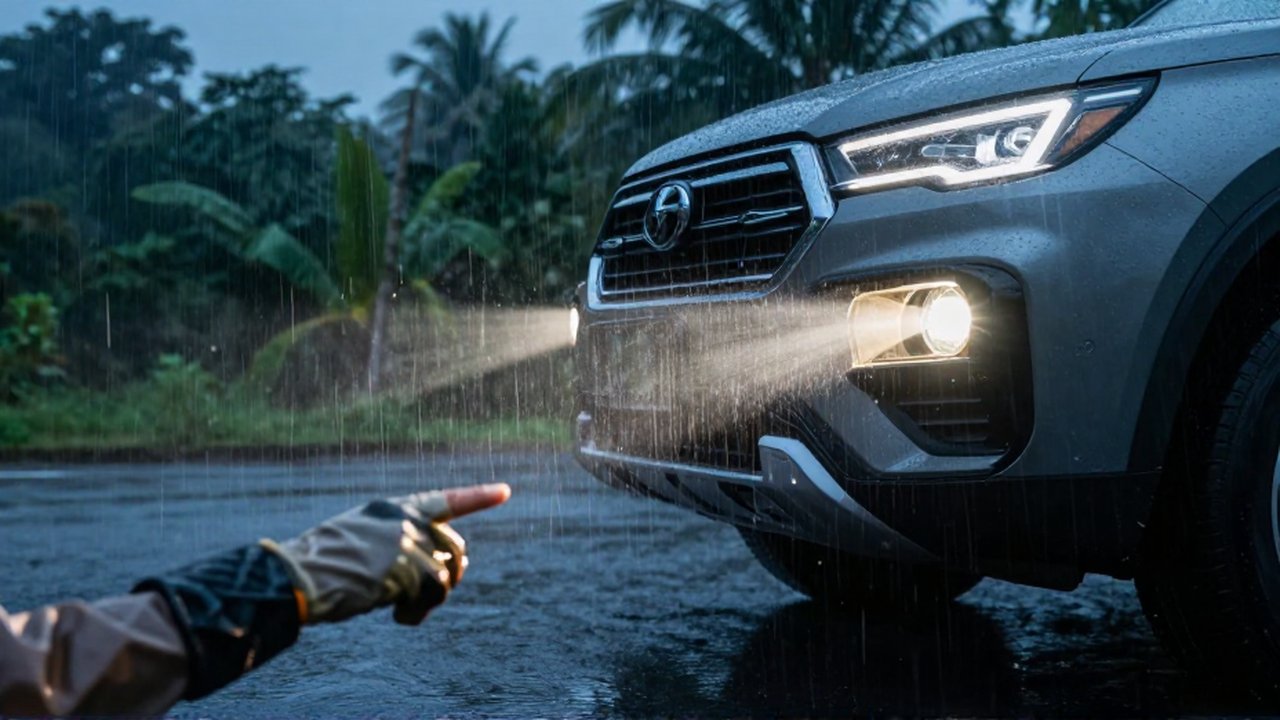
Several factors can compromise the ability of your fog lights to cut through heavy rain. Understanding these causes helps in performing more effective maintenance.
| Cause | Effect on Visibility | Solution |
|---|---|---|
| Lens Oxidation | Creates a hazy, milky appearance that scatters light. | Polishing the lens or replacing the housing. |
| Misalignment | Light is aimed too high or too low, missing the road. | Adjusting the light housing assembly. |
| Dim Bulbs | Insufficient lumens to penetrate heavy water droplets. | Replacing old or low-quality bulbs. |
| Internal Moisture | Condensation inside the lens obscures the beam. | Replacing cracked seals or damaged housings. |
Best practices for maintaining light clarity
To ensure maximum visibility during unexpected rainfall, proactive maintenance is essential. Keep the area around the lower bumper clean, as this is where road spray and debris most frequently accumulate. If you notice that your lights appear yellowed, using a specialized headlight restoration kit can often restore the clarity of the plastic lens.
Furthermore, always check the electrical connections if one side of the pair is significantly dimmer than the other. A loose ground wire or a corroded socket can lead to inconsistent light output, which is dangerous when you rely on a balanced field of view to navigate through a storm.
Frequently asked questions
Can I use fog lights during normal clear weather? It is generally recommended to use them only when visibility is reduced. Constant use in clear weather can distract other drivers and may not be necessary for your vision.
How do I know if my fog lights are aimed too high? If the light pattern hits the wall at eye level or higher rather than being concentrated near the ground, they are likely aimed too high and will cause glare for oncoming traffic.
Is it necessary to replace both fog light bulbs at the same time? Yes, it is highly recommended. Replacing them in pairs ensures that the light intensity and color temperature are perfectly matched on both sides of the vehicle.
Does rain require the use of high beams? No. In heavy rain or fog, high beams should be avoided because they reflect off the water droplets and create a "white wall" effect, making it harder to see. Fog lights and low beams are the correct tools for these conditions.
Leave a Reply