
Importance of regular suspension inspections for local roads

Introduction
The suspension system is a critical component of any vehicle, consisting of springs, shock absorbers, and various linkages designed to manage the impact of road irregularities. Its primary purpose is to maintain tire contact with the ground and ensure passenger comfort by absorbing vibrations. In environments where road conditions vary significantly, regular inspections are essential to prevent mechanical failure and maintain vehicle control.
Maintaining a healthy suspension is particularly vital when navigating local roads that may feature potholes, uneven surfaces, or unpaved sections. Neglecting these checks can lead to a cascading effect of mechanical issues, affecting not just the driving experience but also the overall safety of the vehicle. Frequent monitoring allows for the early detection of worn components before they compromise the structural integrity of the car.
Challenges posed by local road conditions
Driving on diverse road textures places continuous stress on a vehicle's chassis and suspension components. While highways are designed for smooth transit, local streets often present unexpected obstacles such as deep potholes, speed bumps, and sudden transitions between asphalt and gravel. These impacts force the suspension to work much harder to dissipate energy.
Constant exposure to these stressors accelerates the wear of rubber bushings, ball joints, and shock absorbers. In many cases, a single significant impact from a pothole can cause internal damage to a strut or bend a control arm. Because these damages are often cumulative, a vehicle that frequently traverses difficult terrain requires a more proactive inspection schedule than one driven exclusively on well-maintained motorways.
Signs of suspension wear and failure
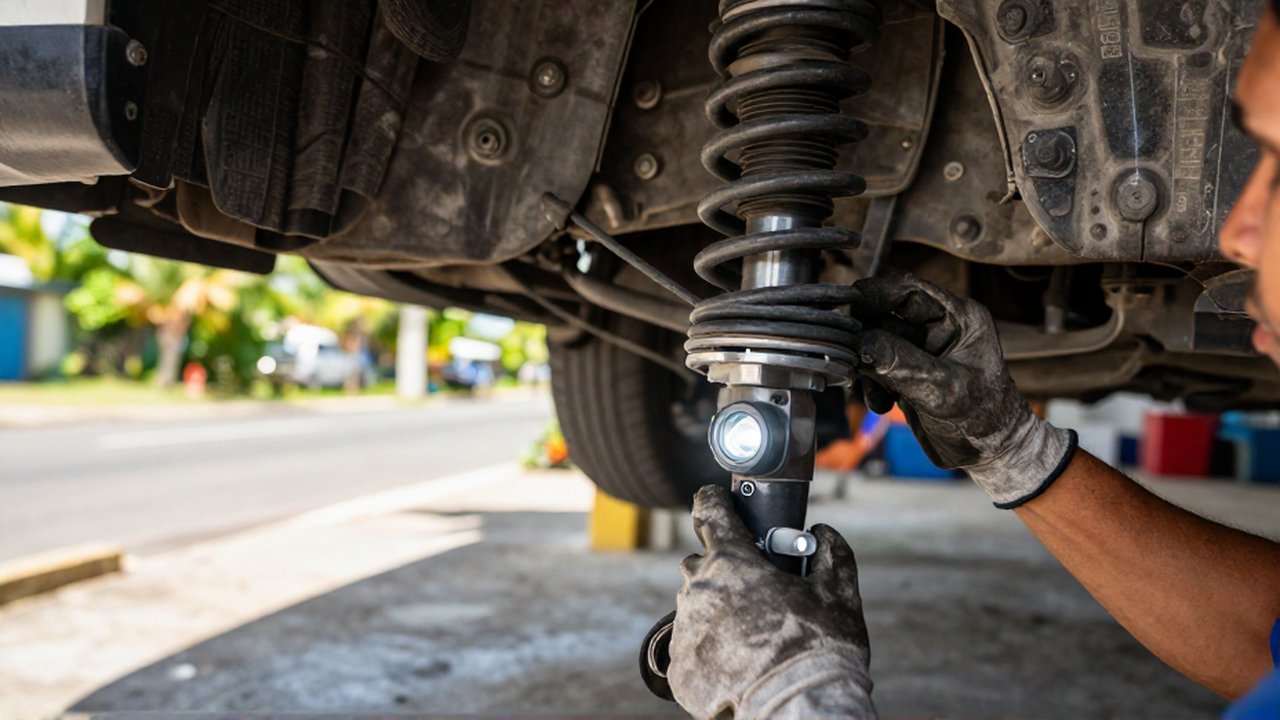
Recognizing the early symptoms of suspension degradation can save significant repair costs and prevent dangerous driving situations. Drivers should remain vigilant for specific physical cues and auditory signals that indicate the system is no longer functioning optimally.
Common indicators include:
- Unusual noises: Clunking, squeaking, or banging sounds when driving over bumps often point to worn bushings or damaged struts.
- Changes in handling: If the car feels "floaty" or takes longer to stabilize after a bump, the shock absorbers may be failing.
- Vehicle instability: Excessive leaning during turns or difficulty maintaining a straight line can signal issues with the control arms or steering linkages.
- Uneven tire wear: If the tread on your tires is wearing more heavily on one side than the other, it is a strong sign of misalignment caused by suspension issues.
- Nose diving: Excessive forward tilting when braking suggests that the front shocks are no longer providing adequate resistance.
Benefits of proactive suspension inspections
Investing time in regular inspections provides more than just peace of mind; it offers tangible mechanical and financial advantages. By identifying a worn part early, a driver can avoid the "domino effect" where one failing component puts undue stress on others.
A well-maintained suspension contributes to better fuel efficiency by ensuring the tires maintain optimal contact with the road, reducing rolling resistance. Furthermore, it preserves the lifespan of other expensive components, such as tires and steering racks. Most importantly, a functional suspension ensures that the vehicle responds predictably during emergency maneuvers, which is a fundamental aspect of road safety.
Essential inspection steps for vehicle owners
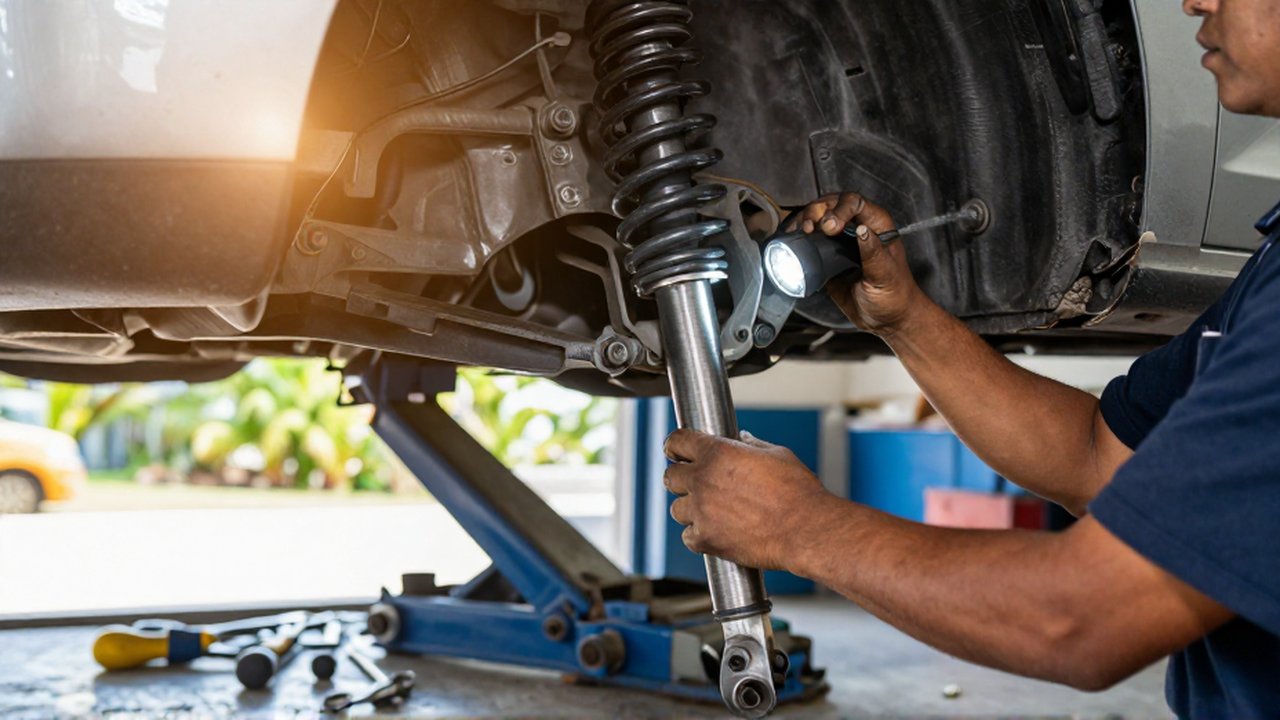
While a professional mechanic should perform a comprehensive technical evaluation, vehicle owners can perform basic visual and functional checks to monitor the health of their system.
| Component | What to look for | Potential Issue |
|---|---|---|
| Shock Absorbers | Fluid leaks or visible oil on the casing | Failed seals/leaking fluid |
| Bushings | Cracks, tearing, or excessive movement in rubber | Worn or perished rubber |
| Springs | Visible cracks or signs of sagging | Metal fatigue or breakage |
| Tires | Uneven tread patterns | Alignment or suspension geometry issues |
To perform a simple "bounce test," push down firmly on one corner of the vehicle and release it. The car should return to its original position and stop immediately. If the vehicle continues to oscillate or bounce several times, the shock absorbers are likely worn out and require replacement.
Common mistakes in suspension maintenance
One frequent error is waiting for a total component failure before seeking professional help. Many drivers mistake minor vibrations or slight noises as "normal for an old car," when in reality, these are warnings of imminent failure. Another mistake is ignoring tire wear patterns; many assume that as long as there is tread left, the tires are fine, forgetting that uneven wear is a symptom of a deeper suspension problem.
Finally, attempting to fix suspension issues with temporary "quick fixes" rather than replacing worn parts can lead to unpredictable vehicle behavior. Suspension components are safety-critical, and maintaining them with high-quality, compatible parts is the only way to ensure reliability on local roads.
Frequently asked questions
How often should I have my suspension inspected? For vehicles frequently driven on uneven or local roads, an inspection every six months or during every oil change is recommended to catch wear early.
Can a single pothole damage my suspension? Yes, a significant impact can damage shock absorbers, bend control arms, or cause immediate tire damage.
Is it possible to drive with a broken suspension component? While the vehicle may remain mobile, driving with damaged suspension is highly dangerous as it compromises braking, steering, and stability.
How do I know if my suspension is affecting my braking? If the front of the car dips excessively when you apply the brakes, or if the car pulls to one side during deceleration, your suspension likely needs attention.
Leave a Reply