
Common causes of electrical failures in tropical climates

Introduction
Driving a vehicle in a tropical environment presents unique challenges that extend far beyond simple engine performance. High humidity, intense UV radiation, and frequent heavy rainfall create a punishing atmosphere for a car's electrical system. Understanding these environmental stressors is essential for any owner looking to prevent sudden breakdowns, avoid costly repairs, and ensure the longevity of their vehicle's electronic components.
Electrical failures in these climates often manifest as intermittent issues, such as flickering lights, sensor malfunctions, or a complete failure to start. Because tropical regions combine high temperatures with moisture, the degradation of insulation and the buildup of corrosion happen much faster than in temperate zones. Recognizing the primary causes of these failures allows drivers to implement proactive maintenance strategies.
Impact of high humidity and moisture

Humidity is perhaps the most persistent enemy of vehicle electronics in tropical regions. When moisture levels in the air remain high, water vapor can penetrate various parts of the electrical system, leading to several destructive processes.
One of the most common issues is the accumulation of moisture within connectors and junction boxes. Even if a component is not directly exposed to rain, the ambient humidity can lead to condensation inside electrical housings. This moisture creates a bridge between electrical terminals, leading to short circuits or "parasitic draws," where the battery drains even when the engine is off.
Furthermore, moisture promotes oxidation. When water meets metal terminals, a chemical reaction occurs that creates a layer of non-conductive material. This buildup increases electrical resistance, which means current cannot flow smoothly. As a result, components may perform poorly or fail to function entirely, requiring the cleaning or replacement of various sensors and wiring harnesses.
Effects of extreme heat and UV radiation
Tropical climates are characterized by high ambient temperatures and intense sunlight. While many drivers focus on how heat affects the engine, the effect on the electrical system is equally significant.
Heat accelerates the aging of plastic and rubber components. Most wiring in a vehicle is protected by an insulating sheath made of polymer or rubber. Constant exposure to high temperatures under the hood causes these materials to become brittle, crack, and eventually flake away. Once the insulation is compromised, bare wires may touch each other or the vehicle's chassis, causing catastrophic short circuits.
UV radiation also plays a role, particularly for wiring and electrical components located in the engine bay or near the dashboard. Sunlight degrades the protective coatings on wires exposed to the exterior, leading to a breakdown of the physical integrity of the wiring loom. This degradation can cause erratic signals in modern vehicles that rely heavily on complex electronic control units (ECUs) and sensitive sensors.
Corrosion and salt air exposure
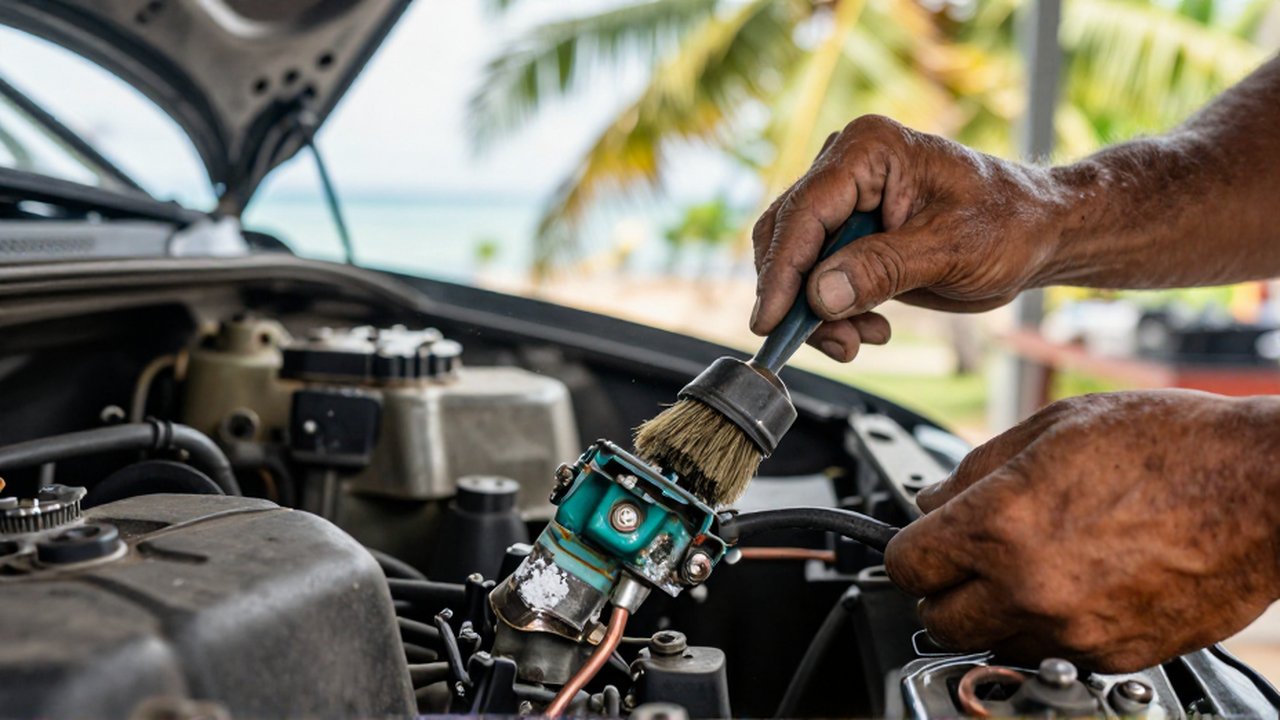
For vehicles operating in coastal tropical areas, the presence of salt in the air introduces an additional layer of complexity. Salt acts as a powerful catalyst for electrochemical corrosion.
Salt particles can settle on electrical terminals, connectors, and ground points. When combined with humidity, this forms an electrolyte that speeds up the oxidation of metal parts. Corrosion in ground connections is particularly problematic; if the connection between the electrical system and the vehicle's frame is compromised by salt-induced rust or oxidation, the entire electrical circuit can become unstable.
This type of corrosion often results in "ghost" problems, where lights behave unexpectedly, or the vehicle's computer throws error codes that are difficult to diagnose. Unlike a simple broken wire, corrosion often spreads through a connection, making it necessary to clean or replace multiple components to achieve a reliable fix.
Preventive maintenance for tropical electrical systems
Preventing electrical failure requires a combination of regular inspection and the use of protective materials. While it is impossible to stop the climate from affecting the car, certain steps can significantly mitigate the risks.
| Action | Purpose | Frequency |
|---|---|---|
| Inspecting wire insulation | To check for cracks, brittleness, or exposure | Every 6 months |
| Cleaning battery terminals | To prevent acid buildup and oxidation | Every 4 months |
| Applying dielectric grease | To seal connectors from moisture and salt | During major repairs/inspections |
| Checking ground points | To ensure stable electrical flow to the chassis | Annually |
Using dielectric grease in electrical connectors is a highly effective way to create a waterproof barrier. This grease does not conduct electricity itself, but it displaces moisture and prevents oxygen from reaching the metal contacts, thereby stopping corrosion before it starts. Additionally, keeping the engine bay relatively clean can prevent the accumulation of salt and dirt that holds moisture against sensitive components.
Frequently asked questions
Why does my car battery die faster in hot climates? High temperatures accelerate the chemical reactions inside the battery and increase the rate of internal evaporation. Furthermore, heat can cause the battery to work harder to power cooling systems, leading to faster discharge.
How can I tell if my electrical problem is caused by corrosion? If you notice intermittent issues like flickering lights, slow sensor response, or components that work only when they are moved, it is often a sign of corrosion at a connection point.
Does washing my car help protect the electrical system? A regular wash helps remove salt and dirt, which can prevent corrosion. However, you must avoid using high-pressure water directly on electrical connectors, sensors, or the engine's wiring, as this can force moisture into sealed units.
Is it better to replace or clean old wiring? If the insulation is cracked or brittle, replacement is necessary to prevent short circuits. If the issue is simply oxidation on a terminal, cleaning the contact point with specialized tools can often restore functionality.
Leave a Reply