
Best ways to prevent rust in coastal Dominican areas
Introduction
Living in a coastal region of the Dominican Republic offers incredible beauty, but the salt-heavy air poses a significant threat to vehicle longevity. The constant presence of salt spray and high humidity creates a highly corrosive environment that can accelerate the oxidation of metal components. For car owners, understanding how to mitigate this damage is essential to maintaining the structural integrity and resale value of their vehicles.
Preventing rust is not a one-time task but a continuous maintenance strategy. By implementing specific cleaning habits and protective measures, you can shield your car’s chassis, bodywork, and undercarriage from the destructive effects of the tropical marine atmosphere. This article provides practical guidance on how to defend your vehicle against the unique environmental challenges found near the Caribbean coast.
Understanding the impact of salt air on vehicles

The primary enemy of metal in coastal areas is salt, which acts as an electrolyte that speeds up the chemical reaction of oxidation. In the Dominican Republic, the combination of intense tropical heat and saline moisture creates a "perfect storm" for corrosion. Even if your vehicle is parked in a garage, micro-particles of salt can travel through the air and settle on your car.
Corrosion typically starts in hard-to-reach places, such as the undercarriage, wheel wells, and door seams. Once rust begins to penetrate the paint or the metal itself, it can spread rapidly under the surface, often remaining invisible until the damage is significant. This makes proactive prevention much more cost-effective than attempting to repair structural rot later.
Essential washing and cleaning routines
Regular cleaning is the most effective first line of defense against coastal corrosion. A standard car wash might remove surface dust, but it may not be sufficient to neutralize salt buildup.
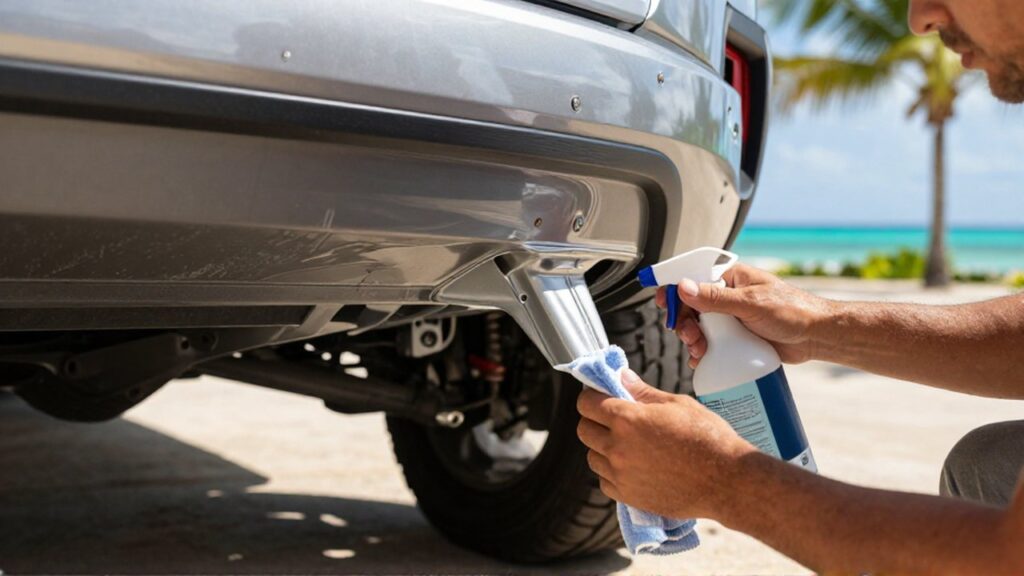
- Frequent rinsing: Use fresh water to rinse your vehicle at least once a week. Focus specifically on the lower sections of the car, including the bumpers and wheel arches, where salt accumulates most heavily.
- Undercarriage cleaning: Most salt damage occurs underneath the vehicle. Whenever possible, use a high-pressure rinse to clear salt and debris from the chassis and suspension components.
- Quality soaps: Use pH-neutral automotive soaps. Harsh detergents can strip away protective waxes, leaving the metal more vulnerable to the elements.
- Drying the vehicle: After washing, dry the vehicle thoroughly with a microfiber towel. Leaving water to air-dry in high humidity can sometimes lead to spotting or the trapping of salt particles in crevices.
Protective coatings and maintenance products

Beyond simple cleaning, applying specialized layers of protection can create a physical barrier between the metal and the salty air.
Waxing and Sealing Applying a high-quality carnauba wax or a synthetic sealant every few months provides a sacrificial layer. If salt settles on the car, it sits on the wax rather than the clear coat. For even better protection, ceramic coatings can be considered; these provide a much harder, more durable shield that is highly resistant to chemical and environmental stressors.
Undercoating and Corrosion Inhibitors Since the undercarriage is most exposed to the coast, applying a specialized undercoating is a wise investment. There are various types of protective sprays available: 1. Oil-based sprays: These penetrate into small cracks and crevices to displace moisture. 2. Wax-based coatings: These provide a thicker, more durable barrier against physical debris and salt. 3. Rubberized coatings: These are excellent for sound dampening as well, though they should be applied carefully to ensure they do not trap moisture underneath.
Common mistakes to avoid
Avoiding certain habits can significantly extend the life of your vehicle's exterior. One frequent mistake is neglecting the vehicle during the rainy season. While rain may seem like it is washing the car, it often just redistributes salt and mud into deeper, more hidden areas.
Another error is ignoring small chips in the paint. A tiny stone chip on the hood or a scratch on the door provides an immediate entry point for salt air to attack the underlying metal. Addressing these cosmetic issues immediately with touch-up paint or professional repair can prevent them from turning into large rust patches. Finally, do not rely solely on indoor parking; while a garage helps, it does not eliminate the saline atmosphere of a coastal environment.
Frequently asked questions
How often should I wash my car if I live near the ocean? In highly coastal areas, a thorough rinse with fresh water at least once a week is recommended to prevent salt buildup.
Does washing the car during a rainstorm help? No, rain is often acidic or carries salt spray. It is much more effective to use clean, fresh water to ensure all salt particles are actually removed.
Can I prevent rust entirely? While it is nearly impossible to stop all oxidation in a tropical marine environment, rigorous cleaning and the application of protective coatings can significantly delay and minimize the risk.
Is ceramic coating better than wax for coastal areas? Ceramic coatings generally offer much longer-lasting protection and better resistance to environmental chemical attacks than traditional wax, making them a highly effective option for coastal living.
Leave a Reply