
Guide to cleaning fuel injectors for efficiency
Introduction
Fuel injectors are critical components in a modern internal combustion engine, responsible for delivering a precise mist of pressurized fuel into the combustion chamber. Over time, carbon deposits, varnish, and microscopic debris can accumulate on the injector nozzles, disrupting the spray pattern and affecting the air-fuel ratio. Maintaining clean injectors is essential for ensuring optimal engine performance, improving fuel economy, and preventing long-term damage to delicate engine components.
When injectors become clogged, the engine struggles to maintain a consistent combustion cycle. This often leads to noticeable symptoms such as rough idling, hesitation during acceleration, or a significant drop in fuel mileage. Addressing these issues through regular cleaning can restore the vehicle's responsiveness and ensure that the engine operates at its peak design efficiency.
Identifying the right time to clean your injectors depends on observing how your vehicle behaves under different driving conditions. While preventative maintenance is ideal, reactive cleaning is often necessary when the engine shows signs of distress. Understanding the different methods available will help you decide between a simple DIY approach or seeking professional mechanical intervention.
Symptoms of clogged fuel injectors
Recognizing the signs of injector inefficiency can prevent minor issues from escalating into expensive mechanical failures. One of the most common indicators is a noticeable decrease in fuel economy. If you find yourself visiting the gas station more frequently than usual despite no changes in your driving habits, the injectors may not be atomizing fuel correctly, causing wasted energy.
Another significant symptom is engine hesitation or "stuttering." This typically occurs when you press the accelerator, as the engine demands a specific amount of fuel that the clogged injectors cannot provide promptly. You might also experience a rough idle, where the vehicle vibrates excessively or feels unstable while stopped at a light. In severe cases, the engine might misfire, which can lead to damage in the ignition system or the catalytic converter.
Methods for cleaning fuel injectors

There are two primary ways to approach injector cleaning: using chemical additives or performing a professional pressurized cleaning. Each method serves a different level of contamination and requires different levels of expertise.
The first method involves fuel system cleaners, which are specialized chemical additives poured directly into the gas tank. These products are designed to circulate through the entire fuel system, dissolving light deposits on the injector tips and within the fuel rails. This is a preventative approach, best suited for vehicles that are running relatively well but require routine maintenance to prevent buildup.
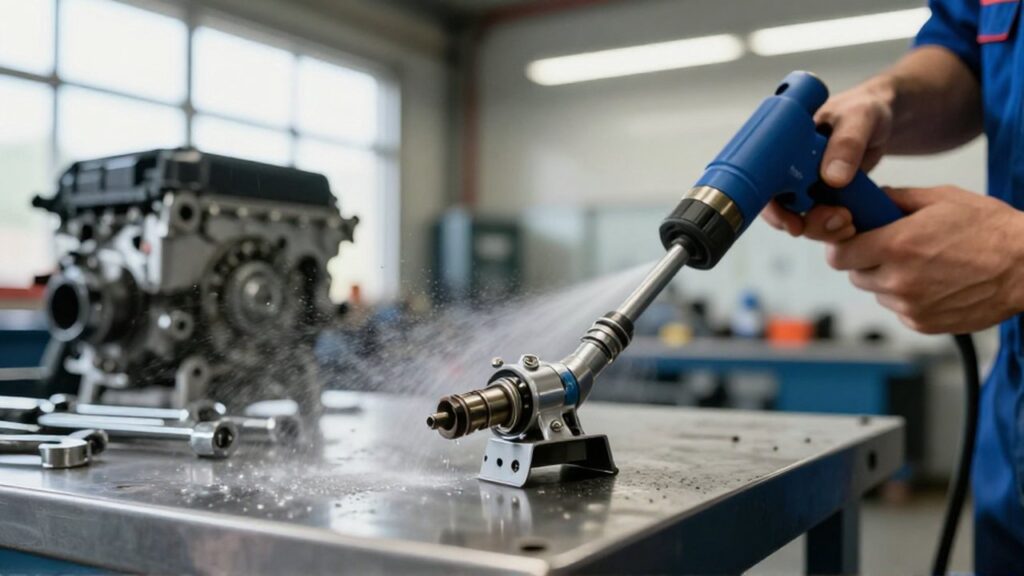
The second method is professional pressurized cleaning, often performed at a mechanic's shop. This process involves removing the fuel rail or connecting specialized equipment directly to the injectors. A pressurized cleaning solution is then forced through the injectors while they are being electronically pulsed. This method is much more effective for tackling heavy carbon buildup and can be used to test whether an injector is functionally dead or merely dirty.
Comparison between additive and professional cleaning
| Feature | Fuel Additives | Professional Pressurized Cleaning |
|---|---|---|
| Effectiveness | Low to Moderate (Preventative) | High (Restorative) |
| Complexity | Very Simple (DIY) | High (Requires tools and expertise) |
| Cost | Low | Moderate to High |
| Best For | Routine maintenance | Heavy buildup or engine misfires |
Benefits of maintaining clean injectors

Maintaining a clean fuel system offers several immediate and long-term advantages. The most prominent benefit is the restoration of engine power and smoothness. When fuel is atomized into a fine mist rather than large droplets, it burns more completely, leading to a more consistent combustion stroke and a smoother driving experience.
Furthermore, clean injectors help protect your vehicle's emissions system. When injectors are clogged, they can cause "rich" or "lean" running conditions, both of which force the catalytic converter to work harder to process unburnt fuel or excess oxygen. By ensuring efficient combustion, you reduce the amount of pollutants released and extend the lifespan of expensive exhaust components.
Common mistakes during injector maintenance
One of the most frequent errors is waiting too long to address symptoms. Many drivers attempt to solve engine hesitation by replacing spark plugs or air filters, only to find the problem persists because the root cause—the fuel delivery—was never addressed.
Another mistake is the over-reliance on cheap, low-quality additives. While additives are useful, using ineffective products can provide a false sense of security while the underlying problem worsens. Additionally, attempting to perform a manual pressurized cleaning without the proper diagnostic tools can lead to fuel leaks or damage to the electrical connectors of the injectors, potentially turning a maintenance task into a costly repair.
Frequently Asked Questions
How often should I use a fuel system cleaner? For preventative maintenance, many experts suggest using a high-quality cleaner during every oil change or every few thousand kilometers to prevent significant carbon buildup.
Can cleaning injectors fix a complete engine misfire? If the misfire is caused by a partial blockage, cleaning may help. However, if the injector has an internal electrical failure or a mechanical blockage that is too severe, cleaning will likely not resolve the issue.
Will cleaning injectors improve my car's acceleration? Yes, if the hesitation is caused by improper fuel atomization, cleaning the injectors can restore the correct air-fuel mixture, allowing the engine to respond more quickly to throttle inputs.
Is it safe to clean injectors myself? Using fuel tank additives is perfectly safe for any driver. However, attempting to bypass the fuel rail for a pressurized cleaning should be left to professionals to avoid fuel spills or component damage.
Leave a Reply