
Guide to safe motorcycle lane splitting in busy cities

Introduction
Lane splitting is the practice of riding a motorcycle between rows of slow-moving or stopped vehicles in a single lane. In busy urban environments, this maneuver serves as a vital tool for motorcyclists to maintain momentum, reduce travel time, and decrease the frustration of sitting in heavy congestion. When executed correctly, it allows riders to navigate through traffic more efficiently than cars, turning a standstill into a steady flow.
However, because this technique involves navigating much tighter spaces than traditional riding, it carries inherent risks. It requires a high level of situational awareness, precise throttle control, and a deep understanding of vehicle dynamics. Understanding when to engage in lane splitting and how to do so safely is essential for any rider looking to navigate metropolitan areas without compromising their security.
Mastering this skill is not just about speed; it is about predictability and visibility. A rider who splits lanes haphazardly becomes a hazard to both themselves and car drivers. This guide provides the necessary framework to help you transition from cautious observation to confident, safe movement within urban traffic streams.
Essential principles for urban lane splitting
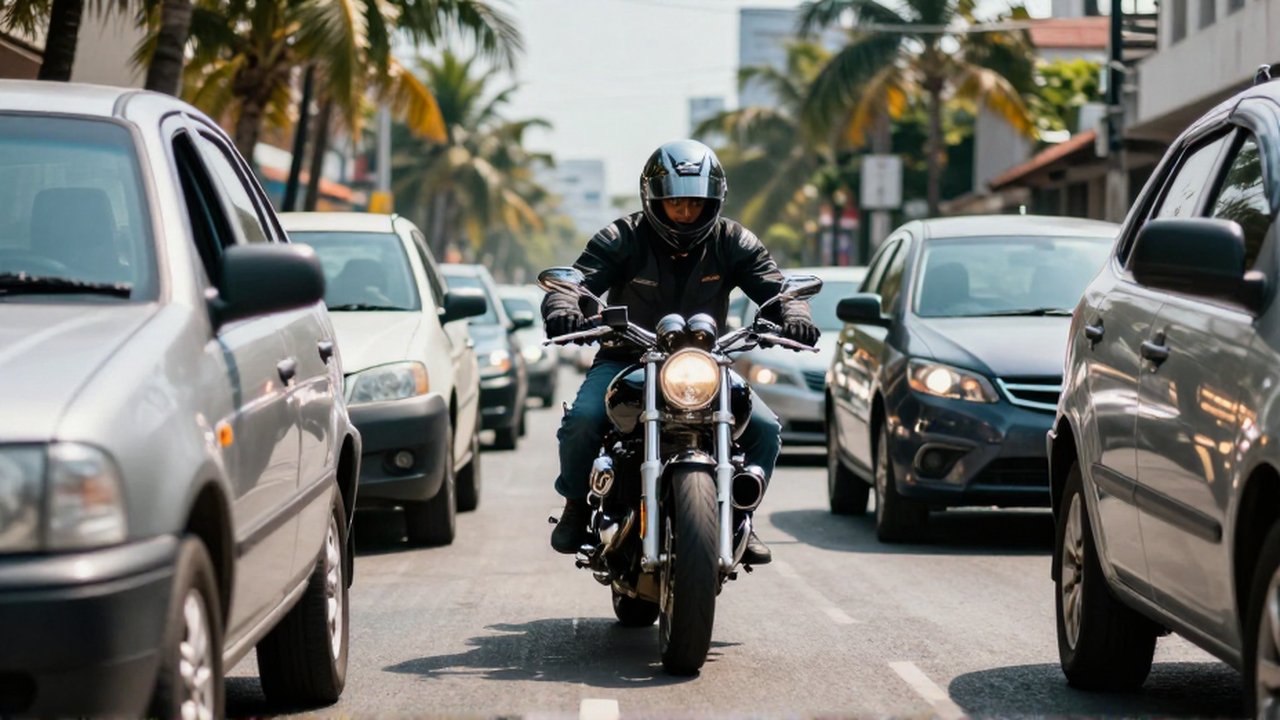
The foundation of safe lane splitting lies in the concept of predictability. Drivers in cars are often focused on the vehicle directly in front of them and may not be scanning the gaps between lanes. To mitigate this, a motorcyclist must move in a way that is easy for car drivers to perceive and anticipate.
Always maintain a consistent speed. Sudden bursts of acceleration or erratic zig-zagging can startle drivers, potentially causing them to swerve into your path. Instead of darting through gaps, aim for a smooth, linear trajectory. If you find yourself needing to make sudden maneuvers to avoid obstacles, it is a sign that you should slow down or exit the splitting maneuver entirely.
Visibility is your primary defense. Since your profile is much narrower than a car, you must maximize your presence. Keep your lane position stable and avoid staying in a driver's blind spot for extended periods. If you are approaching a junction or an area where cars might turn, increase your following distance and prepare to adjust your path immediately.
Critical safety steps and techniques
To execute lane splitting effectively, riders should follow a disciplined approach that prioritizes control over speed. Transitioning from a standard lane position into a split requires a systematic mindset.
- Assess the gap width: Never attempt to split if the space between vehicles is too narrow to allow for error. A safe gap should be wide enough to accommodate your motorcycle plus a margin for slight deviations in driver behavior.
- Manage your speed: The general rule is to maintain a speed that is slightly faster than the surrounding traffic but significantly slower than the speed limit for that stretch of road. Speed should be proportional to the tightness of the gap.
- Use your eyes and mirrors: Constant scanning is required. Look ahead to anticipate how the line of traffic is moving, and check your mirrors frequently to monitor the vehicles to your sides.
- Control your throttle and clutch: Smoothness is paramount. Avoid jerky movements that could cause your rear tire to slip or cause you to lose balance in tight quarters.
| Element | Safe Practice | Risky Practice |
|---|---|---|
| Speed | Consistent and moderate | Rapid acceleration or sudden braking |
| Trajectory | Straight and predictable lines | Constant weaving or zig-zagging |
| Gap Selection | Wide enough for maneuvering | Extremely tight or "squeezing" through |
| Awareness | Continuous scanning of surroundings | Focusing only on the vehicle ahead |
Common mistakes and environmental risks
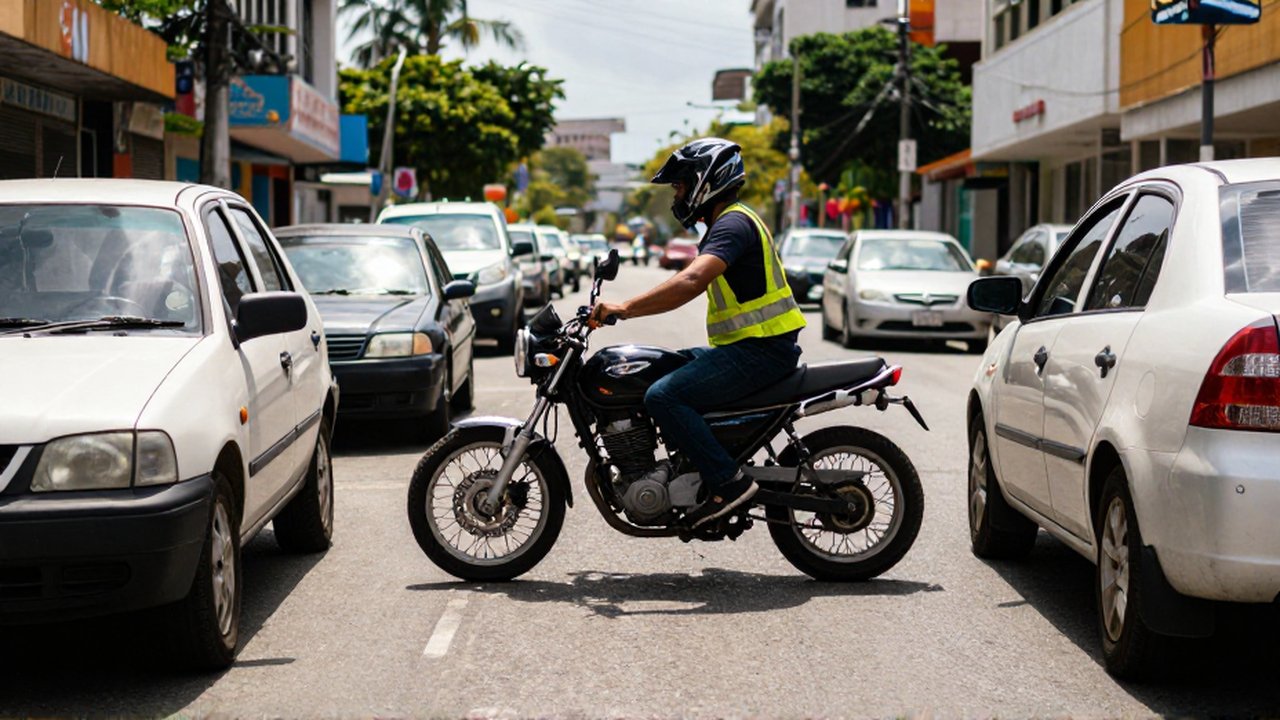
Even experienced riders can fall into dangerous habits. One of the most frequent mistakes is "filtering" versus "splitting" confusion. While filtering often refers to moving through slow traffic, many riders mistake high-speed lane splitting for a way to bypass traffic lights quickly. This often leads to entering intersections at speeds that make it impossible to react to turning vehicles.
Another significant risk involves the "side-swipe" scenario. Drivers often check their mirrors for other cars, but they rarely check for motorcycles in the space between lanes. This is especially dangerous at intersections or when a driver is preparing to change lanes. Always assume that a driver might move into your lane without looking.
Environmental factors also play a massive role in safety. In tropical or urban climates, road surfaces can change rapidly. Oil spills from idling cars, sand, or wet patches from sudden rain can make the narrow lane between vehicles incredibly slippery. When lane splitting, you have less room to correct a slide, making surface integrity a primary decision criterion.
Situations to avoid splitting
There are specific scenarios where the risks of lane splitting far outweigh the benefits of saving time. Recognizing these moments is a hallmark of a professional rider.
High-traffic intersections are one of the most dangerous areas. Cars frequently make sudden turns, and pedestrians may step into the street from between vehicles. It is generally safer to wait in a standard lane at an intersection to maintain a clear view of the traffic signals and the movement of other vehicles.
Avoid splitting when weather conditions are poor. Rain, heavy wind, or low visibility significantly reduce your ability to judge distances and control your motorcycle. Furthermore, the presence of large vehicles like buses or trucks increases the risk of unpredictable movement and creates significant wind turbulence that can push a motorcycle out of its intended path.
Frequently asked questions
Is lane splitting legal in all cities? Legality varies significantly by country, state, and local municipality. You must always check the specific traffic laws of your region, as some jurisdictions permit it while others strictly prohibit it.
What is the difference between lane splitting and lane filtering? While definitions can vary, "filtering" usually refers to moving through stopped or near-stopped traffic, whereas "splitting" often implies moving through moving traffic. Both require high levels of caution.
How can I stay visible to car drivers while splitting? Wear high-visibility gear, keep your helmet visor clean for maximum visibility, and avoid staying in the blind spots of larger vehicles like trucks or buses.
When should I stop lane splitting immediately? If the traffic starts moving at a high speed, if the gaps become too narrow, if the road surface appears slippery, or if you feel you are losing control of your momentum, you should immediately exit the split and return to a standard lane.
Leave a Reply