
How to check chassis alignment after an accident
Introduction
A vehicle's chassis serves as the structural backbone that maintains the integrity, safety, and performance of the entire car. When an accident occurs, even if the exterior bodywork appears relatively intact, the impact forces can travel through the frame, causing subtle or significant structural misalignments. Checking the chassis alignment is critical to ensure that the vehicle can still steer predictably, maintain stability at high speeds, and protect passengers during future collisions.
Identifying a compromised chassis is essential for both safety and long-term vehicle value. An unaligned frame can lead to uneven tire wear, poor handling, and mechanical strain on suspension components. This guide provides practical methods to identify signs of misalignment and explains the steps necessary to evaluate the structural health of your vehicle following a collision.
Signs of structural misalignment
Detecting a bent or misaligned chassis often begins with observing how the vehicle behaves during routine operation. While some issues are immediately obvious, others manifest as gradual changes in driving dynamics. One of the most common indicators is the "pulling" sensation, where the car consistently drifts toward one side of the road even when the steering wheel is centered.
Another significant sign is uneven tire wear. If you notice that one side of a tire is wearing down faster than the other, or if you see "feathering" on the tread, it suggests that the geometry of the suspension is no longer aligned with the road surface. Furthermore, unusual vibrations in the steering wheel or the seat, especially at specific speeds, can indicate that the frame is no longer providing a stable platform for the mechanical components.
Visual inspections can also reveal alignment issues. Look for uneven gaps between body panels, such as the space between the doors and the frame, or the hood and the fenders. If these gaps appear asymmetrical or wider on one side than the other, it is a strong indication that the underlying structure has shifted due to impact.
Visual inspection techniques for the frame
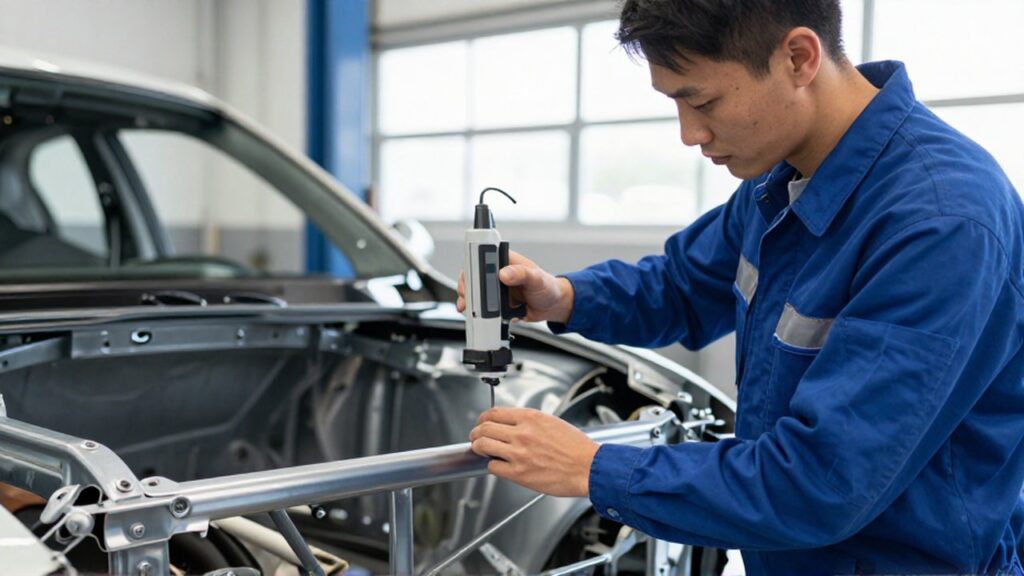
A manual inspection is the first step in determining if a vehicle requires professional structural repair. Start by examining the visible parts of the chassis or frame rails, if your vehicle is a body-on-frame design. Look for any signs of buckling, twisting, or cracks in the metal. Even small ripples in the metal can indicate that the structural integrity has been compromised.
For unibody vehicles, where the frame and body are integrated, focus on the symmetry of the vehicle components. You can perform a basic check by looking at the vehicle from the front and rear. Ensure that the wheels appear to be in the same plane and that the body sits level on the ground. If the car seems to lean to one side or sits lower on one corner, the chassis may have suffered a structural bend.
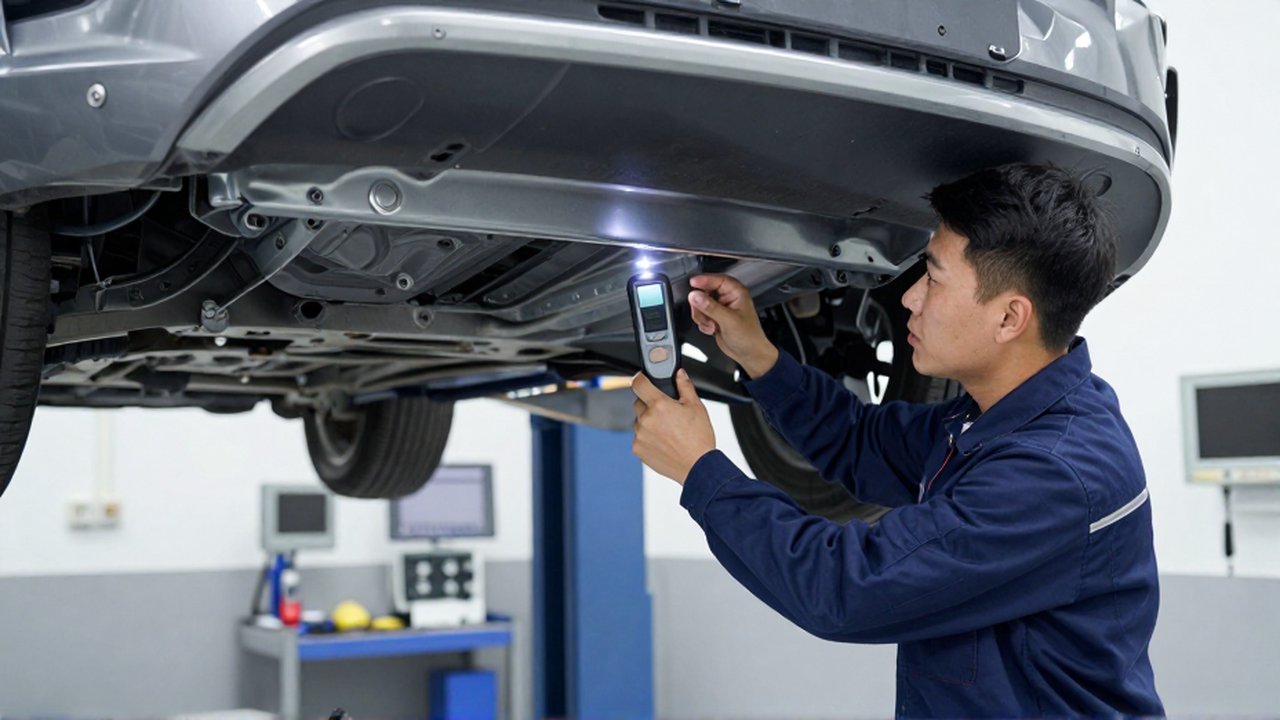
Check the mounting points for the suspension and engine. If these points look stressed, moved, or if the bolts appear to have been previously disturbed, the impact force was likely significant enough to alter the chassis geometry.
Comparative measurements and tools
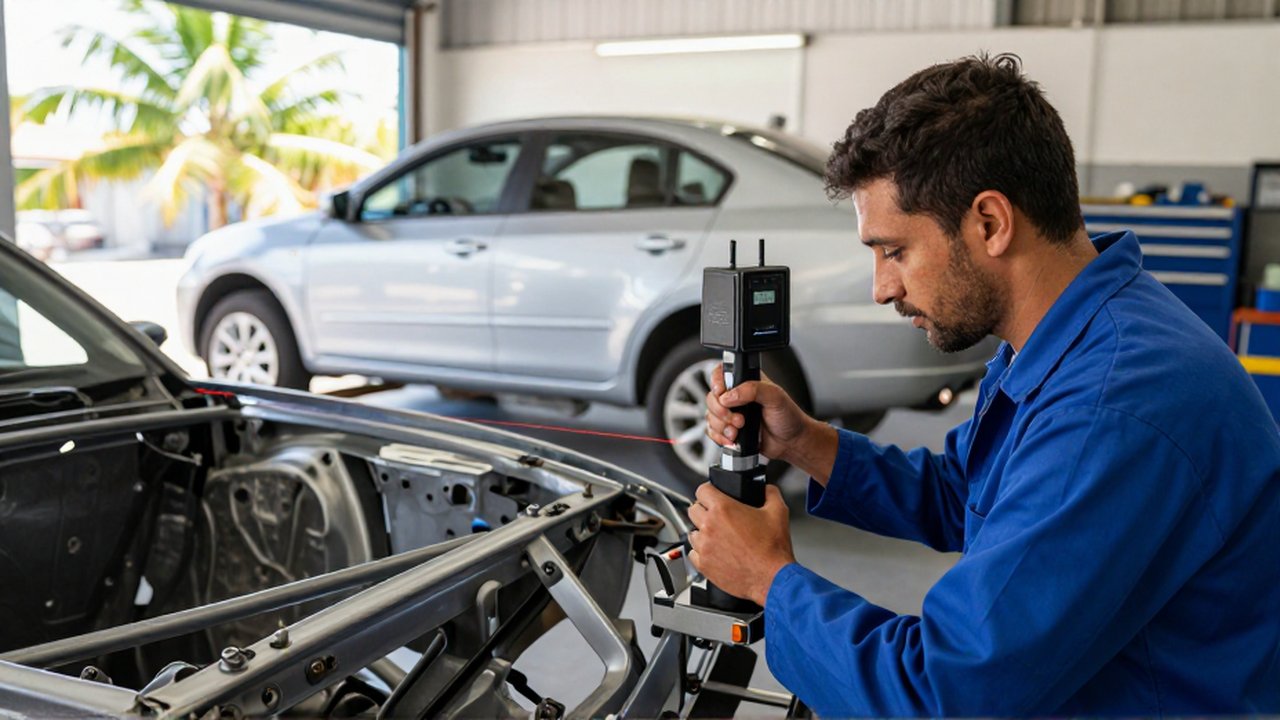
While visual checks are helpful, they cannot detect subtle twists or "diamond" frames where the vehicle is no longer rectangular. To get a precise answer, professional shops use specialized equipment, but there are certain metrics you can observe.
| Symptom | Potential Chassis Issue | Severity |
|---|---|---|
| Constant pulling to one side | Bent suspension mounting or frame rail | Moderate to High |
| Rapid, uneven tire wear | Misaligned geometry/camber/toe issues | Moderate |
| Wind noise at high speeds | Misaligned door seals due to frame twist | Moderate |
| Steering wheel off-center | Compromised steering rack or frame alignment | High |
Professional technicians use laser measuring systems that compare the vehicle's current dimensions against the manufacturer's original specifications. These systems can detect deviations as small as a few millimeters. If you suspect an issue, it is impossible to accurately confirm a chassis misalignment without these high-precision tools.
Risks of ignoring chassis damage
Driving a vehicle with a misaligned chassis introduces several layers of risk. The most immediate concern is safety. A compromised frame affects the vehicle's ability to absorb energy during a subsequent accident. If the structure is already weakened or bent, it may not perform as designed in a crash, increasing the risk of injury to occupants.
Mechanical longevity is another major concern. When the chassis is out of alignment, the suspension, steering, and drivetrain components are forced to operate under constant, uneven stress. This leads to premature failure of shock absorbers, bushings, and steering linkages, resulting in much higher repair costs in the long run.
Lastly, there is the issue of vehicle value. A vehicle with a documented history of structural damage or a chassis that has been improperly repaired will have significantly lower resale value. Even if the car "drives fine," the underlying structural instability is a permanent flaw in the vehicle's history.
Frequently asked questions
Can a car be safe to drive if the chassis is slightly bent? While the car may be functional, it is not considered truly safe. A bent chassis changes how the vehicle handles emergencies and how it reacts to other collisions, meaning it may not provide the intended level of protection.
How can I tell if my car needs a frame alignment versus a simple wheel alignment? A wheel alignment corrects the angle of the wheels relative to each other and the road, while a chassis alignment corrects the actual structure of the vehicle. If a standard wheel alignment cannot hold its position or if you see body panel misalignment, the issue is likely the chassis.
Is a chassis repair always permanent? If performed by specialists using proper pulling equipment and following manufacturer guidelines, structural repairs can restore the vehicle to a safe state. However, a repaired chassis will always have a history of previous damage that affects its market value.
Will a bent chassis cause my tires to pop? Not directly, but the extreme unevenness in tire wear caused by misalignment can lead to structural weaknesses in the tire itself, increasing the risk of a blowout over time.
Leave a Reply