
How to top up windshield wiper fluid correctly
Introduction
Maintaining a clear view through your windshield is a fundamental aspect of safe driving, especially when navigating the unpredictable dust, insects, or sudden tropical rain showers common in the Dominican Republic. Windshield wiper fluid is specifically formulated to clean the glass without streaking or damaging the wiper blades. Unlike plain water, this specialized fluid contains cleaning agents and sometimes anti-freeze or anti-foaming properties that ensure the glass remains transparent during various driving conditions.
Topping up your fluid is one of the simplest yet most essential vehicle maintenance tasks you can perform. It should be done whenever you notice the spray becoming weak, making a scraping sound, or failing to activate entirely. Keeping this reservoir full prevents the wiper pump from running dry, which could lead to mechanical failure and more expensive repairs. By following a correct procedure, you ensure your visibility remains optimal at all times.
Importance of using the right fluid

Using the correct windshield washer fluid is crucial for the longevity of your vehicle's cleaning system. Many drivers make the mistake of using pure water or highly concentrated detergents meant for household cleaning. Pure water can promote the growth of algae or bacteria inside the reservoir and lacks the lubricity needed to help the blades glide smoothly across the glass.
Specialized washer fluids are designed to:
- Clean effectively: They dissolve road grime, oils, and insect residue without leaving streaks.
- Protect components: The chemical composition is safe for the plastic reservoir, rubber seals, and delicate spray nozzles.
- Maintain blade health: The lubrication properties prevent the wiper blades from dragging or tearing against a dry windshield.
- Manage climate issues: In some regions, fluid is formulated to prevent freezing; in tropical climates, it focuses on rapid evaporation and cleaning efficiency.
Preparation and necessary tools
Before you open the hood, ensure your vehicle is parked on a level surface and the engine is turned off. This prevents accidental movement and allows the components to cool down completely. You typically do not need professional tools for this task, but having a few items ready can make the process much cleaner and more efficient.
You will need the following items:
- Windshield washer fluid: A dedicated automotive washer fluid.
- A clean funnel: This is highly recommended to prevent spills on the engine bay.
- A rag or paper towels: Useful for wiping up any accidental drips.
- Gloves: Optional, but helpful if you want to avoid contact with cleaning chemicals.
Step by step guide to topping up the reservoir

Follow these steps to ensure the reservoir is filled correctly without causing a mess or damaging the system.
First, locate the reservoir. Open the hood of your vehicle and look for a translucent plastic tank. Most manufacturers mark this tank with a symbol resembling a windshield with tiny water droplets spraying from it. It is usually a bright color, such as blue or yellow, to distinguish it from other fluids like oil or coolant.
Second, open the reservoir cap. Once you have identified the correct container, unscrew the cap carefully. If the cap is stuck, do not force it violently; check if it is a screw-type or a flip-top lid.
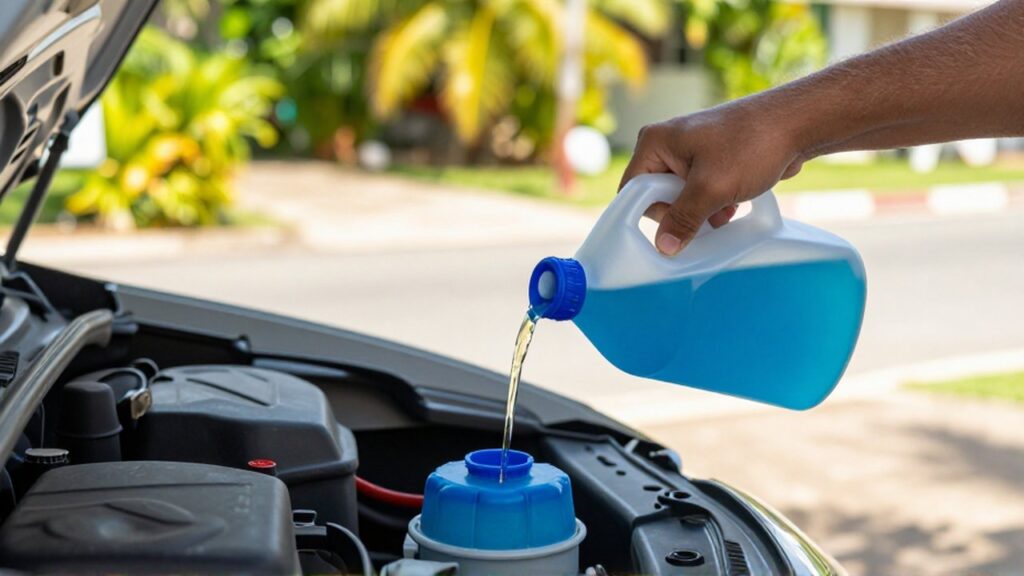
Third, pour the fluid using a funnel. Place the funnel into the neck of the reservoir to minimize the risk of spilling fluid onto sensitive engine components. Slowly pour the windshield washer fluid into the tank. Avoid pouring too quickly, as this can cause air bubbles to build up, which might force the fluid back out of the neck.
Fourth, check the fluid level. Most reservoirs are translucent, allowing you to see the liquid level through the side of the tank. Fill the fluid until it reaches the "Max" line or just below the neck of the opening. Do not overfill it to the point where it creates a pressurized mess when you move the vehicle.
Finally, replace the cap and clean up. Screw the cap back on tightly until it clicks or feels secure. Use your rag to wipe away any splashes on the reservoir or the surrounding engine parts.
Common mistakes to avoid
One of the most frequent errors is confusing the washer fluid reservoir with the engine coolant reservoir. The coolant reservoir is critical for engine temperature regulation; pouring washer fluid into it can cause severe engine damage. Always verify the icon on the cap before pouring.
Another mistake is using too much concentrated soap or dish detergent. While it might seem like a good way to clean the glass, these substances often create excessive foam. This foam can clog the spray nozzles and create a blinding film of bubbles on the windshield when you attempt to use the wipers.
Finally, avoid neglecting the fluid until the tank is completely empty. Regularly checking the level during your routine inspections ensures that you are never caught with a dirty windshield during a critical moment on the road.
Frequently asked questions
Can I use distilled water if I am in an emergency? Yes, in an emergency, distilled water is a better temporary solution than tap water because it lacks the minerals that can clog nozzles. However, you should replace it with proper washer fluid as soon as possible to ensure effective cleaning.
How often should I check the wiper fluid? There is no fixed schedule, but it is a good practice to check the level once a month or during every routine vehicle inspection.
Why is my washer fluid not spraying even after topping it up? This could be due to clogged spray nozzles, a blown fuse, or a failure in the washer pump. If the fluid is full but nothing happens, you may need a mechanical inspection.
Is it safe to mix different brands of washer fluid? Generally, yes. Most automotive washer fluids are compatible with one another, though it is always best to stick to one type for consistency.
Leave a Reply