
Differences between coil springs and leaf springs

Introduction
The suspension system of any vehicle is a critical component designed to manage weight, absorb road shocks, and maintain tire contact with the ground. At the heart of this system are the springs, which serve as the primary mechanism for storing and releasing energy when the vehicle encounters bumps or uneven terrain. Understanding the fundamental differences between the two most common types—coil springs and leaf springs—is essential for anyone looking to understand vehicle handling, load capacity, and maintenance requirements.
While both components aim to provide a smoother ride and protect the vehicle's chassis, they achieve these goals through different mechanical designs. Choosing or maintaining the right spring type depends heavily on the vehicle's intended purpose, such as whether it is designed for high-speed passenger comfort or heavy-duty hauling. Recognizing how these components function allows owners to better diagnose suspension issues and make informed decisions during repairs or vehicle upgrades.
Mechanism and design of coil springs
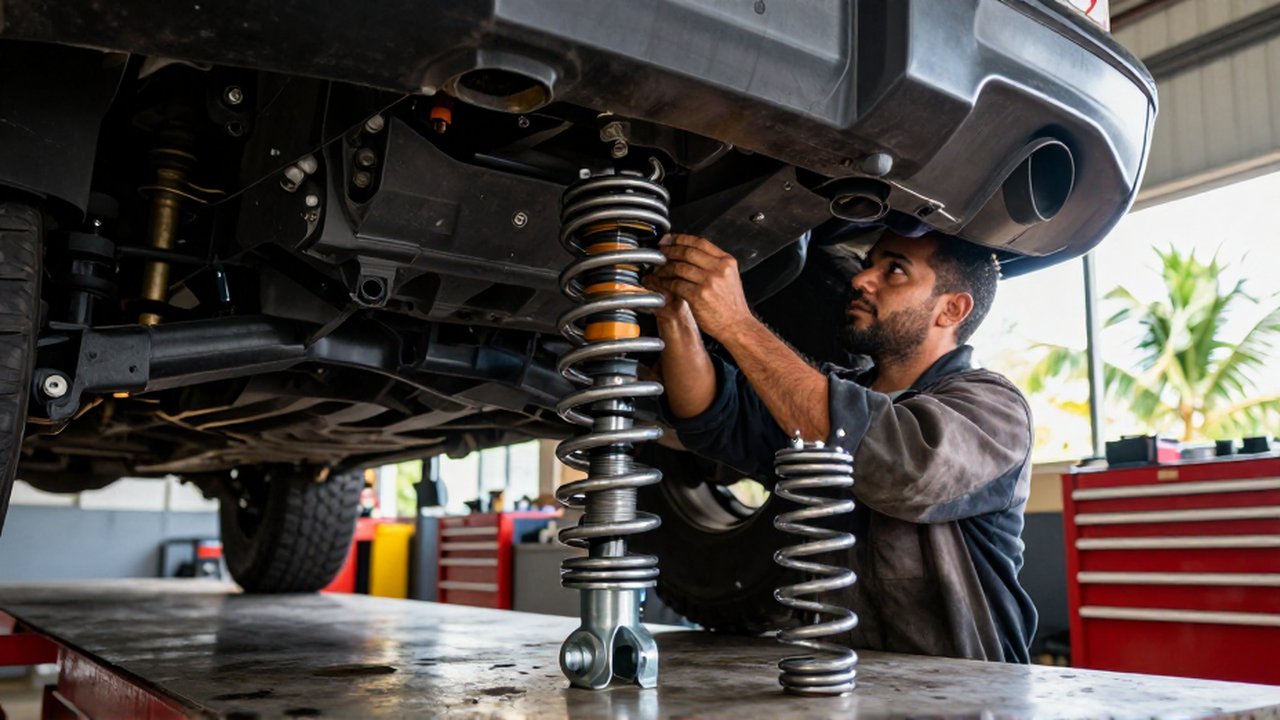
Coil springs are composed of a single, continuous helical wire that is wound into a cylindrical shape. When a load is applied to the vehicle, the wire undergoes torsion—a twisting motion—to compress or expand the spring. This design is highly efficient at absorbing energy through smooth, linear movement, making it the standard choice for modern passenger cars and light crossovers.
Because coil springs are compact, they allow engineers significant flexibility in vehicle design. They can be placed in tight spaces, such as within the control arms of a multi-link suspension system. This compactness contributes to better weight distribution and allows for more complex suspension geometries that can independently manage each wheel, providing superior handling and stability during cornering.
Functionality and benefits of leaf springs
Leaf springs consist of several layers of flexible metal strips, known as leaves, stacked on top of one another. These leaves are typically arranged from longest to shortest, with the longest leaf being clamped to the vehicle's frame. When the vehicle encounters a bump, the leaves slide slightly against each other, distributing the force across the entire stack.
The primary advantage of leaf springs is their incredible load-bearing capacity. Because the leaves act as both a spring and a structural member that locates the axle, they are exceptionally robust. This makes them the preferred choice for trucks, SUVs, and commercial vehicles designed for towing or carrying heavy cargo. They are simpler to manufacture and maintain, often serving as a durable solution for vehicles that face harsh working conditions.
Comparative analysis of performance and comfort
The choice between coil and leaf springs often involves a trade-off between ride quality and utility. Coil springs generally offer a much smoother and more refined ride. Since they can be paired with sophisticated shock absorbers and independent suspension setups, they allow the wheels to react to bumps without affecting the opposite side of the vehicle, which translates to better passenger comfort and more precise steering.
In contrast, leaf springs are often associated with a stiffer, more "bouncy" ride when the vehicle is unladen. Because they are typically used in solid axle configurations, a bump on one side of the road is often felt on the other side as well. However, as soon as a heavy load is added, the leaf springs settle into their optimal operating range, providing the stability necessary to prevent the vehicle from sagging or bottoming out under pressure.
Summary of key differences

| Feature | Coil Springs | Leaf Springs |
|---|---|---|
| Primary Use | Passenger cars, performance vehicles | Trucks, vans, heavy-duty SUVs |
| Main Advantage | Excellent ride comfort and handling | High load capacity and durability |
| Space Efficiency | High; compact design | Low; requires more longitudinal space |
| Suspension Type | Often used in independent suspension | Usually used in dependent/solid axle |
| Complexity | Higher integration with other parts | Simpler, more rugged construction |
Common maintenance and failure signs
Both spring types are subject to wear and fatigue, though the symptoms of failure can differ. For coil springs, common issues include snapping due to corrosion or losing their tension over time, which leads to a vehicle sitting lower than intended. A telltale sign of a failing coil spring is often an unusual metallic clunking sound when driving over uneven surfaces or a noticeable "leaning" of the car to one side.
Leaf springs are prone to different issues, such as cracking due to metal fatigue or "flattening" if they are consistently overloaded beyond their rated capacity. Because they rely on the friction between the leaves, the bushings and clips that hold them together can also wear out. If you notice the rear of a vehicle sagging significantly or hear squeaking sounds when the vehicle moves vertically, it may indicate that the leaf springs or their mounting hardware require inspection.
Frequently asked questions
Which spring type is better for off-road driving? It depends on the goal. For high-speed desert racing where stability and articulation are key, coil springs are preferred. For heavy-duty rock crawling or carrying gear through mud, leaf springs offer the necessary durability and load support.
Can I convert a leaf spring suspension to coil springs? This is a highly complex and expensive engineering task. It usually requires replacing the entire axle setup, control arms, and mounting points. It is generally not a simple "swap" and should only be considered a major vehicle redesign.
Do springs need to be replaced in pairs? Yes, it is highly recommended to replace springs in pairs (both fronts or both rears). Replacing only one spring can create an imbalance in the vehicle's ride height and handling, leading to unpredictable steering and uneven tire wear.
How does tropical humidity affect these springs? In humid or coastal environments, both types are susceptible to rust. Corrosion can weaken the metal structure of a coil spring or cause leaf springs to seize or crack. Regular cleaning and inspection of the underside of the vehicle are vital for longevity.
Leave a Reply