
Safety risks of driving motorcycles on unpaved roads
Introduction
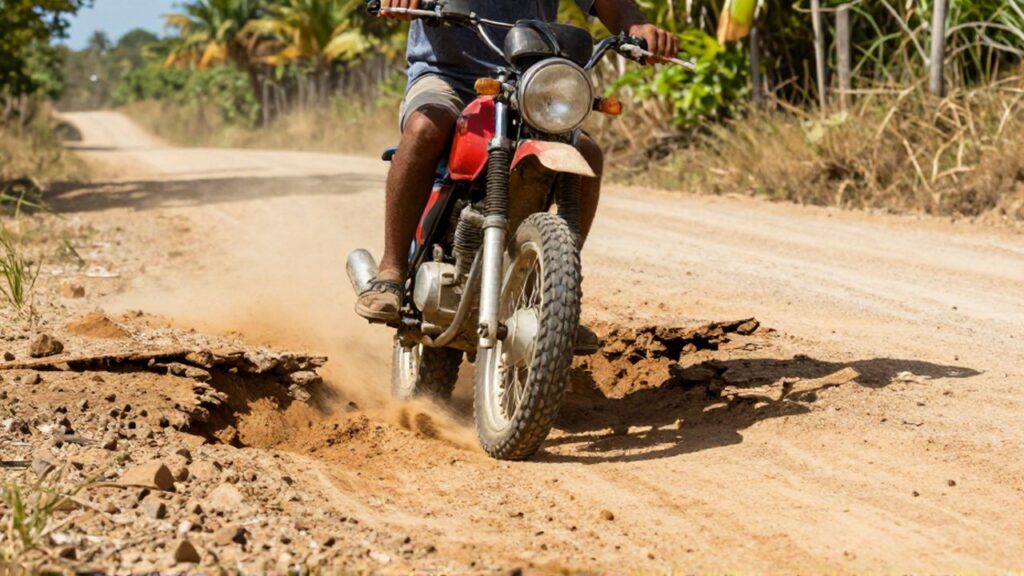
Riding a motorcycle on unpaved roads presents a unique set of challenges that differ significantly from traveling on asphalt. While many riders enjoy the adventure of off-road or rural routes, these environments introduce unpredictable variables that can instantly compromise stability and control. Understanding these risks is essential for every rider who intends to navigate dirt, gravel, or sand paths, as the margin for error is much smaller than on paved surfaces.
This article explores the specific hazards associated with non-paved terrain, ranging from surface instability to environmental obstacles. By recognizing these dangers, riders can better prepare their equipment, adjust their riding techniques, and make informed decisions about whether a specific route is safe for their skill level and motorcycle type. Prioritizing safety awareness is the first step toward preventing accidents in unpredictable rural or off-road settings.
Surface instability and traction loss
The most immediate danger on unpaved roads is the lack of consistent friction between the tires and the ground. Unlike asphalt, which provides a predictable grip, unpaved surfaces are often composed of loose materials that shift under the weight of the motorcycle.
Loose gravel is one of the most common hazards. Small stones act like ball bearings under the tires, causing the bike to slide laterally, especially during cornering or braking. When the surface is composed of deep sand, the tires may sink, leading to sudden resistance that can jerk the handlebars out of the rider's grip. Furthermore, mud introduces a layer of lubrication that can result in a complete loss of traction, making it nearly impossible to steer or stop effectively.
Hidden obstacles and uneven terrain
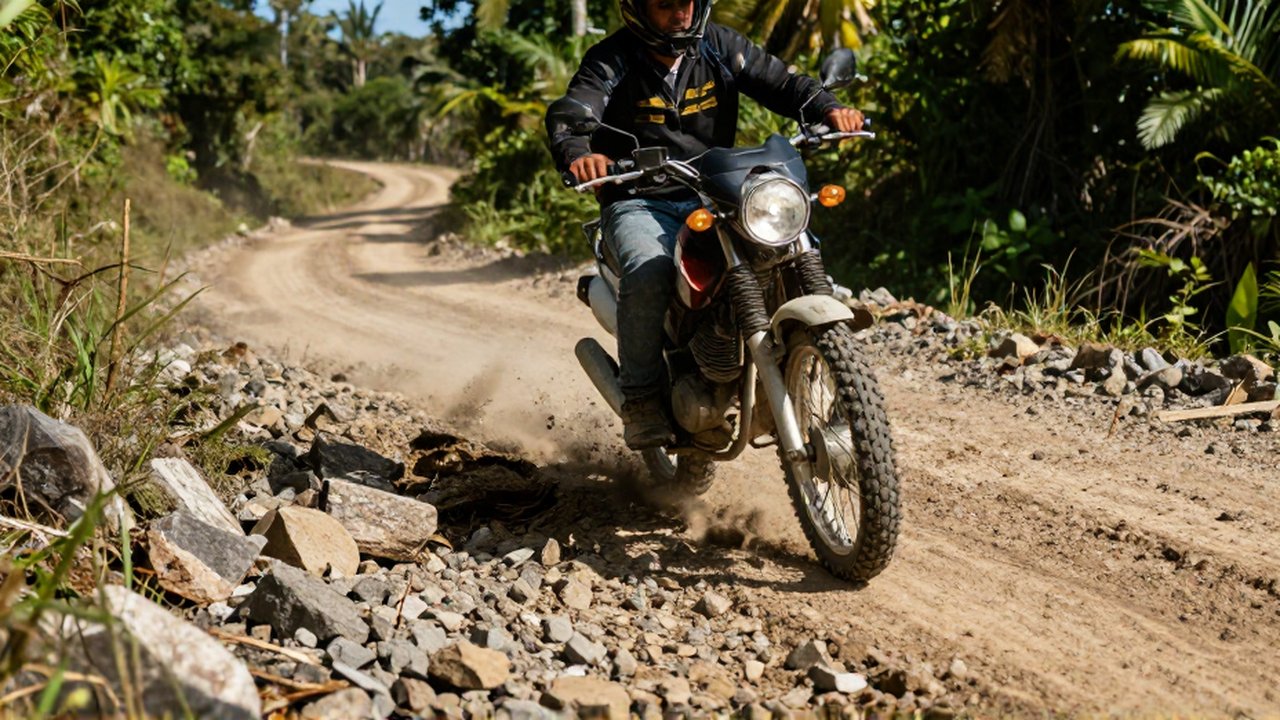
Unpaved paths are rarely level or smooth. Riders frequently encounter unexpected topographical changes that can cause sudden loss of balance. Deep ruts created by heavy vehicles or erosion can catch a motorcycle tire, potentially causing a crash if the rider cannot navigate them with precision.
Beyond the shape of the ground, hidden hazards often lie just beneath the surface. This includes large rocks partially buried in the dirt, tree roots crossing the path, or holes obscured by dust and shadows. Sudden impacts with these objects can damage the motorcycle's suspension, rims, or engine components, and more critically, they can cause the rider to be thrown from the vehicle.
Environmental and visibility factors
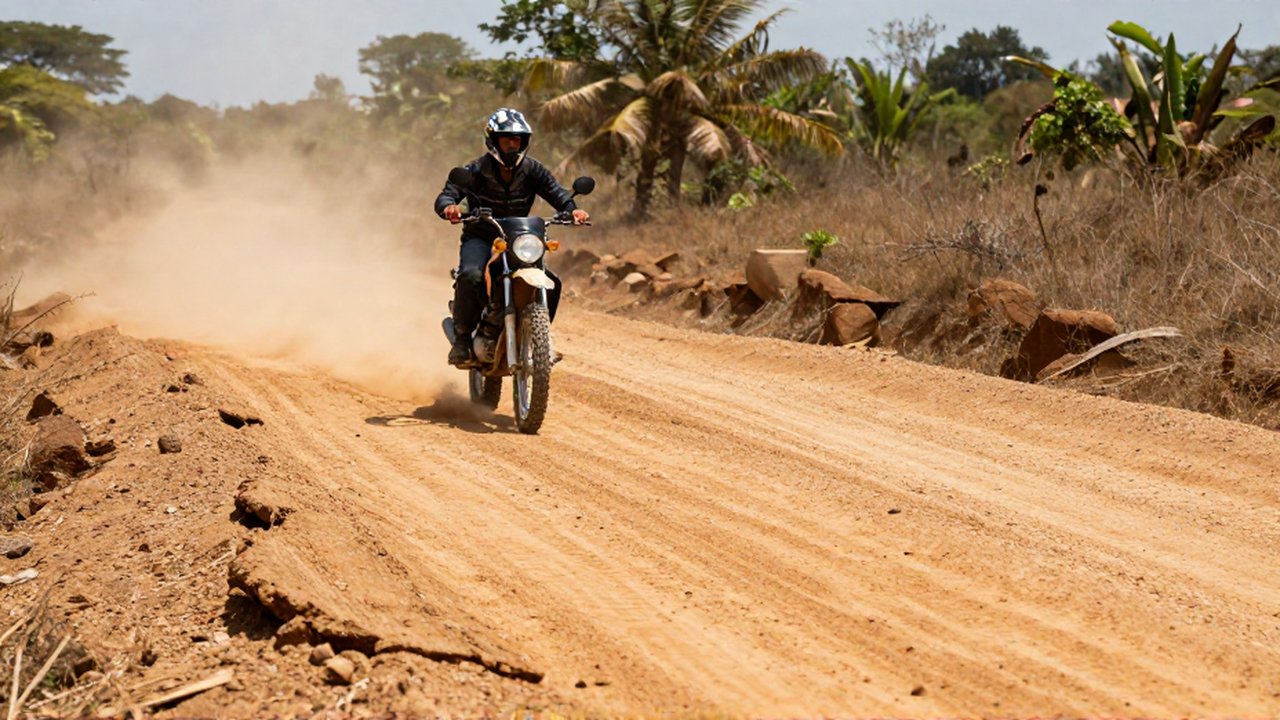
The environment plays a massive role in the level of risk encountered on unpaved roads. Dust is a significant concern; a single vehicle passing by can create a cloud that completely obscures the rider's vision, leading to collisions with obstacles or other travelers.
Weather conditions also change the landscape rapidly. Rain can turn a dry, dusty trail into a treacherous mud pit in a matter of minutes. Additionally, the presence of animals or pedestrians on rural unpaved roads adds a layer of unpredictability. Unlike highway driving, where surroundings are often structured, unpaved environments require constant scanning to detect living hazards that may move into the rider's path without warning.
Comparison of road surfaces and motorcycle impact
| Surface Type | Primary Risk | Impact on Control |
|---|---|---|
| Gravel | Sliding/Lateral movement | Reduced cornering stability |
| Sand | Sinking/Front-end washouts | Difficulty maintaining direction |
| Mud | Total loss of traction | High risk of low-side falls |
| Dirt/Ruts | Sudden impacts/Tipping | Risk of structural damage and falls |
Essential safety recommendations
To mitigate the risks mentioned above, riders should adopt specific preparation and riding habits. Selecting a motorcycle designed for dual-purpose or off-road use is a fundamental starting point, as these bikes feature suspension and tires optimized for uneven surfaces.
Riders should always maintain a lower center of gravity and avoid aggressive braking or sudden steering inputs. Staying standing on the footpegs can help the body absorb shocks from bumps, allowing the motorcycle to move more freely beneath the rider. It is also vital to check weather forecasts and avoid riding on unpaved roads immediately after heavy rainfall unless the vehicle and rider are specifically equipped for extreme mud conditions.
Frequently asked questions
Does a standard street motorcycle work on unpaved roads? While it is possible, street motorcycles are not optimized for these conditions. Their tires lack the grip needed for loose surfaces, and their suspension is often too stiff to absorb shocks, increasing the risk of losing control.
How does speed affect safety on dirt roads? High speeds significantly increase risk because they reduce the time available to react to sudden changes like ruts, rocks, or loose patches. Slower, controlled speeds allow for better balance and quicker corrections.
What is the most dangerous weather condition for unpaved riding? Heavy rain is often the most dangerous because it instantly transforms loose dirt into unpredictable mud and creates deep ruts and slippery surfaces that are difficult to navigate.
Should I wear more or less protection on unpaved roads? You should wear more protection. Since the risk of falling on uneven terrain is higher, wearing sturdy boots, reinforced clothing, and full-face helmets is critical to minimize injury during a slide or impact.
Leave a Reply