
How to identify motorcycle engine overheating symptoms
Introduction
Motorcycle engine overheating is a critical mechanical issue that occurs when the internal temperature of the engine exceeds its designed operating range. Recognizing the early signs of thermal distress is essential for any rider to prevent catastrophic engine failure, such as seized pistons or warped cylinder heads. Understanding these symptoms allows you to take immediate action, potentially saving thousands in repair costs and ensuring your safety on the road.
In tropical climates like the Dominican Republic, where high ambient temperatures and heavy traffic are common, the risk of overheating is significantly increased. Whether you ride an air-cooled commuter or a liquid-cooled sportbike, knowing how to read your machine's "signals" is a fundamental skill for vehicle ownership. This guide focuses on the physical, auditory, and performance-based indicators that your engine is struggling to regulate its temperature.
Common physical signs of overheating

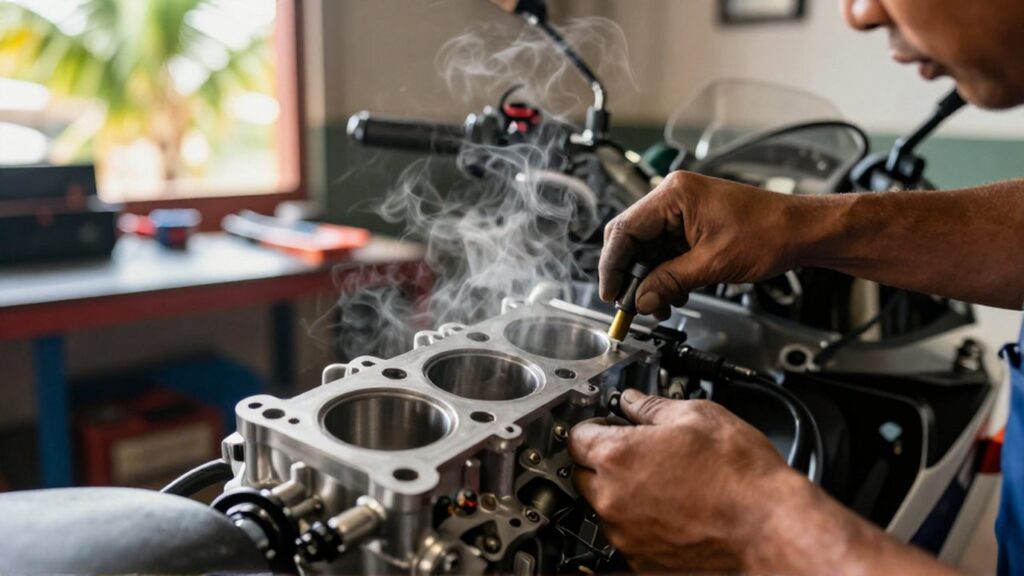
One of the most immediate ways to identify an overheating engine is through physical changes you can observe or feel. For riders of air-cooled motorcycles, the engine casing may become excessively hot to the touch, often emitting a distinct, shimmering heat haze around the cylinder area. If you notice a strong smell of burning oil or a sweet, syrupy scent, it is a major red flag. The sweet smell typically indicates that coolant is leaking from a hose or a gasket and boiling off the engine block.
For liquid-cooled motorcycles, the symptoms are often more specific to the cooling system. Keep a close eye on the temperature gauge or the warning light on your dashboard. If the needle moves into the red zone or the light illuminates, the engine is already in a danger zone. Additionally, check for any visible steam or smoke rising from the engine compartment. Do not mistake white smoke from the exhaust for overheating, though they can sometimes occur simultaneously if coolant is entering the combustion chamber.
Changes in engine performance and sound
Overheating rarely happens without affecting how the motorcycle actually runs. As the metal components expand excessively due to heat, you may notice a significant loss of power. The bike might feel "sluggish," making it difficult to maintain cruising speeds or climb hills. This loss of compression is a direct result of the engine components not fitting together with the precision required for efficient combustion.
The sound of the engine also changes when it is too hot. You might hear a phenomenon known as "knocking" or "pinging," which is actually pre-ignition caused by the extreme heat within the cylinders. This sounds like metallic clicking or tapping. Furthermore, if the engine begins to sputter, idle roughly, or stall completely while you are stopped in traffic, these are clear indicators that the thermal management system has failed.
Comparison of air cooled and liquid cooled symptoms

The symptoms can vary depending on the type of cooling system your motorcycle utilizes. Understanding these differences helps in diagnosing the specific component that might be failing.
| Symptom Type | Air Cooled Motorcycles | Liquid Cooled Motorcycles |
|---|---|---|
| Primary Indicator | Rapid rise in engine case temperature | Temperature gauge or warning light |
| Common Smell | Burning oil or scorched metal | Sweet scent (leaking coolant) |
| Visual Cues | Heat haze around cylinder fins | Steam or coolant leaks from hoses |
| Performance | Gradual power loss | Sudden stalling or "limp mode" |
Immediate steps to take when overheating occurs
If you identify any of these symptoms while riding, the most important action is to reduce the load on the engine immediately. If you are in heavy traffic, pull over to a safe location as soon as possible. Turn off the engine to stop the heat generation. In many cases, idling a hot engine can actually make the situation worse because the water pump or airflow is not working effectively enough to dissipate the stored heat.
Important Safety Note: If your motorcycle is liquid-cooled, never attempt to open the radiator cap while the engine is hot. The pressurized coolant can explode outward, causing severe burns. Always wait for the engine to cool down completely before inspecting coolant levels or checking for leaks. For air-cooled engines, avoid splashing cold water directly onto a hot engine block, as the thermal shock can cause the metal to crack.
Frequently asked questions
Can riding in heavy traffic cause my motorcycle to overheat? Yes. In stop-and-go traffic, there is less natural airflow passing over the engine. For air-cooled bikes, this is particularly dangerous as they rely on movement to stay cool. For liquid-cooled bikes, it puts a heavy load on the radiator and cooling fans.
Why does my motorcycle smell like burning oil when it gets hot? As the engine temperature rises beyond normal limits, oil can leak past seals or splash onto hot engine fins and begin to cook. This creates a distinct, acrid burning smell that serves as an early warning sign.
Is a slight loss of power normal during high temperatures? While some minor changes in performance are expected in extreme tropical heat, a noticeable loss of power or "sluggishness" is not normal and usually indicates the engine is struggling to maintain efficient combustion due to heat.
Does high mileage increase the risk of overheating? Yes. Older engines may have worn gaskets, degraded coolant, or clogged radiator fins, all of which reduce the efficiency of the cooling system and make the engine more prone to overheating.
Leave a Reply