
How to prevent rust on motorcycle metal parts

Introduction
Rust is one of the most persistent enemies of motorcycle owners, particularly in regions with high humidity or coastal proximity. Oxidation occurs when iron-based metals react with oxygen and moisture, creating a corrosive layer that weakens the structural integrity and aesthetic appeal of your machine. Preventing this process is essential for maintaining the resale value of your motorcycle and ensuring that critical components, such as brake lines, bolts, and frames, remain safe to operate.
Understanding how to manage metal surfaces requires a combination of consistent cleaning, proper storage, and the application of protective barriers. By implementing a proactive maintenance routine, you can stop surface oxidation before it turns into deep pitting that requires expensive professional repairs. This guide provides practical strategies to keep your motorcycle’s metal parts in peak condition, regardless of the environmental challenges you face.
Causes of metal oxidation on motorcycles

The primary driver of rust is the electrochemical reaction between metal, water, and oxygen. On a motorcycle, this process is accelerated by several external factors. High humidity in the air provides a constant supply of moisture, while salt air in tropical or coastal areas acts as an electrolyte that significantly speeds up the corrosion process.
Road debris also plays a major role. Dirt, mud, and road salt can trap moisture against the metal surface for extended periods, creating micro-environments where oxidation thrives. Furthermore, mechanical damage such as stone chips or scratches in the paint or plating exposes the raw metal underneath, providing an immediate entry point for corrosive elements. Identifying these risks is the first step in developing an effective prevention strategy.
Essential cleaning and drying habits
A clean motorcycle is a protected motorcycle. The most effective way to prevent rust is to ensure that no corrosive substances remain on the metal surfaces after a ride. Mud and salt buildup should be washed off regularly using mild soap and water. If you ride through heavy rain or near the ocean, a thorough rinse is necessary to remove salt deposits that are often invisible to the naked eye.
Drying the motorcycle is just as important as washing it. Leaving water to evaporate naturally can result in dried mineral deposits and water spots that encourage localized corrosion. Use a microfiber cloth to thoroughly dry every nook and cranny, especially around bolts, engine fins, and exposed frame sections. Pay close attention to areas where water tends to pool, such as under the fenders or around the mounting points of accessories.
Protective coatings and lubrication methods
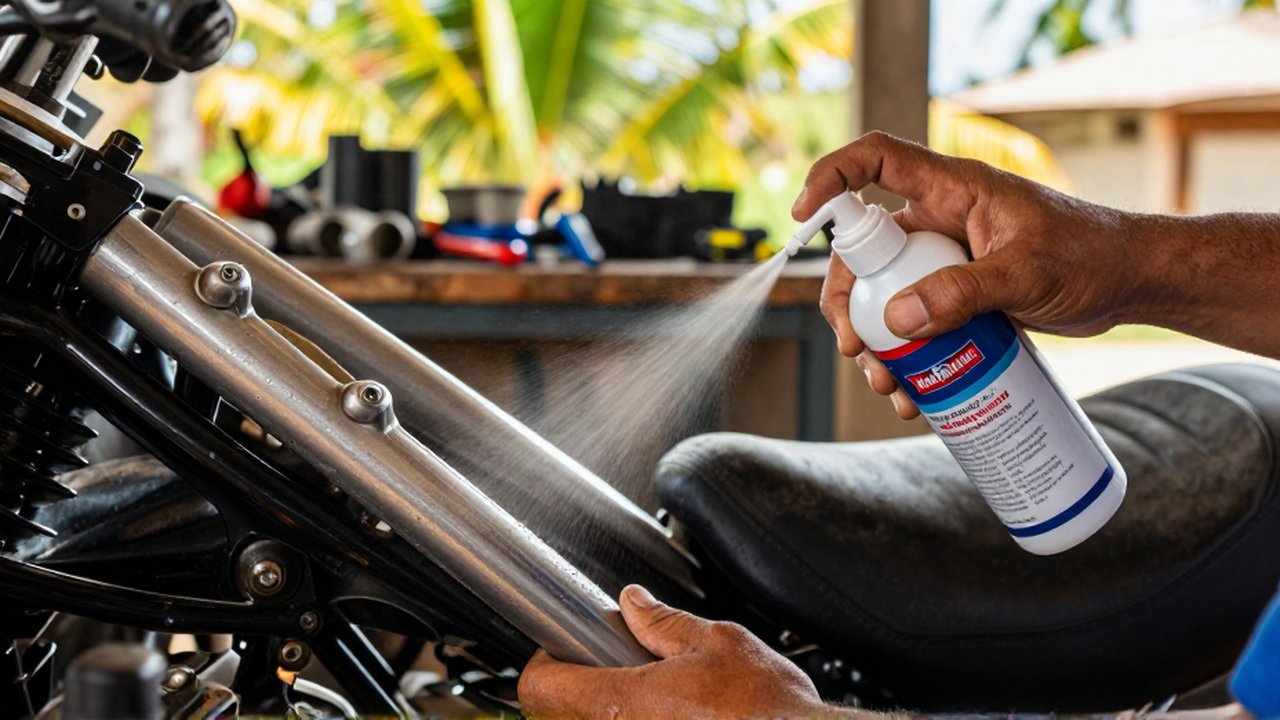
Once the metal is clean and dry, applying a protective layer is the best way to seal it from the atmosphere. There are several products designed specifically for motorcycle maintenance, each serving a different purpose:
| Product Type | Best Use Case | Benefit |
|---|---|---|
| Silicone Sprays | Plastic and non-moving metal parts | Creates a water-repellent barrier |
| Chain Lube | Drive chains and sprockets | Protects against friction and moisture |
| Corrosion Inhibitors | Exposed frames and bolts | Forms a long-lasting protective film |
| Wax or Sealants | Painted metal surfaces | Protects the finish and prevents pitting |
For moving parts like the chain or pivot points, use specific lubricants that provide both protection and lubrication. For static metal parts like the frame or engine casings, a thin layer of corrosion inhibitor or a high-quality wax can prevent oxygen from reaching the metal surface. Avoid over-applying grease, as it can attract dirt and grit, which eventually acts like sandpaper against your metal components.
Safe storage and environmental control
Where you keep your motorcycle significantly impacts its susceptibility to rust. Storing a bike in an open outdoor area exposes it to the full force of humidity, rain, and temperature fluctuations. If possible, a covered garage or a dedicated motorcycle cover should be used to mitigate environmental exposure.
If you live in a highly humid area, consider using moisture absorbers in your storage space to keep the air dry. If the motorcycle is going to be stored for a long period without being ridden, it is wise to use a breathable cover rather than a plastic tarp. Plastic tarps can trap moisture underneath the cover, creating a "greenhouse effect" that actually accelerates rust. Proper ventilation is key to a successful long-term storage strategy.
Frequent maintenance questions
Can I use WD-40 to prevent rust on all parts? While standard multi-use sprays can displace moisture and provide temporary protection, they are not long-lasting lubricants. For moving parts like chains or critical bearings, you should use specialized lubricants designed for those specific mechanical functions.
How often should I check for rust? A visual inspection should be part of every cleaning routine. During your monthly maintenance, look closely at bolts, the exhaust system, and the frame for any signs of orange or brown discoloration. Catching rust early is much easier than removing it later.
Will washing my motorcycle with a pressure washer cause issues? High-pressure washers are effective for cleaning, but you must be careful. Directing high pressure at seals, electrical connectors, or delicate metal bearings can force water into areas where it cannot easily evaporate, potentially causing internal corrosion or electrical faults.
Is it worth cleaning the underside of the fenders? Yes. The underside of the fenders is a common area for moisture and debris to collect. Because these areas are often neglected, they are frequent sites for early-stage rust that can eventually compromise the structural integrity of the fender.
Leave a Reply