
Inspection checklist for motorcycle chassis stability

Introduction
The motorcycle chassis serves as the structural backbone of your vehicle, connecting the engine, suspension, and wheels into a single cohesive unit. Maintaining chassis stability is critical because any structural compromise or misalignment directly impacts your ability to steer, corner, and brake safely. When the frame or its mounting points lose integrity, the motorcycle becomes unpredictable, increasing the risk of accidents during high-speed maneuvers or sudden turns.
Regular inspections are necessary not only for safety but also for preserving the lifespan of your motorcycle. In tropical environments, factors such as humidity and salt air can accelerate corrosion, which weakens the metal over time. Performing a systematic check of the chassis components helps riders identify subtle signs of wear, such as hairline cracks or loosening bolts, before they escalate into catastrophic mechanical failures.
Importance of structural integrity
Structural integrity refers to the ability of the motorcycle frame to withstand the various stresses applied during riding, including vibrations, bumps, and cornering forces. A stable chassis ensures that the geometry of the motorcycle remains consistent. If the frame is bent or weakened, the bike may "weave" at high speeds or lean unevenly, making it difficult to maintain a straight line.
Checking the chassis allows you to detect issues that are often invisible to the casual observer. For instance, a minor bend in the frame might not be noticeable while the bike is stationary, but it will manifest as a strange vibration or a pulling sensation once you are in motion. By focusing on stability, you ensure that the bike responds predictably to every input you provide through the handlebars and footpegs.
Visual inspection for cracks and corrosion

The first step in any stability checklist is a thorough visual scan of the entire frame. You should look for any signs of metal fatigue, specifically hairline cracks around weld points and junctions where different components meet. These areas are under the highest amount of stress and are the most common failure points.
Corrosion is another primary concern, especially in coastal regions. Rust can eat through the metal, thinning the walls of the frame tubing and reducing its strength. Use the following criteria during your visual inspection:
- Weld joints: Inspect every seam for discoloration, bulging, or tiny cracks.
- Surface rust: Look for scaling or pitting on the metal, particularly in areas where paint may have chipped.
- Frame alignment: Observe the bike from the front and rear to see if the frame looks symmetrical or if it appears twisted.
- Mounting points: Check the areas where the engine, swingarm, and suspension attach to the frame for signs of stress.
Verification of mounting hardware and fasteners
A stable chassis relies on more than just the metal frame; it depends on the hardware that holds everything together. Vibration is a constant factor in motorcycle operation, and over time, this can cause bolts and fasteners to loosen. A loose bolt in a critical area, such as the steering head or engine mounts, can lead to significant instability.
It is essential to verify that all major mounting bolts are torqued to the manufacturer's specifications. Pay close attention to the following components:
| Component | Inspection Focus | Risk if Loose |
|---|---|---|
| Steering Head Bolts | Connection between forks and frame | Loss of steering control |
| Engine Mounts | Bolts securing the engine to the frame | Excessive vibration and misalignment |
| Swingarm Pivot | The bolt/axle connecting the swingarm | Unstable rear-end handling |
| Subframe Bolts | Connection of the rear seat/tail section | Structural instability of the rear |
Suspension and steering head assessment
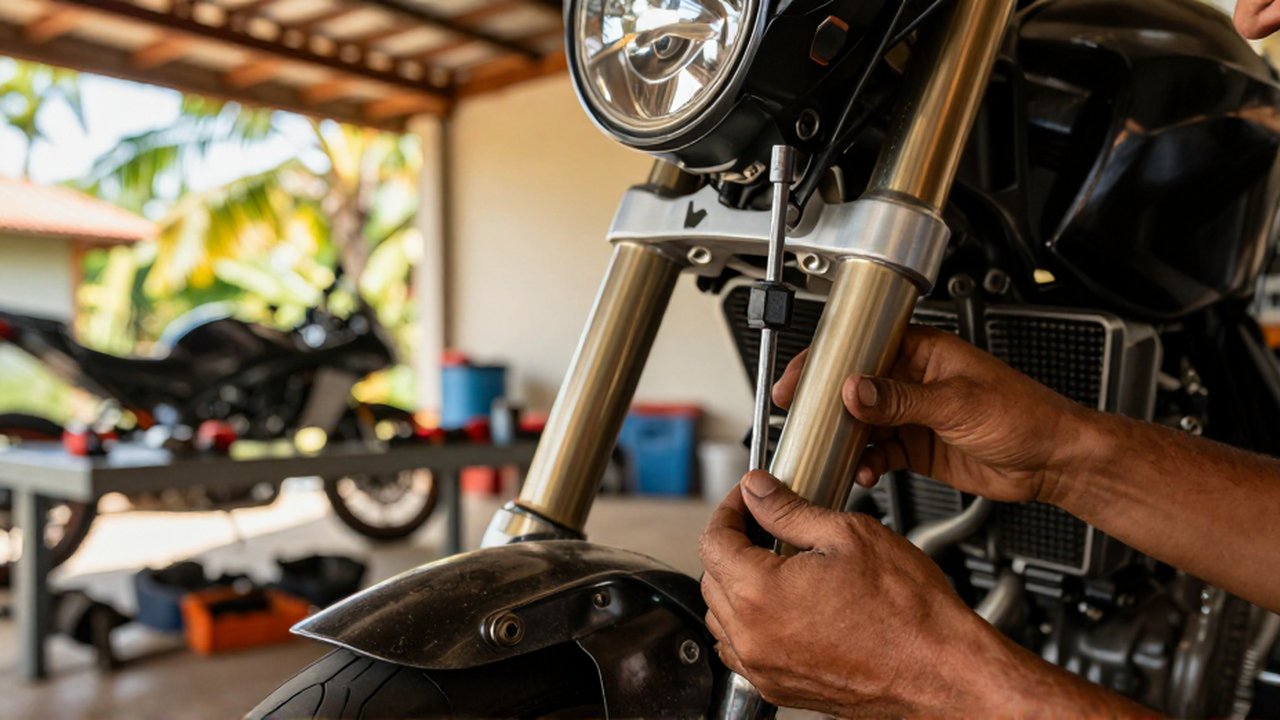
The interface between the chassis and the moving parts—the suspension and the steering assembly—is vital for stability. The steering head bearing is the pivot point that allows the front forks to turn. If these bearings are worn or if the preload is uneven, the motorcycle will feel "clunky" or resistant to smooth steering inputs.
To test this, place the motorcycle on a center stand or a paddock stand to lift the front wheel. Grasp the front forks and attempt to move them fore and aft. If you feel any clicking or movement within the steering neck, the bearings likely need replacement or adjustment. Additionally, check for any play in the swingarm by attempting to move it laterally; any significant movement indicates a worn pivot or bushing, which will compromise rear-wheel stability.
Common signs of chassis instability
Recognizing the symptoms of a compromised chassis can save you from dangerous riding situations. Often, the motorcycle will "tell" you something is wrong through physical sensations. Being attentive to these changes is a key part of proactive maintenance.
Frequent mistakes include ignoring minor vibrations or assuming that a slight "pull" to one side is just a tire issue. While tires are important, a persistent pull after a wheel alignment check often points to a bent fork or a warped frame. Other warning signs include uneven tire wear patterns, which suggest that the chassis geometry is no longer straight, and a sensation of "wobble" or "tank slappers" when riding at higher speeds.
Frequently asked questions
How often should I inspect my motorcycle chassis? A visual inspection should be performed every time you clean the bike. A more technical inspection of bolts and bearings is recommended every few thousand kilometers or once a season.
Can rust be repaired on a motorcycle frame? Minor surface rust can often be cleaned and treated with protective coatings. However, if the rust has caused deep pitting or has compromised the thickness of the metal, the frame may need professional structural repair or replacement.
How can I tell if my frame is bent? Testing for a bent frame is difficult without specialized equipment. However, if the motorcycle pulls consistently to one side, exhibits strange vibrations, or shows uneven tire wear, it is a strong indication that the chassis or suspension geometry is compromised.
Does heavy loading affect chassis stability? Yes. Carrying heavy luggage or a passenger changes the center of gravity and increases the stress on the frame and mounting points. Always ensure your motorcycle is rated for the total weight you intend to carry.
Leave a Reply