
Steps for deep cleaning car seats in Dominican Republic
Introduction
Maintaining a clean vehicle interior is essential for both comfort and the long-term resale value of your car. In the Dominican Republic, the combination of high humidity, intense tropical sunlight, and frequent dust can cause car seats to deteriorate rapidly. Deep cleaning is the process of removing embedded dirt, sweat, and microbial growth that standard vacuuming cannot reach, ensuring your cabin remains hygienic and pleasant.
Performing a deep clean is appropriate whenever you notice persistent odors, visible stains, or a general dullness in the fabric or leather. Regular maintenance helps prevent permanent damage caused by salt in the air or UV exposure, which can make materials brittle. Because the local climate accelerates the buildup of organic matter, a systematic approach to seat cleaning is a vital part of vehicle ownership.
Preparation and necessary materials
Before beginning the cleaning process, you must gather the correct tools to avoid damaging the materials. Using the wrong chemical can cause discoloration or degrade the integrity of the upholstery. The materials required depend largely on whether your seats are made of fabric or leather, which are the two most common options in the local market.
For fabric seats, you will typically need a high-powered vacuum, a soft-bristled brush, a specialized upholstery cleaner, and microfiber cloths. If you are dealing with heavy staining, an extraction machine or a steam cleaner is highly recommended. For leather seats, the kit should include a dedicated pH-balanced leather cleaner, a soft applicator, and a high-quality leather conditioner to prevent cracking under the tropical sun.
Deep cleaning process for fabric seats

Fabric upholstery acts like a sponge, absorbing humidity, perspiration, and environmental dust. To clean these effectively, you must follow a structured sequence to ensure dirt is lifted rather than pushed deeper into the cushioning.
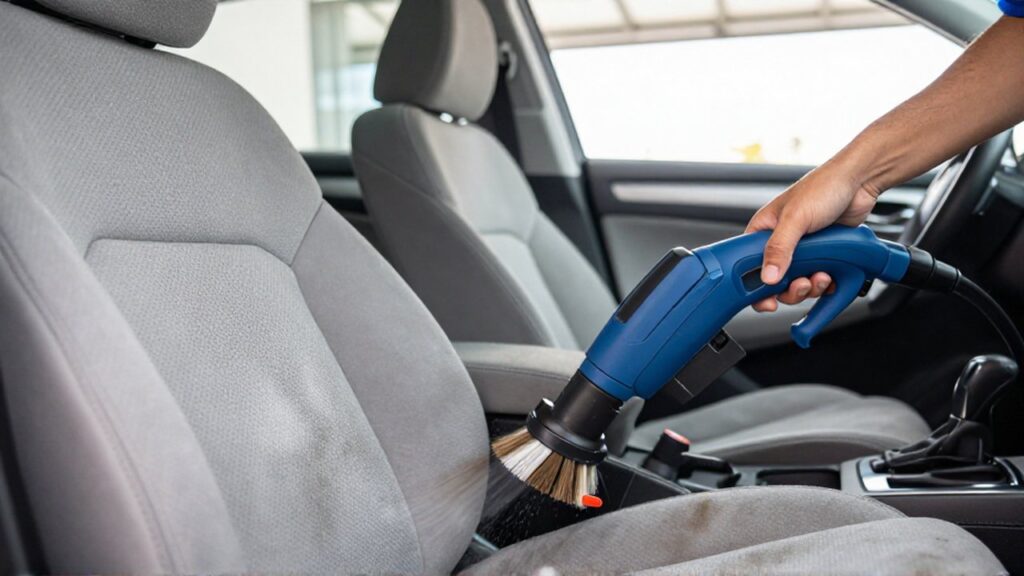
First, perform a thorough vacuuming. Pay close attention to the crevices between the seat back and the bottom cushion, as this is where sand and crumbs accumulate. Once the loose debris is removed, apply your chosen upholstery cleaner. It is best to spray the cleaner onto a cloth or directly onto the seat in small sections to avoid over-saturating the foam padding, which can lead to mold growth due to the local humidity.
Next, use a soft-bristled brush to agitate the cleaner into the fibers. This mechanical action helps break up stubborn stains. For very deep stains, use a damp microfiber cloth to blot the area. If you have an extraction tool, use it now to pull the moisture and dissolved dirt out of the fabric. Finally, allow the seats to dry completely in a well-ventilated area or under the sun, ensuring the windows are slightly cracked to allow airflow.
Deep cleaning process for leather seats
Leather requires a more delicate touch because it is a natural material that can dry out and crack easily. In a tropical environment, the goal is to clean the surface without stripping away the essential oils that keep the leather supple.
Start by wiping the leather with a damp cloth to remove surface dust. Apply a small amount of pH-balanced leather cleaner to a soft applicator or sponge. Work in gentle, circular motions, ensuring you cover the entire surface without applying excessive pressure. Once the dirt is lifted, wipe the area immediately with a clean, dry microfiber cloth to prevent the cleaner from drying on the surface.
The most critical step for leather in the Dominican Republic is conditioning. After the surface is clean and dry, apply a high-quality leather conditioner. This creates a protective barrier against UV rays and helps prevent the material from becoming brittle in the heat. Buff the leather with a clean cloth once the conditioner has been absorbed to achieve a natural finish.
Material comparison and recommendations

Choosing the right method is vital for preserving your interior. The following table summarizes the key differences in care requirements.
| Feature | Fabric Seats | Leather Seats |
|---|---|---|
| Main Risk | Odors and mold from moisture | Cracking due to UV and dryness |
| Cleaning Agent | Upholstery foam or liquid cleaner | pH-balanced leather cleaner |
| Key Tool | Soft brush or extractor | Soft applicator and conditioner |
| Drying Time | Moderate to long (must be 100% dry) | Very short |
| Maintenance Frequency | High (due to dust/sweat) | Medium (focus on conditioning) |
Common mistakes to avoid during cleaning
One of the most frequent errors is over-wetting fabric seats. Because of the high ambient humidity in the country, excess water trapped in the seat foam can take days to dry, creating a perfect environment for mildew and unpleasant odors. Always aim for "damp" rather than "soaked."
Another mistake is using household detergents or multipurpose cleaners on automotive upholstery. These often contain harsh chemicals or high pH levels that can bleach fabric or strip the protective coating from leather. Additionally, avoid leaving your car windows tightly closed while the seats are drying; airflow is your best tool for preventing moisture-related issues.
Frequently asked questions
How often should I deep clean my car seats? Depending on usage and climate, a deep clean every six months is generally recommended to prevent permanent staining and material degradation.
Can I use vinegar to clean my car seats? While vinegar is a natural cleaner, it is acidic. It should be used with extreme caution on fabric and avoided on leather, as it can disrupt the material's balance.
What should I do if I spill liquid on my seats immediately? Blot the spill immediately with a clean, dry cloth. Do not rub, as rubbing pushes the liquid deeper into the fibers.
Is it safe to dry seats in the direct sun? While sunlight helps speed up the drying process for fabric, excessive direct sun can be too harsh for leather. For leather, it is better to dry in a shaded, ventilated area.
Leave a Reply