
Steps to diagnose engine knocking sounds
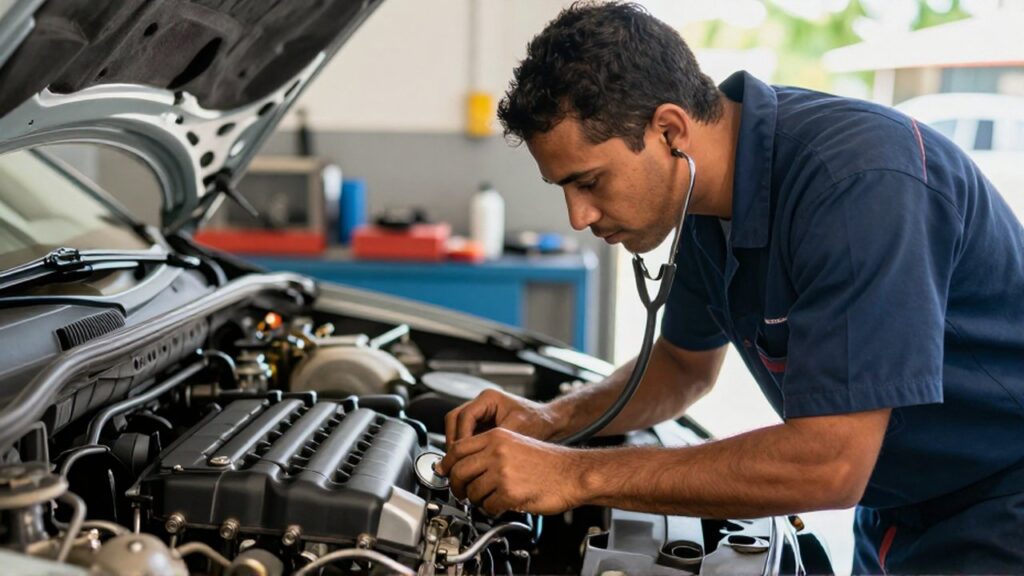
Introduction
An engine knocking sound, often described as a metallic pinging or rhythmic tapping, is a clear signal that something is amiss within your vehicle's internal combustion process. This phenomenon occurs when the fuel-air mixture in the cylinders ignites incorrectly, causing uncontrolled pressure waves that strike the piston or cylinder walls. Recognizing these sounds early is vital because persistent knocking can lead to severe hardware damage, such as broken pistons, bent connecting rods, or damaged cylinder heads.
Diagnosing the specific cause of these noises allows you to differentiate between minor maintenance issues and catastrophic mechanical failures. While some knocking is caused by simple factors like low-quality fuel, other instances point to deep-seated mechanical wear. Understanding the steps to identify the source of the sound can help you decide whether a quick fix at a pump is sufficient or if an immediate visit to a specialized mechanic is required to prevent total engine failure.
Identifying the type of sound
The first step in any diagnosis is distinguishing between different types of acoustic signals. Not all "knocking" is the same, and the pitch and timing of the noise provide crucial clues. A high-pitched metallic pinging that occurs primarily during acceleration is often referred to as "spark knock" or detonation. This is usually related to the combustion process itself rather than physical parts hitting each other.
Conversely, a deeper, heavier thudding or rhythmic tapping often indicates a mechanical issue. A heavy "knock" that increases in speed with the engine RPMs is frequently associated with internal components like connecting rods or crankshaft bearings. A lighter, faster tapping might stem from the valve train or lifters. Paying close attention to whether the sound occurs while idling, accelerating, or under heavy load is essential for narrowing down the possibilities.
Evaluating fuel quality and octane levels

One of the most common and least invasive causes of engine knocking is the use of improper fuel. In many regions, using a fuel with an octane rating lower than what the manufacturer recommends can cause premature ignition. If the fuel burns too quickly under high pressure, it creates a shockwave that sounds like pinging.
To diagnose this, consider your recent refueling history. If the noise started immediately after visiting a specific gas station or switching to a lower grade of fuel, the octane rating is the likely culprit. A simple way to test this hypothesis is to fill the tank with a higher-octane premium fuel. If the knocking sound disappears after a few miles, you have confirmed that the engine was experiencing pre-ignition due to insufficient octane.
Checking for carbon buildup and sensor malfunctions
Over time, carbon deposits can accumulate on the cylinder heads and piston tops. These deposits take up space, effectively increasing the compression ratio inside the cylinder, which can lead to knocking. Furthermore, carbon deposits can become glowing "hot spots" that ignite the fuel prematurely.
Another critical component to inspect is the Knock Sensor. Modern vehicles are equipped with these sensors to detect vibrations from improper combustion; the engine's computer (ECU) then adjusts timing to mitigate the noise. If the sensor is faulty or the wiring is damaged, the ECU cannot correct the ignition timing, leading to persistent knocking. Using an OBD-II scanner to check for fault codes related to ignition timing or knock sensors can quickly reveal if an electronic malfunction is the root cause.
Inspecting mechanical components and lubrication

If fuel quality and sensors are ruled out, the issue is likely a physical mechanical failure. This requires a much more technical inspection. Low oil pressure or insufficient oil levels can prevent critical components from being properly lubricated, leading to metal-on-metal contact. Always start by checking the oil dipstick to ensure the level is correct and the oil is not excessively dirty or thin.
If lubrication is adequate but the knocking persists, the problem may lie within the following areas:
| Component | Sound Characteristic | Potential Cause |
|---|---|---|
| Connecting Rods | Heavy, deep thudding | Worn bearings or loose bolts |
| Valve Train | Light, rapid tapping | Improper valve clearance or worn lifters |
| Pistons | Rattling or slapping | Worn piston rings or excessive clearance |
| Crankshaft | Deep, rhythmic knocking | Main bearing wear |
Common diagnostic mistakes to avoid
A frequent mistake is ignoring the sound and assuming it will go away on its own. Engine knocking is a symptom of a process that is out of balance; ignoring it usually results in exponentially higher repair costs. Another error is misdiagnosing a mechanical knock as a fuel issue. While higher octane may temporarily quiet a detonation sound, it will not fix a worn bearing. If a heavy thud persists even with premium fuel, the problem is mechanical and requires immediate professional attention.
Finally, attempting to disassemble the engine without proper tools and knowledge can exacerbate the problem. If the diagnosis points toward internal mechanical components, the safest course of action is to stop driving the vehicle and consult a professional mechanic to prevent catastrophic engine seizure.
Frequently asked questions
Can I continue driving if I hear a light pinging sound? If the sound is a light pinging only under heavy load and disappears with higher octane fuel, it may be manageable. However, if it persists, you should stop driving immediately, as it indicates high combustion temperatures that can damage pistons.
Is engine knocking always a sign of a broken engine? No. It can be caused by simple factors like low fuel octane, dirty fuel injectors, or a faulty sensor. However, it must be treated as a warning to prevent it from becoming a more serious mechanical failure.
Why does my engine knock more when it is cold? Some tapping sounds are normal during a cold start as oil circulates and components expand. However, if the knocking is loud and rhythmic, it may indicate issues with the timing chain or hydraulic lifters that haven't reached operating pressure.
How much does it cost to fix engine knocking? The cost varies wildly. Fixing a sensor or changing fuel grades is inexpensive, whereas repairing worn connecting rod bearings or replacing a damaged piston requires extensive engine work that is significantly more costly.
Leave a Reply