
How to identify bodywork repairs on used cars

Introduction
Purchasing a used vehicle is a significant investment that requires a careful assessment of the car's history and physical condition. One of the most critical aspects of this process is detecting whether a vehicle has undergone previous bodywork repairs due to collisions or accidents. Identifying these repairs allows buyers to understand if the car's structural integrity has been compromised or if the aesthetic fixes were merely superficial.
Evaluating the exterior of a car is essential to avoid "hidden" damage that might not be immediately obvious under bright lights or from a distance. A car that looks pristine on the surface may have underlying issues, such as weakened frames or poor paint matching, which can decrease the vehicle's resale value and impact long-term safety. Learning how to spot these signs empowers you to negotiate better prices or walk away from a risky purchase.
Visual inspection of paint and reflections
The most effective way to find bodywork repairs without specialized tools is to observe how light interacts with the car's surfaces. A well-maintained, original factory finish should be consistent across all panels. When inspecting a vehicle, it is highly recommended to perform the check during daylight hours or under bright, even lighting to avoid shadows that can hide imperfections.
Look for "orange peel" textures, which refers to a bumpy, uneven surface in the paint that looks like the skin of an orange. While some modern factory finishes have a slight texture, an exaggerated or inconsistent orange peel often indicates that the panel was repainted after an accident. Similarly, pay close attention to color mismatches. Even if the color seems correct at first glance, look for subtle shifts in shade or metallic flakes that do not align with the rest of the body. This is particularly common when a technician tries to match a specific metallic or pearl paint on a single door or fender.
Checking panel gaps and alignment
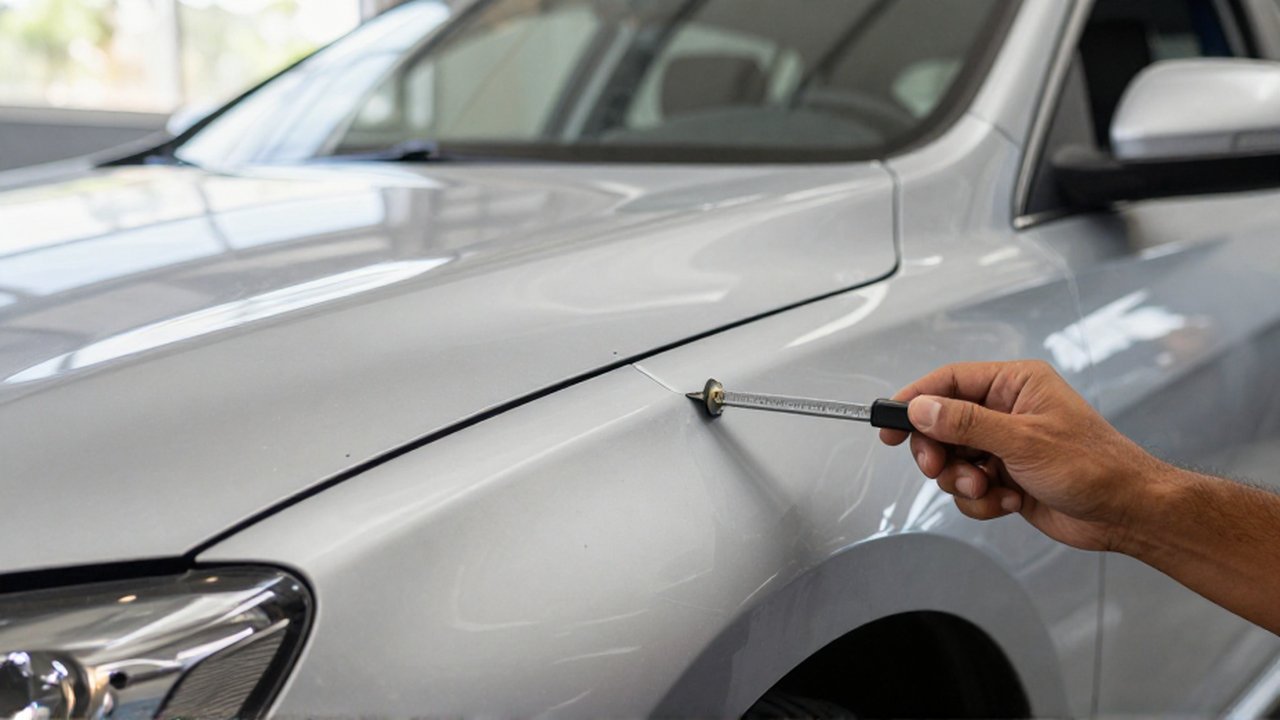
Manufacturers use precision machinery to ensure that the gaps between body panels—such as the spaces between a door and the fender, or the hood and the headlights—are uniform. These gaps are a primary indicator of how well a car has been assembled and whether it has suffered structural shifts.
Run your fingers or a visual line along the edges of the doors, trunk, and hood. If you notice that one gap is significantly wider than the one on the opposite side, or if a panel appears to sit higher or lower than the surrounding components, it strongly suggests that the panel was removed, replaced, or poorly reinstalled following a repair. Misaligned bumpers are also a common red flag; if the bumper does not sit flush with the fenders, it may have been bumped or poorly reattached after a minor collision.
Identifying signs of structural repairs
While surface scratches can be fixed easily, structural damage is a much more serious concern. This involves the components that hold the car together, such as the frame or the pillars. Even if a car looks beautiful, internal damage can affect how the vehicle handles and protects passengers in a future accident.
Inspect the engine bay and the trunk area for signs of welding, non-factory bolts, or uneven sealant. Look at the "pillars"—the vertical supports between the windows. If the paint on these pillars looks different from the rest of the car, or if there are signs of heavy caulking or sealant where there shouldn't be, the car may have been involved in a rollover or a side-impact collision. Additionally, check the bolts that hold the fenders and doors in place. If the paint on the bolt heads is chipped or scratched, it indicates that tools were used to remove those parts, suggesting they were replaced or repaired.
Using simple tools and techniques for verification
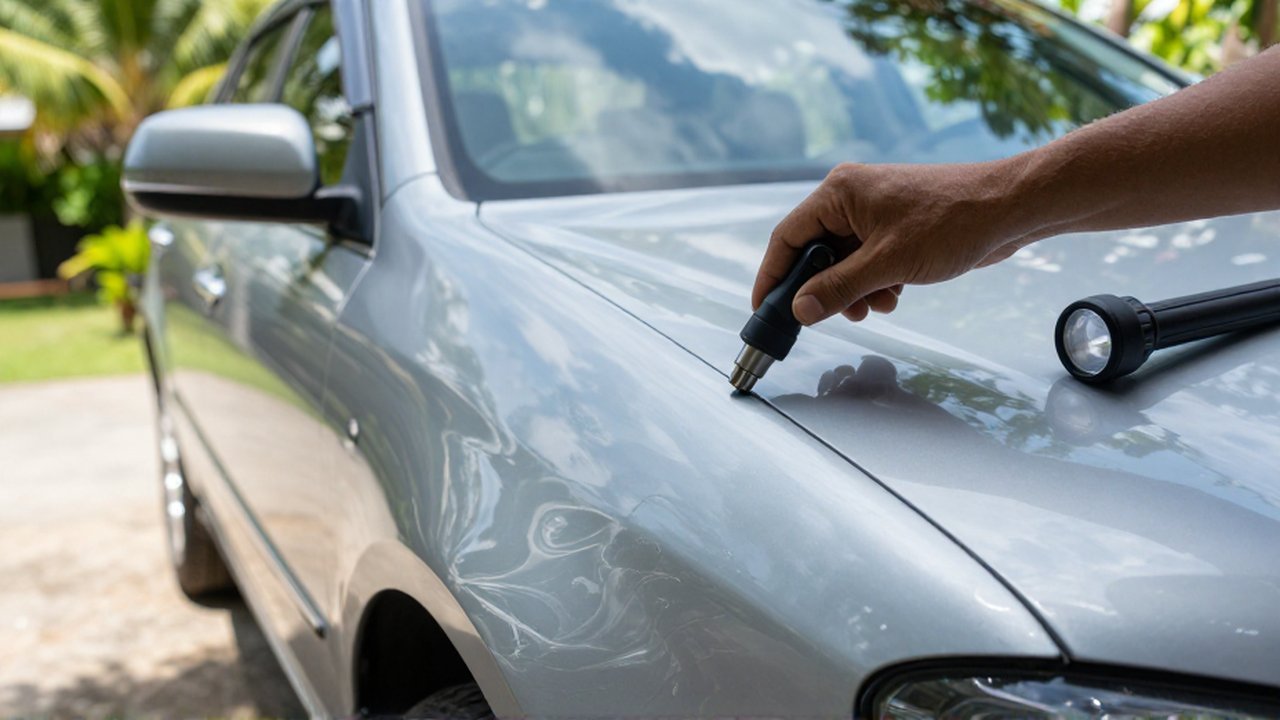
If you want to go beyond a basic visual check, there are a few non-invasive methods to gather more information. A common technique used by enthusiasts is the "magnet test." A simple magnet can be run along the metal panels of the car. If the magnet sticks firmly to most of the car but fails to stick to a specific section, that area may have been repaired using plastic filler (often called Bondo) instead of metal.
Another method is to feel for irregularities. Run your hand slowly along the transition between different panels. Any sensation of a "lip," a dip, or a sudden change in smoothness can reveal where filler was applied to smooth out a dent. While these methods provide helpful clues, they are not foolproof. Professional inspection remains the gold standard for a definitive assessment.
Common mistakes during exterior inspection
Many buyers make the mistake of relying solely on how clean a car is. A professional detailer can easily hide small dents, scratches, and even some paint inconsistencies by applying fresh wax and polish. Always look past the shine to the actual structure and texture of the metal and paint.
Another frequent error is ignoring the "small" things. A minor dent in a corner might seem insignificant, but it can be a symptom of a larger impact that affected the car's alignment. Furthermore, do not assume that a car with a clean Carfax or history report is free of damage; many accidents, especially minor ones, are never officially reported to insurance companies or recorded in databases.
Frequently asked questions
Can a professional painter hide all signs of a repair? While a highly skilled professional can make a repair nearly invisible to the untrained eye, subtle clues like inconsistent orange peel, slight color shifts under different lighting, or microscopic variations in panel gaps usually remain.
Is a replaced panel always a bad sign? Not necessarily. If a part like a side mirror or a bumper cover was replaced due to a minor scrape, it is often a sign of careful maintenance. However, if structural components like the frame or pillars were replaced, it significantly affects the car's value and safety.
Does a magnet test work on all cars? The magnet test only works on steel panels. Many modern vehicles use aluminum, carbon fiber, or high-strength plastics for certain body parts. If the magnet doesn't stick, it might be because the panel is aluminum rather than because of repair filler.
How can I be 100% sure about the car's condition? The only way to be certain is to hire a certified mechanic or a professional vehicle inspector to perform a comprehensive pre-purchase inspection (PPI), which includes checking the underside and internal structural components.
Leave a Reply